
Global Crisis: Prabowo Urges Fuel Conservation and Considers Work-from-Home Policy
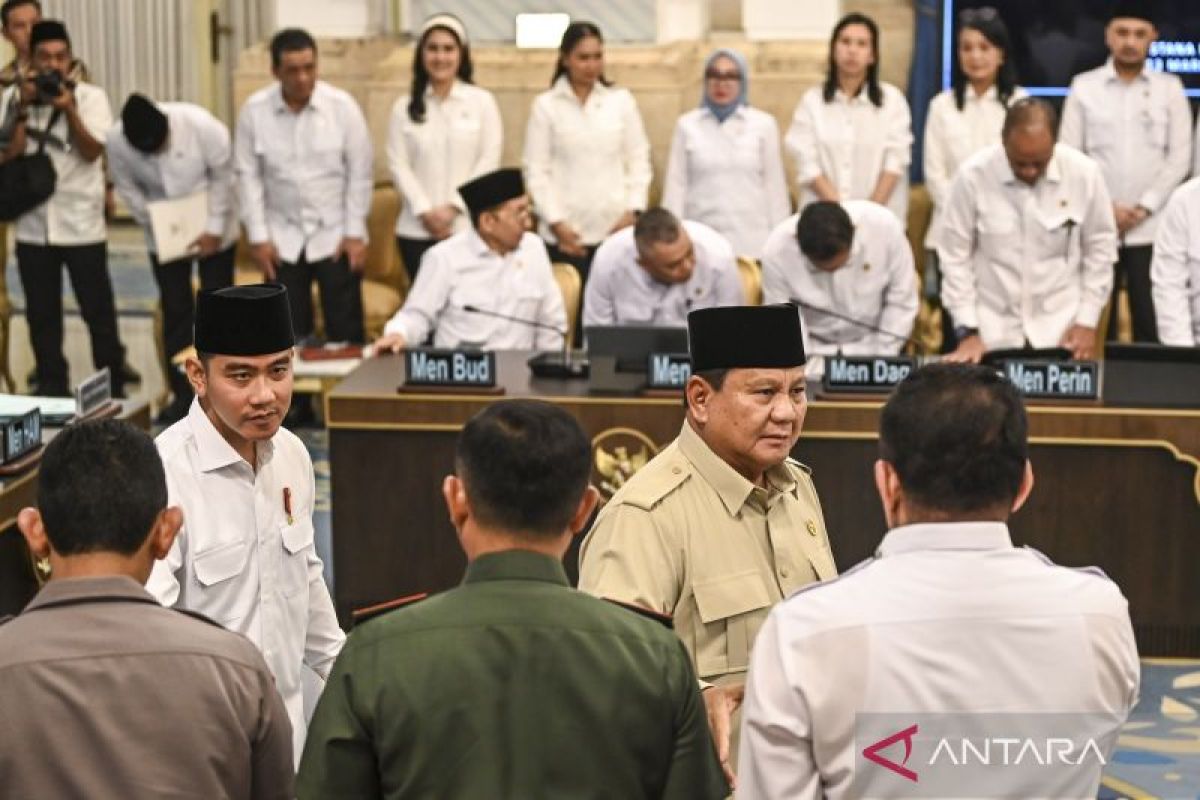
President Prabowo has urged the government to implement proactive fuel conservation measures and consider work-from-home arrangements during a Full Cabinet Session at the State Palace in Jakarta on Friday, citing growing global instability.
“We must take proactive steps to reduce fuel consumption. We cannot assume that whatever happens, we are safe,” the President said, acknowledging Indonesia’s relative stability whilst emphasising the need for precautionary measures.
Prabowo highlighted that global developments in Europe and the Middle East pose potential threats to fuel prices, which in turn could drive up food prices. He noted that whilst the government has secured essential food supplies and accelerated energy sector initiatives, fuel consumption reductions remain necessary in the face of global uncertainty.
The President cited Pakistan as an example, referencing critical austerity measures implemented by that nation, including work-from-home provisions for up to 50 percent of government and private sector employees, and reducing the working week to four days. Other measures mentioned included cabinet and parliamentary salary reductions, restrictions on government vehicle fuel consumption, limited use of official vehicles, and suspension of expenditure on vehicle procurement, air conditioning systems, and office furnishings.
Additional conservation measures implemented by Pakistan include suspending foreign visits funded by government and restricting spending on ceremonial activities.
“These are merely examples for consideration,” Prabowo said. “I believe we should study these measures and implement our own conservation efforts. I am confident that within two or three years we will be very strong, but we must still conserve fuel consumption.”
Drawing on Indonesia’s experience during the COVID-19 pandemic, Prabowo highlighted how work-from-home arrangements improved efficiency and substantially reduced fuel consumption. He instructed the Coordinating Ministers to examine and discuss the proposal shortly.
“Let the Coordinating Ministers discuss this in the coming days. During COVID, we successfully implemented work-from-home, which increased efficiency and saved enormous amounts of fuel. Reducing office visits by government officials and civil servants would decrease congestion and achieve significant savings. We must also consider reducing the working week and implementing other conservation measures,” the President added.
Prabowo emphasised that energy conservation would help protect the nation’s fiscal position and prevent budget deficits from widening. The government aims to achieve more balanced budget management.
The President acknowledged ongoing risks of budget leakages and inefficiencies in fund management, including improper administrative practices. He noted that GovTech system synchronisation coordinated by the National Economic Council is expected to reduce leakages by approximately 40 percent of state expenditure.
“The National Economic Council has begun work on GovTech, synchronising all ministries and agencies into a single network. This is estimated to reduce leakages by up to 40 percent of our spending,” he stated.
Concluding his remarks, Prabowo warned that the government must remain vigilant against potential worst-case scenarios amid global uncertainty, including the possibility of prolonged conflict in the Middle East.
“Although we feel secure and should not panic, we must not be complacent either. We must prepare ourselves for the worst possible scenario. We hope the worst-case scenario does not occur in the Middle East, but many predictions suggest this could become a very prolonged conflict,” he concluded.