
Global Crisis Accelerates Indonesia's Energy Self-Sufficiency
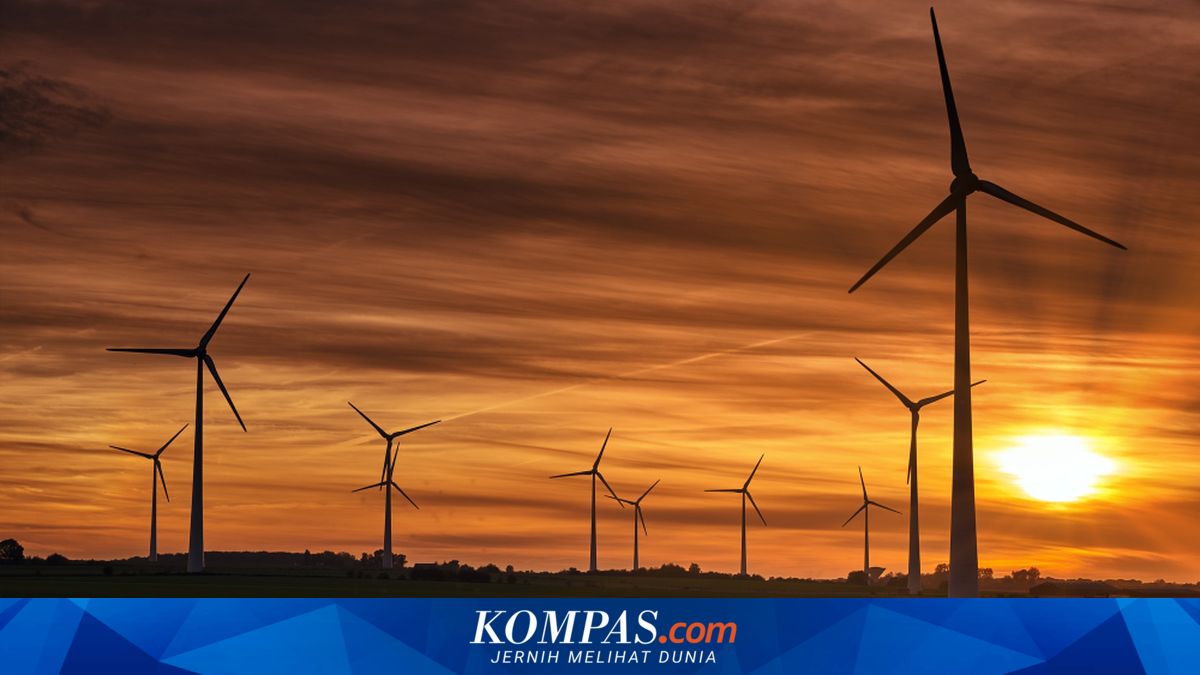
JAKARTA – The issue of energy self-sufficiency emerged during the International Labour Day or May Day 2026 commemoration at Monas, Jakarta, on Friday (1/5/2026), alongside the government’s affirmation of maintaining energy resilience amid global turbulence.
President Prabowo Subianto stressed that the national energy situation remains secure, even opening opportunities for independence in the coming years.
“We are self-sufficient in food. Our food is secure. Our fuel is still secure,” Prabowo stated.
He emphasised that Indonesia remains strong despite many countries being gripped by panic due to conflicts in West Asia (Middle East).
The affirmation at Monas aligns with the policy direction previously conveyed at the Full Cabinet Meeting at the State Palace, Jakarta, on Friday (13/3/2026), which positions energy self-sufficiency as a priority for acceleration.
“We already know that we must shift energy to renewable sources, to energy that we possess ourselves. We understand that. This accelerates it. So this forces us to work harder,” Prabowo said.
He noted that Indonesia has various alternative energy sources that can be utilised, from plant-based fuels to renewables.
“We have palm oil, which we can convert into diesel, into ethanol. We can use sugarcane, cassava, corn. We have all of these. We have abundant geothermal. We can use water power, hydro, mini hydro, there are so many,” Prabowo explained.
“We will implement very rapid development of solar power, which we plan to achieve 100 gigawatts that we target to complete in the next two years. 100 gigawatts is 100,000 megawatts. That means we need roughly 100,000 hectares,” Prabowo added.
In addition, the government is preparing the development of a major gas field in Andaman as well as the Masela project to strengthen the national energy supply.
In a JP Morgan report titled “Pandora’s Bog: The Global Energy Shock of 2026”, Indonesia is ranked as the world’s second most resilient country against the energy crisis, particularly in the oil and gas sector.
“This is not an achievement that came suddenly. There is systematic work from upstream to downstream carried out by the government. I see that the Minister of Energy and Mineral Resources has successfully read the global situation and prepared Indonesia to be more resilient against shocks,” said Nurdin Halid in his statement on Thursday (30/4/2026).
“Advanced countries are instead hit hard because they are too dependent on imports. Indonesia now shows a different direction, utilising its own resources as the main strength,” he added.
He also assessed the development of dimethyl ether (DME) and compressed natural gas (CNG) as substitutes for imported LPG as a strategic step amid global supply chain uncertainties.
“Going forward, we must not stop. Energy resilience must be accompanied by a transition to clean energy so that Indonesia is not only crisis-resistant but also competitive in the future,” he stated.