
Global CPO Prices Surge: Will Domestic Cooking Oil Prices Follow? Trade Minister Responds
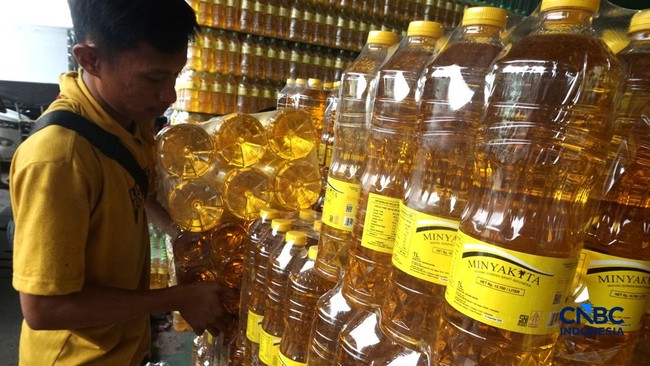
Indonesia’s Ministry of Trade has affirmed that increases in global crude palm oil (CPO) prices have not yet translated into higher cooking oil prices on the domestic market, including the government’s subsidised cooking oil product, Minyakita.
The Indonesian Palm Oil Producers Association (Gapki) had previously projected CPO prices to remain elevated through the first quarter of 2026, at approximately US$1,050–US$1,125 per tonne. However, the government maintains that these conditions have not yet triggered cooking oil price increases in the domestic market.
Trade Minister Budi Santoso stated that his ministry has not received any reports of cooking oil price increases in the market. He said that monitoring shows prices have remained relatively stable or even declined slightly, particularly for Minyakita.
“Currently there is no increase. Just yesterday when I checked, Minyakita prices have actually fallen to Rp15,800 per litre, and the market monitoring system graph shows continuous decline. So there has been no impact up to now,” Santoso explained.
When asked about the possibility of cooking oil prices surging to Rp20,000 per litre as occurred during 2021–2022, Santoso assessed that such a scenario was unlikely to occur in the near term.
Meanwhile, Gapki Secretary General Hadi Sugeng Wahyudiono previously revealed that CPO price dynamics throughout the previous year had temporarily made palm oil a premium commodity compared with other vegetable oils. According to Sugeng, during January to March 2025, CPO prices even exceeded other vegetable oils on the global market. This situation changed towards year-end when CPO prices fell below sunflower oil prices.
Sugeng explained that these dynamics reflect various policies borne by the domestic palm oil industry. Obligations such as domestic market obligations (DMO) and export levies, including export duties, are considered to affect Indonesia’s palm oil competitiveness on the global market.
When CPO prices exceed other vegetable oils, industry players must make extra efforts to maintain export momentum, Sugeng noted.
Despite these challenges, Sugeng stressed that the palm oil industry remains one of Indonesia’s largest foreign exchange earners. Over the past five years, palm oil export values have ranged between US$27.7 billion and US$39 billion annually.
According to him, this contribution plays a major role in maintaining Indonesia’s trade balance in a surplus position. Sugeng emphasised that the palm oil sector’s contribution has consistently remained positive regardless of circumstances, and without palm oil, Indonesia’s trade balance might be negative.