
Global Conflicts Drive Sharp Surge in Silver Prices
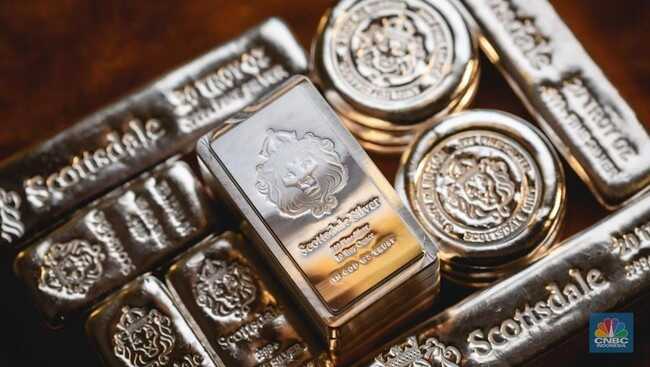
Silver commodity prices (XAG) are poised to experience significant volatility and sharp appreciation at the opening of early week trading. This outlook is driven by a combination of two major factors: extreme geopolitical conflict escalation in the Middle East and a global structural deficit in physical silver supply.
Based on trading data from late February 2026, silver prices have demonstrated solid strengthening trends. Opening the week at $88.22 per troy ounce on Monday (23 February 2026), prices consolidated at $87.33 on Tuesday (24 February) and $88.35 on Thursday (26 February), before closing at their highest level of $93.81 per troy ounce on Friday (27 February 2026).
Looking further back, this trend is particularly significant given that mid-month on 17 February 2026, silver was still trading at $73.45 per troy ounce due to market corrections that had occurred previously.
Geopolitical Sentiment and Capital Flow Shifts
The primary catalyst currently focused on by market participants is the escalating conflict between the United States, Israel, and Iran over the past weekend. Global market sentiment responded rapidly to reports circulating about the deaths of several Iranian military and political leaders due to the attacks that occurred.
Tensions escalated further following claims from US President Donald Trump via social media stating that Iran’s Supreme Leader, Ayatollah Ali Khamenei, also died in the incident.
This situation triggered massive risk-off sentiment across financial markets. Initial indications of this panic were evident from the movement of gold-backed cryptocurrency assets, which recorded nearly 4% gains over the weekend whilst traditional exchanges were closed.
In large-scale crises, silver often records more aggressive percentage gains compared to gold. This geopolitical panic momentum is driving investors to quickly relocate their liquidity to safe-haven instruments as a hedging measure, potentially triggering a surge in silver opening prices on commodity exchanges.
Structural Deficits and Technology Sector Demand
Beyond geopolitical factors, silver price appreciation is fundamentally supported by increasingly tight physical supply conditions, occurring across nearly all regions of the world, particularly the Middle East and the United States.
Massive demand from the technology industry sector, particularly for data centre infrastructure, artificial intelligence, electric vehicles, and solar panels, continues to deplete global supply availability. Silver’s high electrical conductivity makes it a crucial material that is difficult to replace in these future industries.
Conversely, silver production is highly limited and inelastic in response to demand. The majority of global silver supply depends on by-products from gold and copper mining, meaning the market faces a structural deficit estimated at 200 million ounces annually. Retail industry operators in the United States report that physical silver bar availability in the market continues to diminish and is being absorbed by consumers at a very rapid turnover rate.
With the combination of tight industrial supply and demand surges driven by geopolitical panic, commodity analysts are now projecting the potential for higher silver price movements.
Several market projections are even beginning to examine the possibility of silver prices touching new three-digit resistance levels should fundamental supply conditions and Middle East tensions not ease soon.