
Global Climate Deteriorating, Prepare for Hottest Temperature Record in 2027
Jakarta, CNBC Indonesia - The World Meteorological Organization (WMO), under the UN, reports that the Earth’s climate balance is currently at its worst level in history. The planet is beginning to absorb far more heat energy than it can release, due to high emissions of greenhouse gases such as carbon dioxide.
Citing BBC International, this condition is predicted to become increasingly urgent in the near future.
WMO scientists project the emergence of a natural El Niño warming phase in the second half of 2026. Combined with the warming trend from human activities, this phenomenon has the potential to drive global temperatures to a new all-time high in 2027.
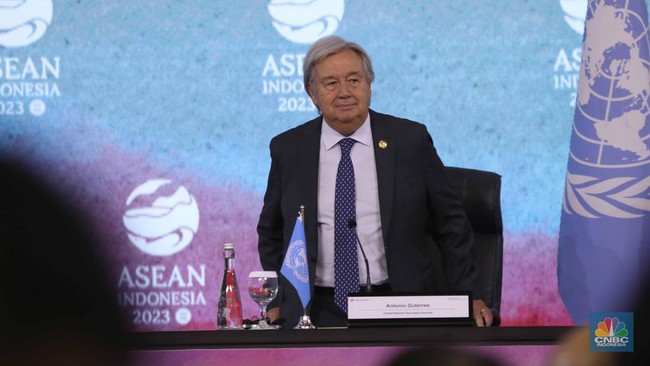
In response to the report, UN Secretary-General António Guterres urges all countries to immediately switch from fossil fuels to renewable energy. This is to achieve climate security, energy security, and national security.
“The Earth is being pushed beyond its limits. Every major climate indicator is flashing red,” said Guterres, citing BBC International, on Monday (23/6/2026).
This record-breaking energy imbalance phenomenon heated the oceans to the highest levels last year and continues to melt polar ice caps. The situation is expected to become even more critical as scientists monitor the potential formation of the natural El Niño warming phase predicted for the second half of 2026.
“If we shift to El Niño, we will see a global temperature increase again, and it could reach a new record,” said WMO scientist John Kennedy.
The WMO notes that the last 11 years have been the hottest period since records began in 1850. In 2025, the average global air temperature was recorded at around 1.43 degrees Celsius above pre-industrial levels.
More than 90% of this excess heat energy is absorbed by the oceans. As a result, the heat stored in the upper layers of the global oceans reached a new all-time high last year.
This condition also damages marine ecosystems, triggers more intense storms, and accelerates the melting of glaciers and polar ice, which impacts sea level rise.
“Human activities are increasingly disrupting the natural balance, and we will live with these consequences for hundreds and thousands of years,” explained WMO Secretary-General Celeste Saulo.