
Global Central Banks Wary Amid US–Israel–Iran Conflict
Global central banks are wary amid the conflict involving the United States, Israel and Iran, with oil prices rising sharply and global inflation risks mounting. The situation is forcing monetary policymakers to rethink the trajectory of interest rates amid heightened global economic uncertainty.
World crude oil prices remain elevated after US and Israel attacks on Iran and disruptions to oil flows through the Strait of Hormuz, a strategic route linking around 20-30% of global energy supplies. Brent and WTI are at their highest in more than a year, reflecting market concerns about disrupted energy supplies.
The energy price surge is not only hitting energy costs but also reinforcing inflationary pressures in various countries. Central banks now face a dilemma between containing inflation and supporting economic growth that is starting to weaken due to geopolitical tensions.
In Europe, ECB Governing Council member Pierre Wunsch said the bank would avoid hasty reactions to higher energy prices. He added that the ECB would carefully evaluate data before determining policy steps.
“If this lasts longer, if energy prices rise further, then we have to run our model and see what happens,” he said, as quoted by CNBC International, Thursday (5 March 2026).
The same was said by Bank of Japan Governor Kazuo Ueda. He noted that the Bank of Japan will continue to consider further rate hikes if conditions support it, even as rising energy prices could affect global economic stability and make monetary policy more complex.
“Oil price increases can dampen or push inflation higher depending on their duration,” Ueda said.
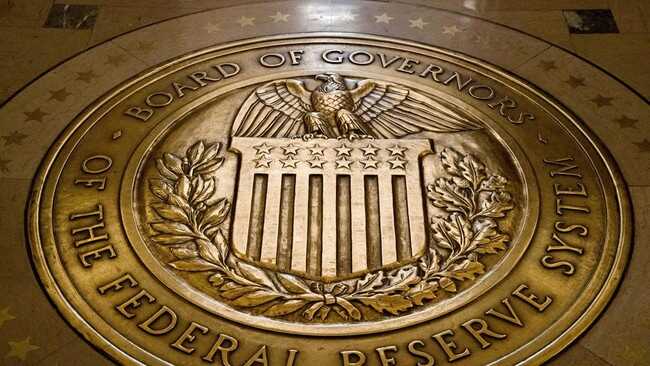
A similar situation is seen in the United States, where higher energy costs are expected to slow the Federal Reserve’s plan to cut rates. Analysts assess that persistent inflation risk could lead the Fed to keep rates elevated for longer than previously anticipated.
AFP quotes the Fed warning that rising economic uncertainty affects consumer sentiment on Wednesday. But the Beige Book report also highlights tariff-related uncertainties following the Supreme Court’s decision to overturn tariffs by the US presidency.
The central bank said that although consumer spending rose slightly, many Fed districts noted that sales were restrained by economic uncertainty, higher price sensitivity and lower-income consumers reducing spending. The report cited tariffs as a driver of higher costs in many sectors, as many companies raised prices for consumers as a result.
“Some companies continue to pass tariff-related costs on to customers, while others begin to do so after absorbing earlier increases,” the report said.
The impact of the conflict is also being felt by central banks in developing countries, including Indonesia, Bank Indonesia. Bank Indonesia continues to monitor the transmission of oil price shocks to domestic inflation via commodity price channels, financial markets and international trade, and to watch the movements of the rupiah amid global turmoil.
Economists warn that if the conflict endures and energy supply disruptions continue, inflationary pressures could intensify, forcing central banks to extend high-rate cycles to curb price rises. At the same time, global economic growth faces risks of slowdown due to the combined effects of higher energy costs and geopolitical uncertainty.
The situation is important for global monetary policy moves, prompting central banks in various countries to take greater care in setting rate decisions amid geopolitical volatility that shows no signs of abating.