
Global Arms Spending Hits Record High, SIPRI: Trend to Continue
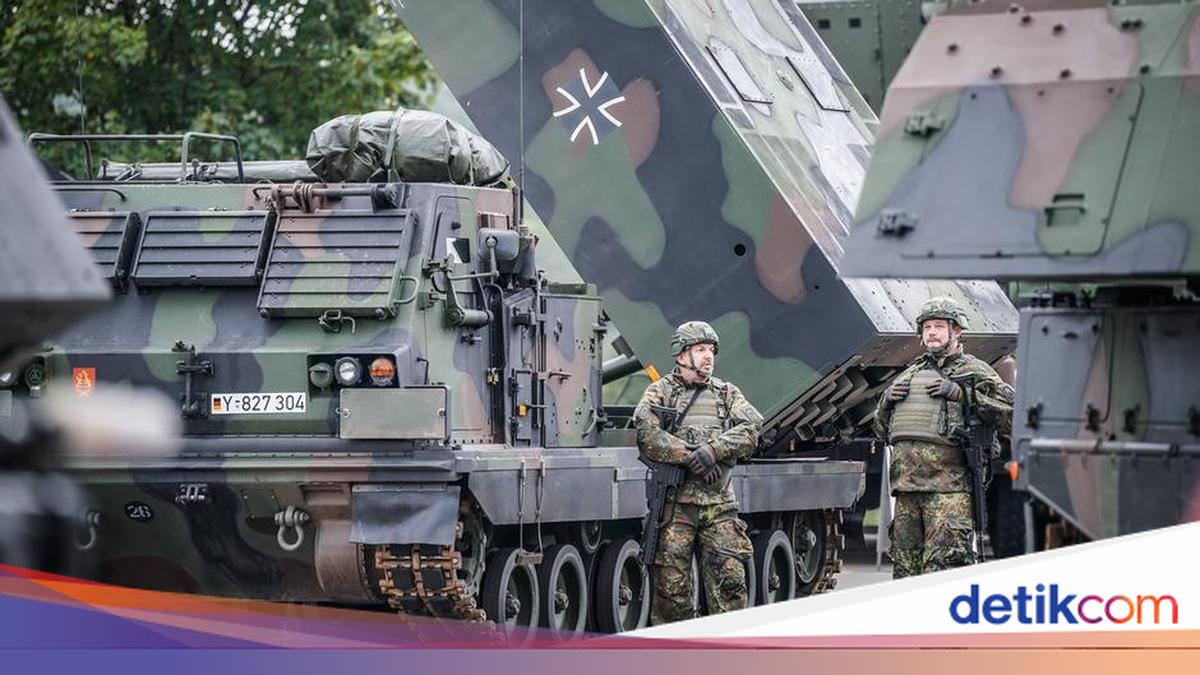
Global military spending increased for the 11th consecutive year in 2025. Governments worldwide spent a total of $2.887 trillion (£2.2 trillion) on ships, aircraft, missiles, and other weapons. This expenditure refers to the latest data from the Stockholm International Peace Research Institute (SIPRI). That figure represents the highest military spending ever recorded.
“This truly reflects countries’ responses to ongoing wars, tensions, and geopolitical uncertainties,” said Xiao Liang, a researcher in SIPRI’s Military Expenditure and Arms Production Programme. Fighting continued in Ukraine and Gaza in 2025, while conflicts such as the war in Sudan also added to global instability. “With all these crises still ongoing, and many countries’ long-term spending plans already locked in, this trend is likely to continue into 2026 and beyond.”
Much of the global military spending increase in 2025 was driven by Europe. Expenditure in the region rose 14% to $864 billion (£660 billion). Russia’s full-scale invasion of Ukraine in early 2022 has transformed European countries’ views of their own security. Many European governments fear that Russia could pose a broader threat beyond Ukraine. In response, European countries, particularly NATO members, have increased defence spending to bolster their militaries and deter further aggression.
“That is clearly the biggest driver,” said Xiao Liang. “In recent years, spending by Russia and Ukraine themselves has been a major factor in Europe. Their expenditures continue to rise in 2025. But in terms of total spending, the focus has shifted to central and western European countries, as their militarisation plans and expenditures begin to materialise. Those countries recorded the highest annual growth since the end of the Cold War last year.” Spain’s defence budget surged 50%, Poland 23%, and Italy 20%.
Germany changes budget rules to fund military spending
Among European countries, Germany became the largest military spender in 2025. Its defence budget rose 24% to $114 billion (£87 billion). This placed Germany fourth among the world’s top military spenders. For the first time since 1990, Germany’s military spending exceeded NATO’s 2% of GDP benchmark, reaching 2.3%. To finance this, the German parliament amended its fiscal rules in 2025. Military spending above 1% of GDP is now exempt from Germany’s strict debt brake. This gives the government a “green light” to borrow more for defence enhancements.
“I think Germany’s military capabilities are not improving as quickly as the spending figures suggest,” said Liang. “However, I believe that in the long term, Germany will become stronger and more militarily independent.”
In addition to the Russian war in Ukraine, Germany’s spending increase also reflects uncertainty about future US security guarantees. The German government is seeking to reduce its dependence on the United States, like other NATO allies, especially after President Donald Trump once again questioned the alliance’s collective defence commitments.
Why did US military spending fall in 2025?
The United States spent less on its military, only $954 billion (£730 billion) in 2025. That figure fell 7.5% from the previous year. The main cause of this decline was the US Congress not approving new military aid for Ukraine, unlike the previous three years. SIPRI counts such aid as part of the donor country’s military spending.
“That trend is already reversing,” said Liang. “The newly approved 2026 US budget signals a major increase. With the war in the Middle East and rising tensions in Asia, this slowdown is likely only temporary.” According to the Pentagon, in just the first six days of the Iran war in 2026, the US had already spent $11.3 billion (£8.6 billion).
Indeed, in 2025 the US continued major investments in nuclear and conventional weapons, aiming to maintain military dominance and counter China in the Indo-Pacific, which is the primary focus of US national security strategy.
The US remained the world’s largest military spender in 2025, accounting for about a third of total global defence expenditure. However, its share has been steadily shrinking since 2020.
“This is not because the top spenders are cutting budgets,” said Liang, “but rather due to widespread increases elsewhere, especially among middle powers.”
Some argue that a more even military balance could make the world safer. Liang disagrees. “That means more weapons and more military equipment,” he said. “A new arms race erodes trust and increases the risk of miscalculation,” making the world more dangerous.
China remained the world’s second-largest military spender and continued to increase its defence budget every year for 31 consecutive years. This is the longest period of any country monitored by SIPRI. Its spending rose 7.4% in 2025 as China pushes forward with its armed forces modernisation plans for 2035.
China’s military build-up has significant regional impacts, said Liang. “China’s military modernisation and tensions with its neighbours have long driven spending increases in the region, particularly in countries like Japan, Taiwan, and the Philippines,” he said. “But in 2025, this also relates to shifts in security thinking among US allies. Countries like A