
Glimpse of the 'Cosmic Nursery' NGC 5134: James Webb’s Latest Image Reveals the Life Cycle of Stars
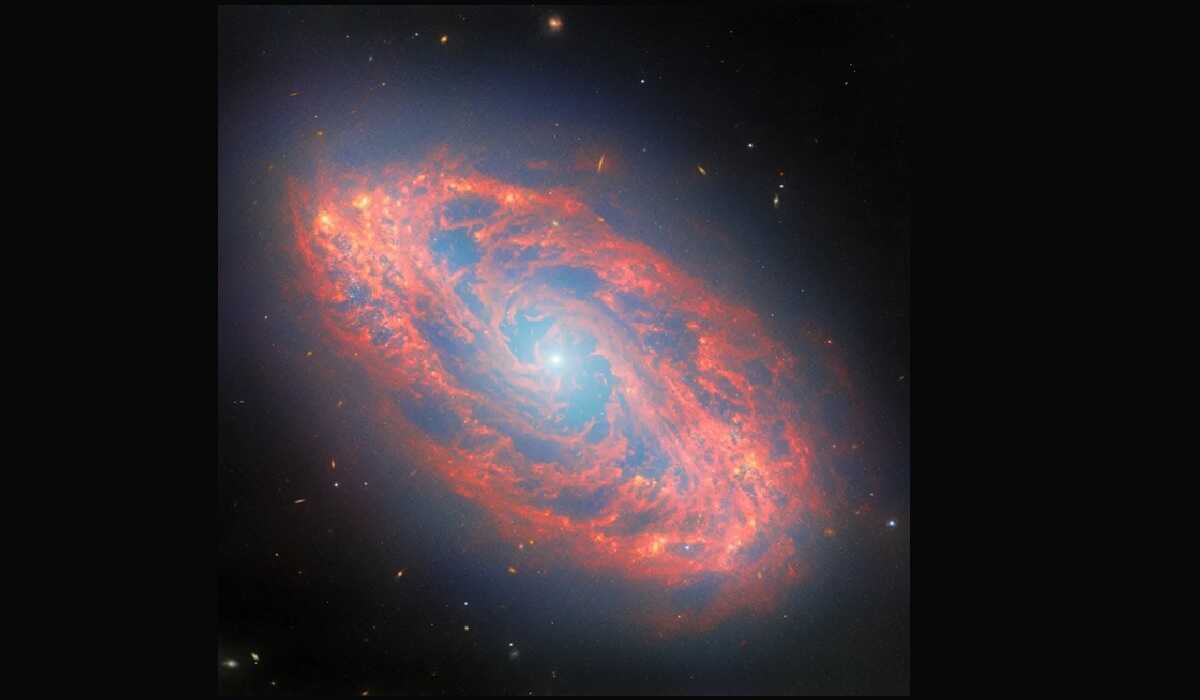
James Webb Space Telescope (JWST) has once again captivated the world with the latest image of the spiral galaxy NGC 5134. The photograph reveals a spectacular panorama of glowing dust clouds, newly formed stars, and the continuing imprint of the life cycles of stars across the cosmos. Located about 65 million light-years away in the Virgo constellation, NGC 5134 may seem distant to the average reader. Yet in cosmic terms it is a relatively close neighbour. This proximity enables JWST’s advanced instruments to probe the remarkable details of its tightly wound spiral arms. Structurally, NGC 5134 is a spiral galaxy with a very bright central core, encircled by long arms rich in gas, dust, and stars. These arms function as a ‘cosmic nursery’ where interstellar material continually triggers the birth of new stars. The beauty of this image stems from the collaboration of two of JWST’s sophisticated instruments. What makes this observation so crucial for science? The glowing dust clouds along the galaxy provide the raw material for star formation. As gravity pulls this gas together, new stars ignite and gradually consume the fuel that forms stars in the galaxy. However, space has its own recycling system. When a star dies, it returns part of its material to the void. Massive stars explode in spectacular supernovae, dispersing essential elements out to hundreds of light-years. Meanwhile, smaller stars, like our Sun, shed their outer layers as they swell into red giants. By observing NGC 5134 in infrared light, astronomers can trace the birth, evolution, and recycling of this material. This data is a crucial key for scientists to understand how galaxies grow and transform over billions of years in the history of the universe. (Space/Z-2)