
Gilimanuk Port Queue Congested; ASDP Ensures Vehicle Flow Continues
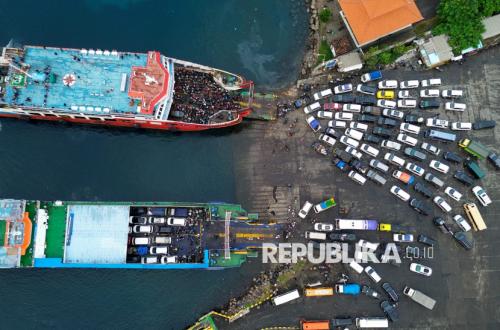
PT ASDP Indonesia Ferry (Persero) has ensured that vehicle queues to Gilimanuk Port continue to move despite congestion during the 2026 Lebaran transport period. The surge in traffic flow has been driven by increased public mobility as people seek to cross earlier ahead of the closure of the route during Nyepi Day celebrations.
Deputy Chief Executive of ASDP Indonesia Ferry Yossianis Marciano stated that the queues are influenced by the high volume of vehicles and traffic dynamics along the route to the port.
“In addition to the high volume of vehicles heading to the port, queue conditions are also affected by traffic dynamics along the entire route to the Gilimanuk area, including public activities at various service points such as fuel filling stations and other travel support facilities,” said Yossianis on Tuesday (17 March 2026).
Yossianis explained that queues which previously reached approximately 36 kilometres have now reduced to around 20 kilometres, with conditions of heavy yet flowing traffic. The company is optimising ships, docks, and operational arrangements to maintain traffic flow.
“ASDP is making maximum efforts by optimising ships, docks, and operational arrangements to ensure vehicle flow continues,” said Yossianis.
Yossianis noted that the surge in traffic is evident from data collected on day H-5 on 16 March 2026, with 76,495 passengers crossing from Bali to Java, representing a 2.9 per cent increase compared to the previous year. The number of vehicles recorded was 23,025 units comprising 14,398 motorcycles, 6,350 four-wheeled vehicles, 1,339 trucks, and 938 buses.
Cumulatively from day H-10 to H-5, the number of passengers reached 309,135 people or an increase of 0.7 per cent year-on-year. The total number of vehicles crossing was recorded at 97,787 units, up 2.8 per cent compared to the same period last year.
Yossianis stressed that operational optimisation continues to be carried out with stakeholders to ease congestion gradually.
“With the support of all stakeholders, ASDP continues to strive to maintain ferry services that are safe, smooth, and conducive so that public mobility and logistics distribution continue to run smoothly,” said Yossianis.
General Manager of ASDP Ketapang Branch Arif Eko stated that traffic engineering measures have been applied to facilitate vehicle flow to the port. Small vehicles are being diverted to the cargo buffer zone to reduce congestion on the main route.
“Small vehicles are also directed to the Cargo Buffer Zone area which is currently being monitored for capacity in order to reduce congestion on the main route to the port,” said Arif.
Arif stated that the Ketapang–Gilimanuk route is being operated with a heavy traffic pattern using 34 ships. Twenty-four ships are being operated with an Arrival–Unloading–Departure scheme to accelerate service rotation.
“Twenty-four ships are being deployed to serve the Arrival–Unloading–Departure scheme, where ships arriving at Ketapang Port immediately undergo cargo unloading processes and quickly resume sailing without loading new vehicles, so that ship rotation becomes faster,” said Arif.