
Gibran Receives Audience from Indonesia Tax Consultants Association, Emphasises Importance of Strengthening National Tax Ecosystem
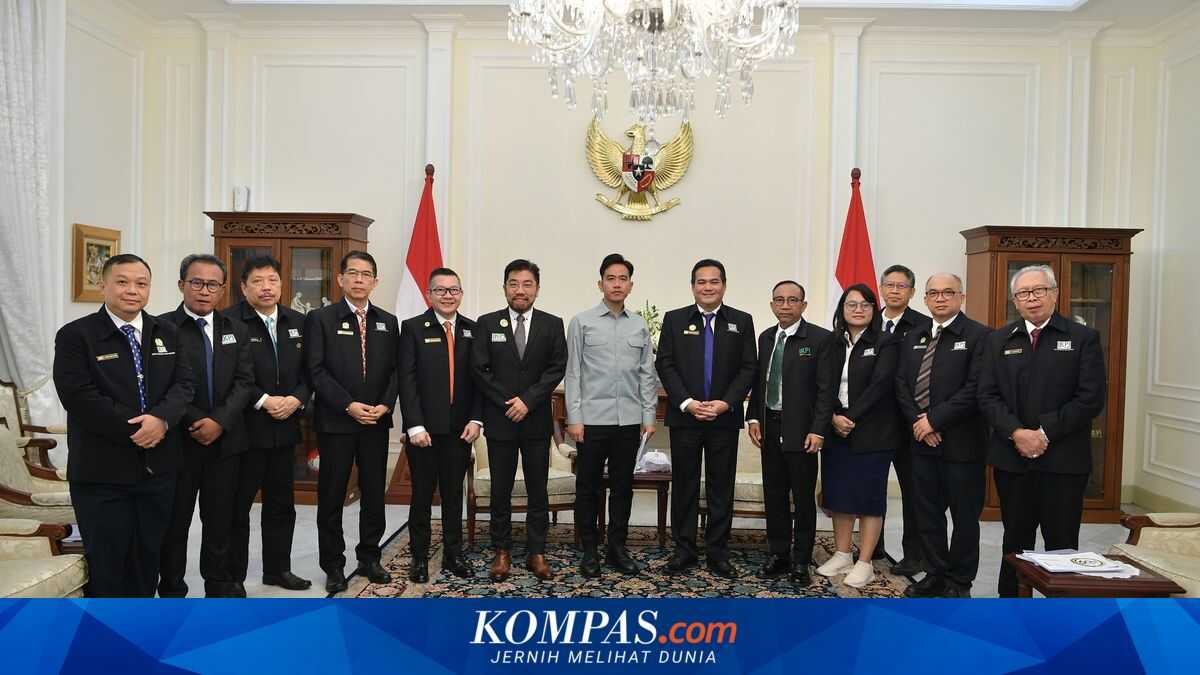
Jakarta – Vice President Gibran Rakabuming received an audience from the Indonesian Tax Consultants Association (IKPI) at the Vice President’s Office in Jakarta on Friday, 27 June 2026.
During the meeting, Gibran emphasised the importance of strengthening the national tax ecosystem, including through reinforcing the regulatory framework for the tax consultant profession. This was disclosed by IKPI Chairman Vaudy Starworld, who noted that the Vice President views strengthening tax consultant regulations not merely as a matter of professional governance, but as part of the government’s strategic effort to reinforce overall state revenue collection.
“The Vice President stated that the tax consultant law is not only about the tax consultant profession, but rather how, in an integrated manner and on a broader scale, it concerns state revenue,” Vaudy explained.
With a clear legal framework, tax consultants are expected to perform their roles professionally as strategic partners of the government in enhancing tax literacy and compliance among taxpayers, particularly business operators and professionals. He added that the rights and obligations of the tax consultant profession have often been in a vulnerable position regarding different interpretations.
Additionally, the existence of a tax consultant law will also regulate taxpayers who use tax consultant services, thereby expected to increase the compliance rate and ultimately reduce the tax gap. “The tax gap is the difference between the amount the state should receive and the actual amount received. Given the significant difference in this tax gap, this needs to be evaluated,” Vaudy explained.
At the meeting, Vaudy disclosed that IKPI also highlighted the non-realisation of amendments to Government Regulation 55/2022 concerning UMKM tax provisions. However, no further clarification has been provided to date.
“We conveyed that amendments to Regulation 55 regarding UMKM must be carried out immediately. It was announced long ago and even reinforced again, but there is still no certainty now,” Vaudy said.
He argued that this lack of clarity could leave UMKM operators without clear direction, thereby affecting tax compliance. He reminded that UMKMs are a strategic sector that absorbs a large number of workers, including informal sector workers. Without certainty, the government’s efforts to promote formalisation and compliance risk being hampered.
“Taxpayers, especially UMKMs, are waiting. If realisation is delayed too long, this could impact declining confidence in the government, particularly in the field of taxation,” he stressed.