
Get Ready! Indonesia's New B50 Fuel to Roll Out in July 2026
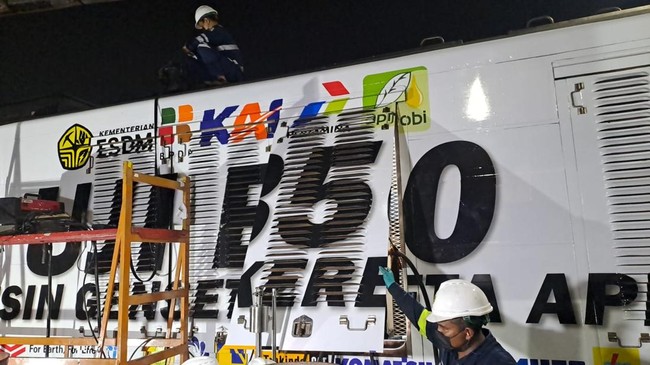
Tangerang, CNBC Indonesia – The Ministry of Energy and Mineral Resources (ESDM) has confirmed that nationwide implementation of the 50% biodiesel blend fuel, or B50, will commence on 1 July 2026. This aligns with a series of B50 trials across various sectors that have yielded positive results.
The Directorate General of New and Renewable Energy and Energy Conservation (EBTKE) of the Ministry, Eniya Listiani Dewi, confirmed that all trial tests across sectors have demonstrated reliable performance for broad implementation soon.
“Previously what is currently underway is 40%, and next July we will raise it to 50% so that we can achieve a situation where we no longer import diesel,” she said at the 50th IPA Convention & Exhibition (Convex) at ICE BSD, Tangerang, on Thursday (21 May 2026).
The government is now finalising the road test phase, covering the automotive sector, mining heavy equipment, and sea transport. Tests so far indicate that using B50 maintains engine stability and does not cause problems with vehicle components.
“On the other hand, yesterday my cold start in Bromo was good, less than a second, even 0.8 seconds. This will mean we have achieved in the automotive sector, i.e., high-speed engines have succeeded,” she said at the event.
The success of engine testing at low temperatures such as in the Bromo region is an important indicator of B50’s technical readiness before distribution to the market. She concluded that if high-speed engine operation has succeeded, then implementation for low-speed engines such as generators and locomotives will be easier to carry out.
“Thus we conclude we can mandate it on 1 July, God willing,” said Eniya.
Separately, the government also plans to launch a 5% ethanol-blend petrol (E5) mandate in certain locations concurrently. The energy blend policy is expected to progressively reduce petrol imports as ethanol production capacity from local raw materials increases.
“The E5 mandate is okay to be issued later via a ministerial decree allocating volumes. But the minister’s direction is that it must be local. Local raw materials capable of delivering fuel grade to us number 26,000 from three companies,” she concluded.