
Germany Sceptical About Accommodating New Wave of Iranian Refugees
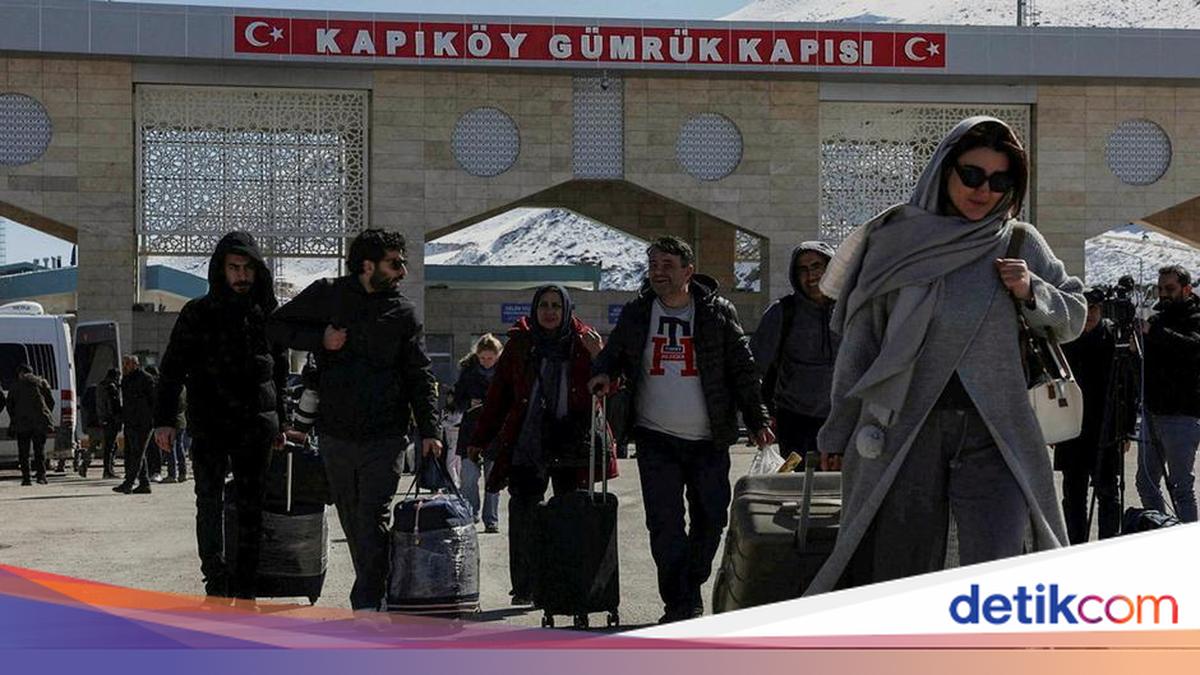
Escalation in the US-Israel war against Iran has also triggered debate about the potential new wave of refugees arriving in Germany.
In a Forsa survey conducted among 1,000 people in Germany, 73% of respondents stated that Germany would not be able to cope with more refugees arriving in the country. This survey was supported by Stern magazine and the RTL broadcasting institution.
Scepticism also comes from political circles. 80% of CDU/CSU supporters are concerned that Germany cannot handle the incoming wave of refugees. Even 98% of supporters of the right-wing conservative AfD party, which has an anti-immigration and remigration agenda, voice similar concerns.
Only supporters of the Green Party stated that they do not see a major problem with additional refugees entering Germany, according to the survey.
This debate arises following the escalation of the war against Iran and the increasing repression by the regime and Iran’s Revolutionary Guard against citizens. It raises questions about the possibility of a new wave of refugees entering Europe, particularly Germany.
“Events of war like those that have recently occurred in Iran show that Germany and Europe must prepare themselves in refugee policy and act in a coordinated manner,” said Andre Berghegger, head of the German Association of Cities and Local Governments, to the Augsburger Allgemeine newspaper.
It is not yet certain whether the war will lead to an increase in the number of refugees heading to Europe. However, it is important to promote and implement a common refugee policy in the European Union.
“At the same time, we must also provide accommodation and reception centres in Germany that can be immediately activated if there is an increase in numbers, even though it is not yet visible,” said Berghegger. He emphasised that the federal government must bear 100% of the costs of such preparedness. “Cities and local governments must not bear the costs and coordination of preparations alone.”
Mark Ankerstein, the German Director for UN refugee assistance, said that since the start of the Iran war, refugee movements have increased sharply. “According to preliminary estimates, the number of internally displaced people in the region has reached 4.1 million, more than 800,000 of whom are in Lebanon,” he explained. “If civilian infrastructure is increasingly affected, the numbers are likely to rise.”
Small likelihood of fleeing to Europe
Meanwhile, migration researcher Gerald Knaus estimates there will be no wave of refugees from Iran to Germany. “Even if the war in Iran escalates or the regime collapses, it is currently unlikely that many people will flee to Europe,” he said. Experience from recent years shows that wars in the Middle East generally cause internal displacement or movement to neighbouring countries. “Because many countries in the region have tightened their borders, there is currently no realistic escape route to Europe,” he added.
The focus should be on the humanitarian situation in Iran, Knaus said. “Even if the number of refugees is small, it does not reflect the actual conditions inside the country; they may be trapped in a humanitarian disaster.”
He also referred to the situation in Gaza and Lebanon, where many people are internally displaced but few reach Europe, despite major humanitarian crises. In addition, global funding for refugee aid organisations continues to decline.
Hundreds of thousands of Iranian diaspora live in Germany
Germany currently hosts Europe’s largest Iranian diaspora, around 319,000 people, including about 128,000 who are already German citizens.
In recent years, Germany has experienced several large waves of refugees, which have shaped migration policy and public debate.
The largest wave occurred in 2015–2016, when more than 1 million asylum seekers from Syria, Iraq, and Afghanistan arrived in Germany. Germany also received Ukrainian citizens after Russia’s invasion in February 2022.
According to UNHCR data on refugee distribution by host country, at the end of 2025, the share of Iranian refugees living in Germany is (29%), followed by the UK (26%), Canada (8%), and Austria (5%). For Lebanese refugees, Germany is also in first place (34%), followed by Canada (12%), Denmark (10%), and France (6%).