
Germany Rejects Trump's Call for Military Support in Middle East, Says War Not NATO's Concern
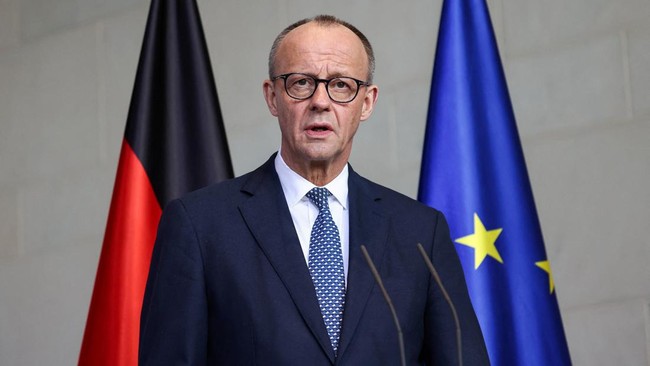
Germany, a member of the North Atlantic Treaty Organisation (NATO), has issued a strong response regarding the US-Israel war in the Middle East. Chancellor Friedrich Merz stated that the conflict, which began with US-Israel strikes on Tehran on 28 February, “is not NATO’s concern” and Germany will not participate in it.
“It has been clear from the outset that this war is not a NATO matter,” Merz said on Monday, adding that the US and Israel “did not consult with us before this war”, according to reporting by AFP on Tuesday, 17 March 2026.
“There was never a joint decision about whether to intervene. That is why the question of how Germany could contribute militarily does not arise. We will not do so,” he added at a press conference with Dutch Prime Minister Rob Jetten.
This represents the latest response from a US ally following President Donald Trump’s call on Sunday for countries including South Korea, France, China, and the United Kingdom to help ensure safe passage through the Strait of Hormuz, which Iran had previously declared closed to US and allied traffic.
Trump subsequently increased pressure on NATO allies, telling the Financial Times newspaper that the alliance faced a “very bleak” future if member states did not do their part to reopen the strait. Merz flatly rejected any possibility of Germany sending ships to the Strait of Hormuz.
“So long as the war continues, we will not be involved in securing free passage in the Strait of Hormuz through military means,” he said.
Merz’s spokesman Stefan Kornelius had previously made similar remarks, stating that the war “has nothing to do with NATO”.
“NATO is an alliance for territorial defence and the mandate for deploying NATO does not exist,” Kornelius said at a regular press conference.
At a separate press conference on Monday, Defence Minister Boris Pistorius said Germany wanted all parties involved to prevent “further military escalation”. Germany’s primary responsibility was for “the eastern and northern flank, which is of high importance” and it would “remain committed to that”.
“There will be no military participation from Germany, but Berlin is prepared to support diplomatic efforts to ensure safe passage through the Strait of Hormuz,” he said.
“We are facing a situation that we did not provoke… This war began without any consultation whatsoever,” Pistorius added.
“What does Donald Trump expect from a handful of European frigates in the Strait of Hormuz that cannot be managed by the mighty US Navy alone? This is the question I ask myself,” he stated.