
German Foreign Minister, China Discuss Reopening Strait of Hormuz
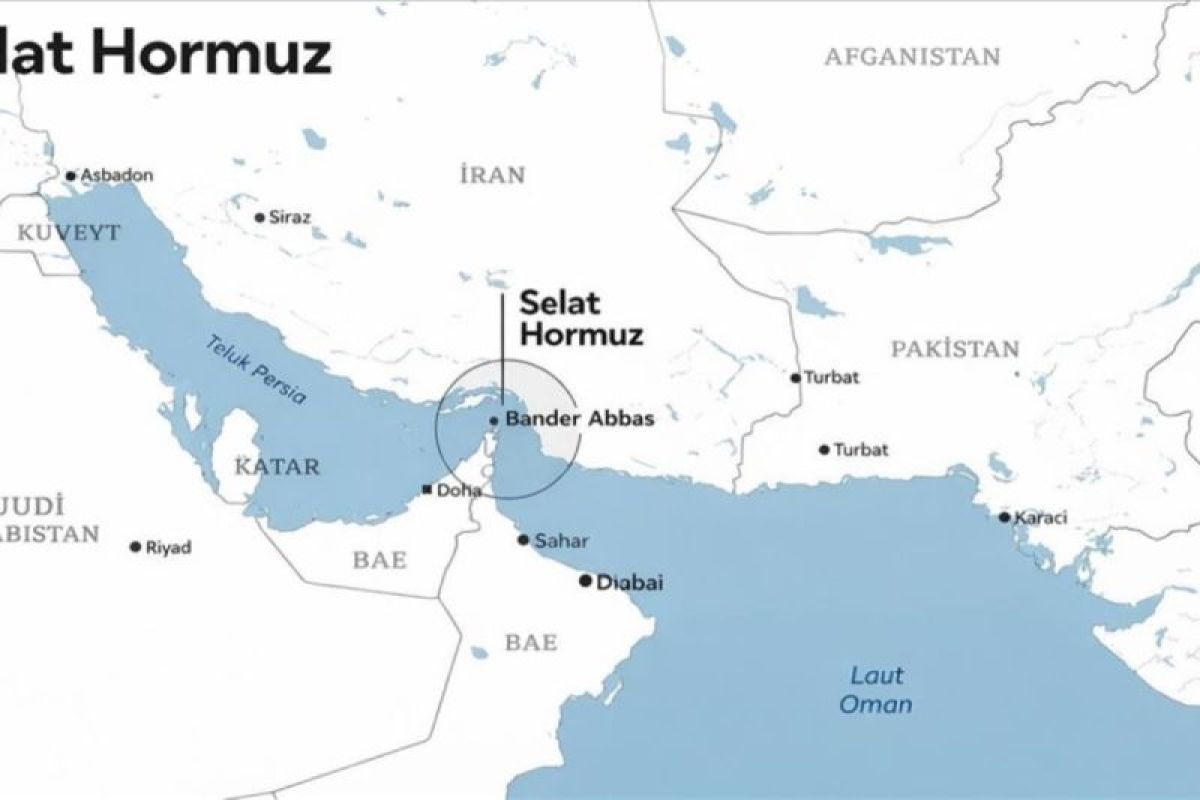
Moscow (ANTARA) - German Foreign Minister Johann Wadephul discussed the situation in the Middle East with Chinese Foreign Minister Wang Yi. The two agreed on the need to restore free shipping lanes for vessels in the Strait of Hormuz, according to the German Foreign Ministry.
An Iranian parliamentary commission member for national security and foreign policy, Alaeddin Boroujerdi, said on Monday that the Iranian parliament plans to introduce new navigation rules in the Strait of Hormuz, under which Tehran would guarantee security in the route for ships while imposing transit fees.
No vessel would be able to pass through the strait without Iranian permission, the parliament member added.
“Germany and China both want to restore freedom of navigation in the Strait of Hormuz. We agree that no country should control shipping lanes or impose fees for navigation,” the German Foreign Ministry stated on X on Thursday.
Berlin and Beijing are concerned about the situation in the Middle East and want to end the conflict as soon as possible, it said.
At the same time, the German Foreign Ministry hopes that China can use its influence over Iran to find a solution through negotiations and end the fighting.
Meanwhile, Italian Foreign Minister and Deputy Prime Minister Antonio Tajani advocated for the establishment of a humanitarian corridor in the Strait of Hormuz for food and fertiliser supplies.
“Together with colleagues, including the Dutch Minister and the Deputy Minister of the United Arab Emirates, Tajani emphasised the need for a UN-led process to build a ‘humanitarian corridor’ as soon as possible,” the ministry said after a video conference related to the Strait of Hormuz.
On 28 February, the US and Israel attacked several targets in Iran, including in Tehran, causing damage and civilian casualties.
Iran retaliated by attacking Israeli territory and US military facilities in the Middle East, including in Bahrain, Qatar, the United Arab Emirates, and Saudi Arabia.
The escalation of tensions around Iran has caused a de facto blockade of the Strait of Hormuz, which is the main route for shipping oil and liquefied natural gas from Persian Gulf countries to global markets, thus driving up energy prices.