
Gerindra: President's 1,098 Sacrificial Cattle Aid from State Budget Legally Valid
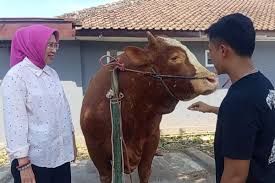
Gerindra spokesperson and Deputy Chairman of the House of Representatives’ Commission II, Bahtra Banong, clarified the controversy surrounding President Prabowo Subianto’s use of the state budget for 1,098 sacrificial cattle aid. He stated that the aid is legally valid as part of the Presidential Social Assistance (Banmaspres) programme, which has a formal budgetary basis and mechanism within the national financial system. “This is not the President’s personal money claimed as private aid. It is a national social assistance programme formally budgeted through the state budget to support communities across various regions. No regulations are being violated,” Bahtra stated in a statement on Wednesday, 27 May 2026. Bahtra explained that the Presidential Social Assistance, including the sacrificial cattle aid, has a legitimate legal basis as it originates from the state budget under the 2026 State Budget Law and is implemented according to national financial management mechanisms under the State Finance Law and State Treasury Law via the Ministry of State Secretariat. He noted that Presidential Social Assistance is not new in Indonesian governance and has been implemented by previous administrations, including those of Presidents Susilo Bambang Yudhoyono and Joko Widodo. “Previous presidents also provided sacrificial cattle aid distributed to various regions through state mechanisms and facilitated by the Presidential Secretariat. Moreover, Presidential Social Assistance has long included food aid, housing assistance, disaster victims aid, education support, healthcare, places of worship assistance, and social aid for the poor. Therefore, there should not be an impression that such programmes are new,” Bahtra explained. He emphasised that the state has an obligation to assist its citizens, including during religious occasions like Eid al-Adha, as part of its social functions and service to the people. “There should not be a narrative that the state is forbidden from aiding its people. On the contrary, such programmes ensure that the benefits of Eid al-Adha are widely felt by the public, particularly those in need,” he stated. Bahtra added that the President’s sacrificial cattle aid programme not only has social impact but also directly boosts the local livestock economy, as all cattle are sourced from domestic farms. “Alongside assisting recipients of the sacrifice, the programme stimulates local livestock economies, strengthens the national livestock sector, and drives regional economic circulation,” he continued. He assessed that controversies raised by some parties are more politically motivated than substantive, ignoring the tangible benefits received by the public. “The key is that the public receives benefits, the programme operates within national regulations, and the community’s economy is stimulated. Everything should not be politicised merely to create negative perceptions,” he concluded.