
Geopolitical Tensions Heat Up, Coal Remains a Global Energy Staple
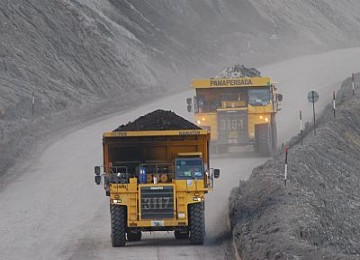
REPUBLIKA.CO.ID, JAKARTA – The Executive Director of the Centre for Energy and Mining Law Studies, Bisman Bakhtiar, assesses that coal still holds an important role in the global energy system even as many countries push for an accelerated transition to clean energy. This commodity is seen as remaining a buffer for energy supplies when disruptions to oil and gas occur due to geopolitical tensions.
Global geopolitical shocks often disrupt oil and gas supplies in international markets. In such conditions, coal is considered more resilient to the impacts of conflict because its reserves are spread across various countries and not concentrated in conflict-prone regions.
“Coal reserves are widely dispersed and not overly concentrated in conflict areas. Therefore, they are relatively safe and not greatly affected by escalating geopolitics. In crisis situations, coal often serves as a buffer for primary energy supplies,” Bisman said in a written statement some time ago.
Energy observer Iwa Garniwa stated that the use of coal in several countries has increased again when there are disruptions to global energy supplies or spikes in oil and gas prices. This situation encourages countries with large energy needs to maintain supply stability through energy sources that are relatively easy to obtain.
“Therefore, several countries such as China and India are increasing coal imports to maintain their energy resilience. China, for example, is increasing coal imports to around 500 million tonnes in 2024 to secure domestic energy supplies,” Iwa said.
This condition provides opportunities for Indonesia as one of the world’s largest coal exporters. Data on the performance achievements of the Ministry of Energy and Mineral Resources (ESDM) for 2025 shows that out of a total of around 1.3 billion tonnes of coal traded globally, Indonesia supplies around 514 million tonnes or about 43 percent.
“Coal can still be a mainstay even though many countries, including Indonesia, are beginning to limit the construction of coal-fired steam power plants. This policy needs to be evaluated if geopolitical escalation increases in order to maintain national energy resilience,” Iwa said.
He assesses that the potential of coal can also be strengthened through diversification of energy products. The development of technologies such as carbon capture, utilisation, and storage (CCUS), coal gasification, and downstream processing into chemicals and fuels is seen as capable of increasing added value while reducing carbon emissions.