
Geologists and Nuclear Experts Deployed to Investigate Mysterious Fires in Seyegan, Sleman
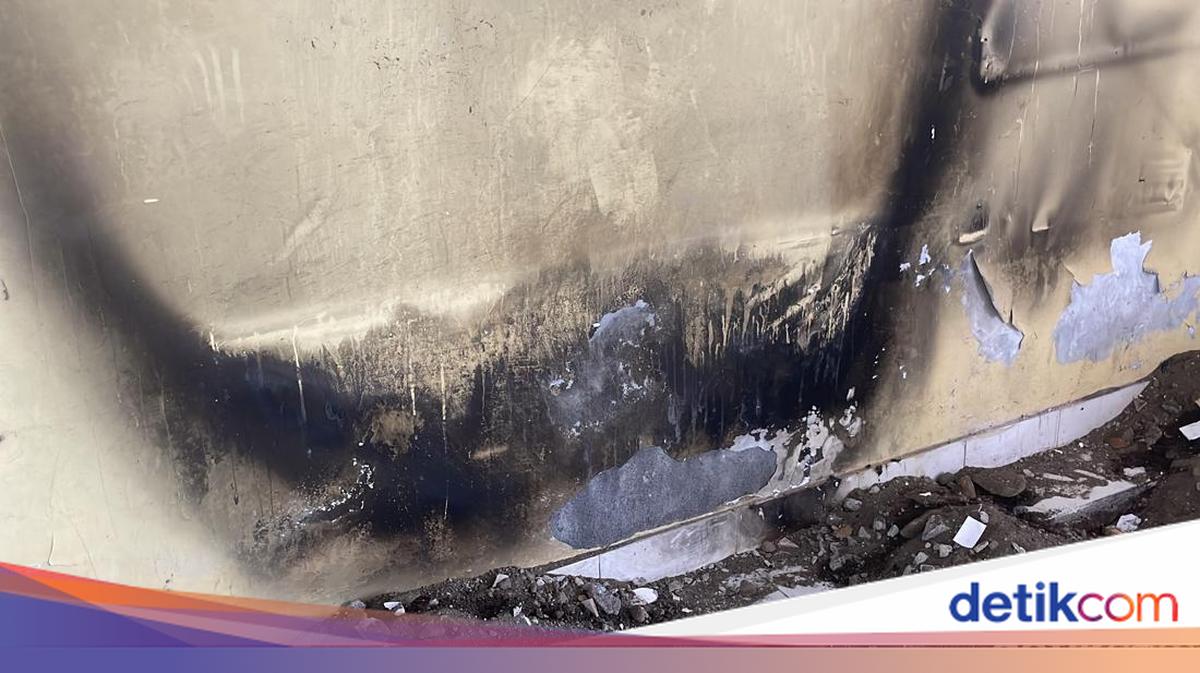
A team of experts has been deployed to investigate recurring fires at Mutfiati’s residence in Seyegan, Sleman, which have occurred over the past week. Universitas Gadjah Mada (UGM) will send seven specialists to uncover the cause of the mysterious fires.
Professor Alva Edy Tontowi, coordinator of UGM’s Centre for Entropy Deceleration Study (PKPE) in the Faculty of Engineering, stated that seven experts from four departments will conduct observations tomorrow.
The seven experts comprise members from the Department of Mechanical and Industrial Engineering, Nuclear Engineering and Physics, Civil and Environmental Engineering, and Geology.
“There are seven people. We’ll observe tomorrow,” Prof Alva told journalists on Friday (29/5/2026).
“The observation will focus on identifying the source, the burning locations, and the surrounding environment,” he added.
Prof Alva noted such incidents are not unprecedented, with similar phenomena previously explained scientifically. “There could be methane gas, biogas, or other causes. Some cases involve petrol station leaks, among others,” said the professor from the Department of Mechanical and Industrial Engineering.
“The public is confused about the cause, so the Faculty of Engineering is using scientific methods to determine what’s actually happening,” he explained.
The fires first erupted at Mutfiati’s home on Saturday (24/5), recurring multiple times until the DIY Police Gegana unit intervened. Initial suspicion pointed to methane from a septic tank, though Mutfiati claimed repairs were made but fires persisted. “Gegana indicated it was residual underground gas, which could dissipate within weeks or months,” she said.
DIY Public Works, Housing, and Mineral Resources Agency Head Anna Rina Herbranti also suspected methane accumulation as the cause, ruling out natural gas. “Young volcanic lithology typically consists of loose materials and lacks the capacity to form hydrocarbon source or reservoir rocks required in hydrocarbon systems,” she stated on Friday (29/5/2026).
Additionally, Anna explained that Seyegan lacks major geological structures like active faults, folds, or sedimentary basins that could form subsurface gas accumulations. “Regionally, the area shows no geological characteristics supporting natural gas potential,” she added.
Based on these findings, Anna suggested the mysterious fires likely stem from organic gas, possibly from the septic tank. Seyegan’s terrain is dominated by young volcanic deposits such as sand, clay, and ash, which are porous, allowing gas from septic tanks to seep to the surface through cracks or pores.
“Spontaneous fire occurrences can be influenced by environmental factors, combustible materials, localised organic gas accumulation, or non-geological technical factors,” Anna said. “Field observations indicate methane accumulation from the septic tank; small fissures or loose fill layers facilitate gas rising to the surface,” she added.
Anna further stated that her agency, along with Sleman Disaster Management Agency (BPBD), PLN Sleman Customer Service Unit, and academic experts, will visit the site tomorrow for handling. “The DIY Public Works, Housing, and Mineral Resources Agency continues to monitor and coordinate with BPBD Sleman and PLN; two fire points remain active today,” she concluded.