
Gen Z must be given space for Jakarta to advance as a global city
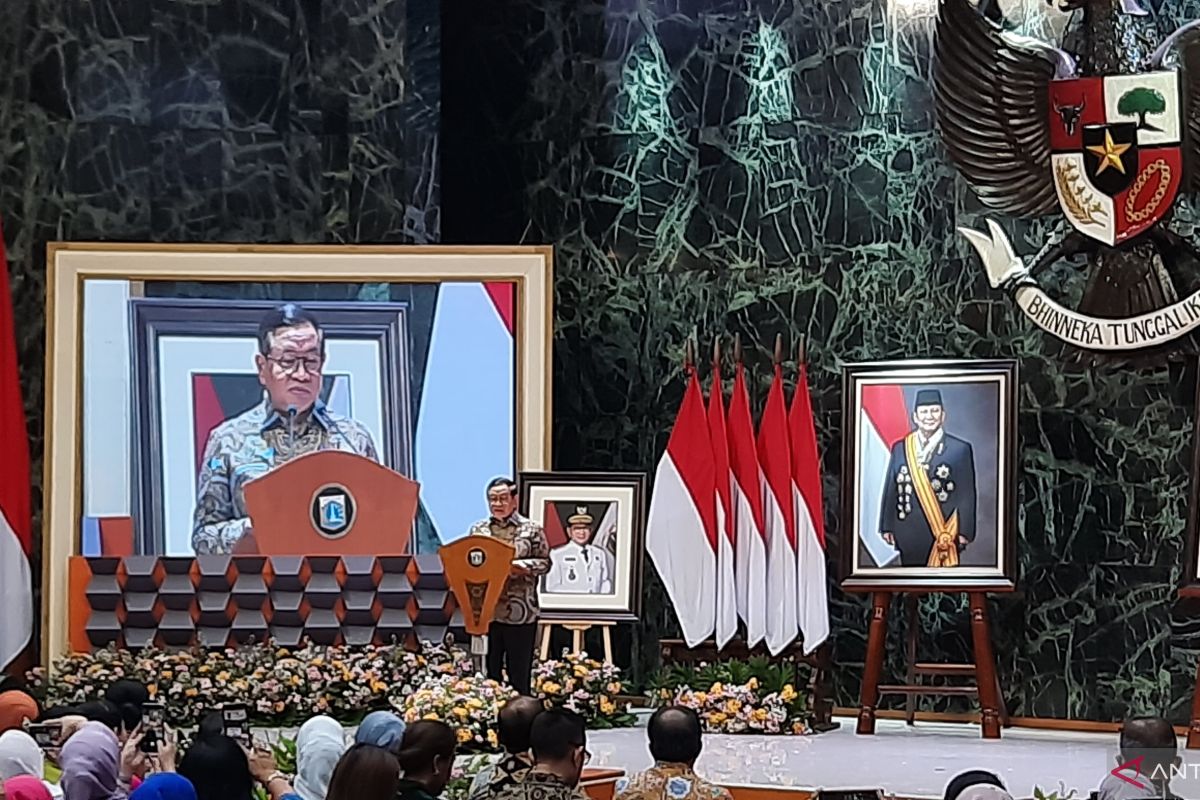
Jakarta (ANTARA) - DKI Jakarta Governor Pramono Anung stated that Generation Z must be given maximum space to support Jakarta’s advancement as an inclusive global city in accordance with Law No. 2 of 2024.
“If Jakarta wants to advance as a global, inclusive city, in line with Law No. 2 of 2024, then the role of Gen Z must be given maximum space,” he said in Jakarta on Thursday.
On that occasion, Pramono also discussed Generation Z’s perspective on the figure of Kartini and women. For them, Kartini is not merely a historical figure in kebaya but a symbol of freedom of expression and financial independence that transcends conventional boundaries.
Gen Z, Pramono continued, views emancipation as the right to choose an authentic life path, whether as a leader in the technology industry, a driver of the creative economy, or voicing social issues through social media.
“They are a generation that no longer sees gender as a barrier, but as a spectrum of strength to collaborate equally,” he said.
Pramono emphasised that Jakarta’s future lies in the hands of Generation Z. “If this nation wants to advance, then the way they view and think is what we give space to, we accommodate for our collective progress,” he said.
Referring to the results of the 2025 Inter-Census Population Survey (Supas) for DKI Jakarta Province, the percentage of Generation Z (born 1997-2012) in the capital is 24.12%, ranking second after the millennial generation (1981-1996) at 24.82%.
These two generations together cover nearly half of Jakarta’s population, indicating the strong dominance of the working-age population in the current structure.
Meanwhile, the other four generations contribute 51.06%, consisting of Generation X (born 1965-1980) at 21.85%, Post Generation Z (born 2013 and onwards) at 17.78%, Baby Boomer Generation (born 1946-1964) at 10.72%, and Pre-Boomer (born before 1945) at 0.71%.