
GBK Complex Manager Affirms Hotel Sultan Land Belongs to State
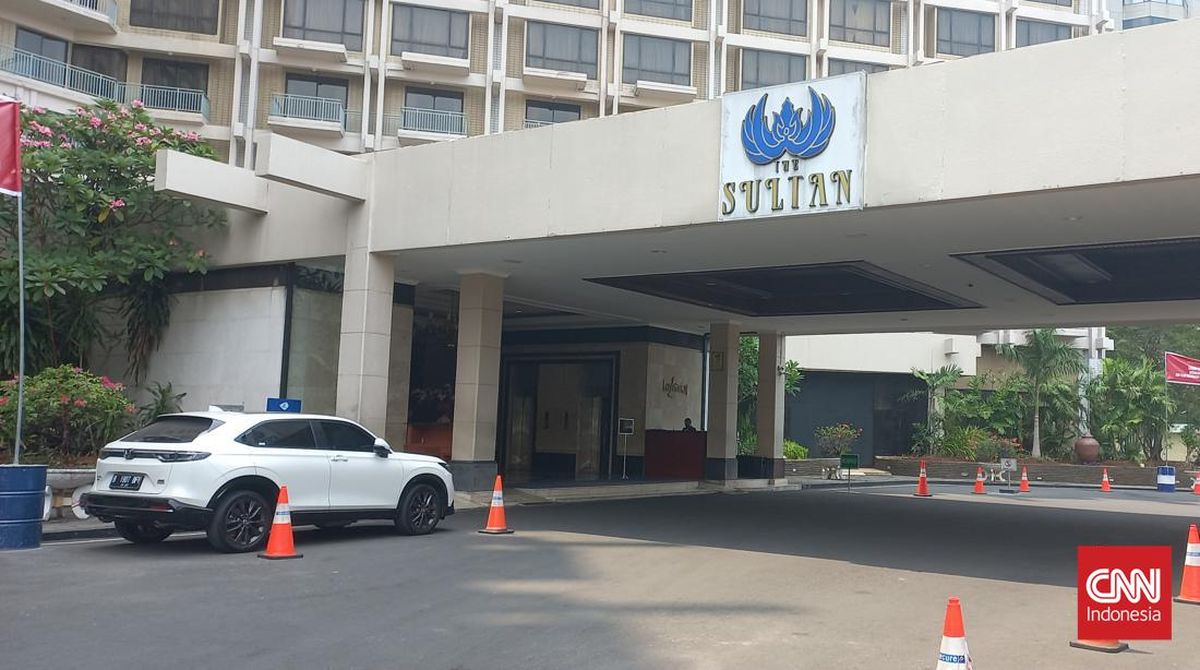
The Centre for Management of the Gelora Bung Karno Complex (PPKGBK) has affirmed that the Hotel Sultan land in Central Jakarta is state-owned property, and execution proceedings will continue.
PPKGBK Executive Director Rakhmadi Afif Kusumo made this statement in response to media questions concerning resistance from PT Indobuildco amid the land execution process.
“Our position is that this has been transferred as state property (Barang Milik Negara), and the property now belongs to the state. Our commitment, following direction from the Coordinating Ministry for Political, Legal and Security Affairs, is to secure this state property and optimise it,” Rakhmadi told journalists on Monday (16 March).
Rakhmadi cited the Hotel Sultan land execution process as being based on a court ruling that is immediately executable (uitvoerbaar bij voorraad) under civil law.
Nevertheless, Rakhmadi stated he was open to resistance and legal remedies currently being pursued by PT Indobuildco.
“As for resistance, we certainly permit it, but the current final court decision must also be respected and we must implement it promptly,” he said.
In the same forum, the legal counsel for the Coordinating Ministry for Political, Legal and Security Affairs and PPKGBK, Chandra Hamzah, also affirmed that the execution was based on an immediate ruling.
Consequently, Chandra stated that execution could proceed even though PT Indobuildco is currently pursuing four separate lawsuits.
“The Central Jakarta District Court ruling is immediate and immediately executable. Therefore, it can be implemented even if there are appeals, cassation, or resistance. It can still be implemented,” he said.
Previously, PT Indobuildco’s legal team lodged complaints with the Judicial Commission against the Chief Judge of the Central Jakarta District Court and the Chief Judge of the Jakarta High Court following the planned execution of Hotel Sultan.
“Today, we filed a complaint with the Judicial Commission regarding Hotel Sultan. Those complained against are the Chief Judge of the Central Jakarta District Court and the Chief Judge of the Jakarta High Court,” said PT Indobuildco’s legal counsel, Hamdan Zoelva, in his statement on Thursday (12 March).
Hamdan stated that his side believed there was discriminatory treatment by the court against Indobuildco compared with the Coordinating Ministry for Political, Legal and Security Affairs and PPKGBK regarding execution of the ruling.
The Hotel Sultan dispute is still being processed at the appeal stage and could potentially proceed to cassation. However, the court reportedly continues to process execution steps at the request of the plaintiff, namely the Coordinating Ministry for Political, Legal and Security Affairs.
“This clearly demonstrates discriminatory treatment before the law,” said Hamdan.
Hamdan explained that well before ruling number 208/Pdt.G/2025/PN.Jkt.Pst was issued, there had been an interim ruling number 667/Pdt.G/2023/PN.Jkt.Pst dated 24 January 2024, which ordered the Coordinating Ministry and PPKGBK to cease all activities in the Hotel Sultan area pending a final judgment.
However, this interim ruling was not implemented for months. Even on 29 October 2024, the Central Jakarta District Court refused to implement the interim ruling, citing lack of permission from the Jakarta High Court Chief.
By contrast, when the Coordinating Ministry and PPKGBK applied for execution of the immediate ruling number 208/Pdt.G/2025/PN.Jkt.Pst dated 28 November 2025, permission was granted swiftly, resulting in an execution decree and first notice of execution (aanmaning) on 26 January 2026.
Subsequently, a second notice of execution was scheduled for 9 February 2026 and a site inspection (konstatering) scheduled for 16 March.
“There is an immediate ruling from the court that is currently being processed, which we are appealing, currently under appeal examination, and will subsequently proceed to cassation,” said Hamdan.
“But the district court is forcing execution at the request of the plaintiff, namely the Ministry, despite the case being contested at the appeal and cassation stages,” he added.