
Gaza Aggression and the Changing Middle East Security Architecture
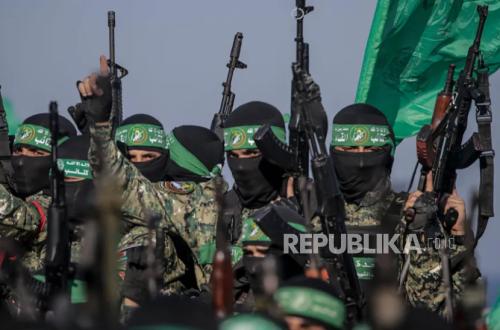
In classical military tradition, an adage remains relevant today: “Amateurs discuss tactics, professionals discuss logistics, and generals discuss grand strategy.” Therefore, the Gaza war cannot be understood solely by the number of rockets fired, territories seized, or figures eliminated. Modern warfare must be assessed by a nation’s ability to maintain political continuity, economic stability during war, international legitimacy, public morale, and long-term strategic resilience. From this perspective, Israel currently faces a far more complex situation than a conventional military conflict. While the country retains technological superiority, Western support, and high combat capacity, it is also exhibiting classic signs of strategic overstretch—where military ambitions exceed the nation’s political, economic, social, and psychological capacity. What began as an operation to restore deterrence after the 7 October 2023 attacks has evolved into a protracted conflict with multidimensional consequences. Pressures arise not only from Hamas or Hezbollah but also from domestic political fragmentation, wartime economic strain, international delegitimization, and escalating regional uncertainty. In strategic terms, this is the most dangerous phase for a nation: when external threats meet internal exhaustion.
Prolonged wars always test a nation’s political resilience. In Israel’s case, this test is increasingly evident. The governing coalition continues to face turbulence. Diverging approaches between hardline right-wing factions, national security groups, and moderate opposition reveal Israel lacks strategic consensus on how to end the war. The inclusion of Benny Gantz and Gadi Eisenkot into the war cabinet was expected to foster national unity. However, over time, fundamental differences have emerged on operational objectives, hostage handling, and strategies toward Iran and Hezbollah. From a military perspective, this is highly dangerous. War requires not just weapons but political unity. Clausewitz described a nation’s centre of gravity as often resting in national leadership cohesion. When this centre begins to fracture, strategic effectiveness gradually weakens. Israel has not yet lost its combat capability, but the national consensus on the war’s direction is eroding.
Israel is renowned as one of the world’s most modern military powers. Yet history shows high technology does not automatically guarantee political victory. Prolonged warfare has placed immense pressure on Israel’s domestic economy. Long-term military reserve mobilisation has affected national productivity. Investment sectors have weakened due to security uncertainty. Regional trade routes are disrupted by Red Sea escalations and threats to the Strait of Hormuz. Simultaneously, war costs are rising exponentially. Multi-front operations from Gaza to Lebanon, alongside direct Iranian threats, demand unprecedented logistical and air defence readiness. While Iron Dome and advanced defence systems remain effective in many scenarios, modern warfare is not decided solely by missile interception capabilities. The critical factor is sustaining long-term national stamina. Sun Tzu warned thousands of years ago that no nation truly benefits from protracted war. Napoleon emphasised logistics as the foundation of victory. In this context, Israel’s greatest challenge is no longer destroying the enemy but preserving its own national resilience.
Israel’s primary post-7 October military objectives were clear: destroy Hamas’s capabilities, rescue hostages, and restore regional deterrence. However, after prolonged conflict, on-the-ground realities show these goals remain unfulfilled. Hamas retains survival capacity. The northern front remains active through Hezbollah pressure. Iranian threats have intensified as a dominant regional factor. Meanwhile, prolonged security disruptions in northern Israel have forced large-scale civilian displacement. On the other hand, Israel’s international legitimacy faces severe pressure due to high civilian casualties and the humanitarian crisis in Gaza. In modern warfare, international legitimacy is a critical component of strategic power. Nations losing legitimacy gradually lose diplomatic space. This is the paradox of modern warfare: a country can win many battles yet fail to achieve its core political objectives. In military strategy terms, this is known as strategic attrition—tactical victories that erode one’s own strategic position.
No prolonged war can be won without public moral support. In Israel, socio-political pressures are increasingly visible through hostage families’ protests, domestic political polarisation, and rising tensions between religious, secular, and Arab-Israeli communities. This situation is compounded by ongoing legal proceedings against Benjamin Netanyahu. Consequently, parts of the public are beginning to question whether the war is being waged solely in the national interest.