
Gatot Nurmantyo's Statements Deemed Tendentious — Here's Why
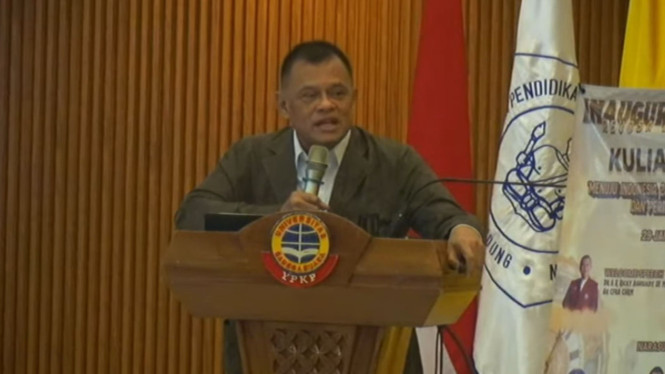
Jakarta, VIVA – Secretary General of the Indonesian Anti-Corruption Committee (KAKI) Anshor Mumin has called on Defence Minister Sjafrie Sjamsoeddin to counsel figures such as former TNI Commander General (Ret.) Gatot Nurmantyo, Sunarko, and Said Didu.
Anshor suspects these figures are exploiting the police reform agenda to advocate for changing the position of the National Police (Polri) so that it would no longer report directly to the President but instead fall under a ministry.
According to Anshor, Defence Minister Sjafrie is well placed to counsel Gatot Nurmantyo, given the networks believed to exist between them.
“Figures such as Gatot Nurmantyo, Sunarko, and Said Didu, who have strong networks with Defence Minister Sjafrie Sjamsoeddin and are calling for the police to no longer report directly to the President — they fundamentally misunderstand and have forgotten the mandate of the 1998 Reform movement, and are tendentiously seeking to disrupt national politics,” Anshor Mumin told reporters, as quoted on Monday, 16 February 2026.
Anshor expressed hope that Defence Minister Sjafrie’s closeness to these figures could be leveraged to advise them against destabilising national politics. He warned that such moves could provoke resistance from pro-democracy citizens and student movements against the government of President Prabowo Subianto.
“This would ultimately impact the business and investment climate in Indonesia and obscure the major anti-corruption programme targeting the trillions in corruption carried out by Riza Chalid and his associates,” Anshor stressed.
Anshor urged the public not to be provoked or trapped by narratives constructed by groups seeking to create chaos. He maintained that reform is not an agenda to alter the state structure regarding the police’s position under the President, but rather a political decision to restore public oversight of the police.
“Within the police reform agenda, there appear to be stowaways seeking to exploit the political uncertainty in ways that could endanger the existence of the state, the national ideology, and the existence of the Unitary State of the Republic of Indonesia itself,” he asserted.
Anshor also emphasised that the primary objective of police reform is to transform the institution into one that is more professional, accountable, transparent, and responsive to the needs of society whilst respecting human rights. Police reform is not a partisan agenda serving the political interests of any particular party, including altering the police’s institutional position.
“This reform aims to restore public trust, eradicate the culture of impunity and corruption, and position the police as a humane institution that does not rely on coercive approaches,” Anshor concluded.