
'Gates of Hell' Fire Dims After 50 Years: What Does It Signify?
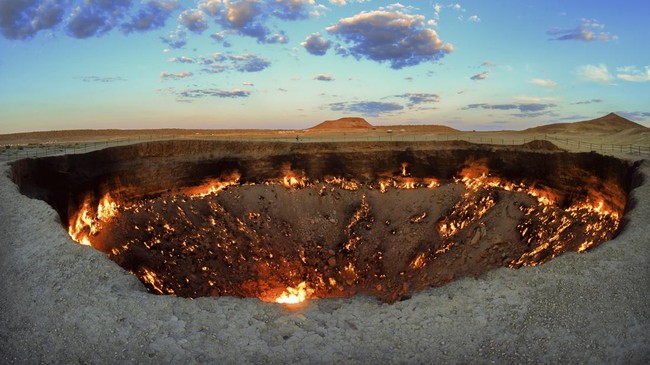
Turkmenistan has a blaze that has been burning for more than 50 years. However, the site known as the Gates of Hell has reportedly begun to dim in recent years. The fire originates from the Darvaza gas crater in the Karakum Desert. A Soviet drilling operation into a natural gas pocket while searching for oil in 1971 accidentally caused this phenomenon. The Soviets decided to burn the gas to quickly deplete it and prevent the release of toxic fumes into the atmosphere. However, this was a mistake; the ground collapsed, creating a crater 70.1 metres wide and 20.1 metres deep. After decades of never extinguishing and becoming a tourist attraction, observers have found the Gates of Hell beginning to dim. This finding was revealed by Turkmenistan at an international conference in 2025. “The reduction (in burning) is nearly three times,” said Irina Luryeva, Director of Turkmengaz, the state-owned energy company, quoted from IFL Science on Wednesday (6/5/2026). The dimming of the fire has also been confirmed by independent satellite data from Capterio, a British company specialising in gas flaring solutions. The Turkmenistan government attributes the dimming to the drilling of two wells near the crater in 2024, which extracted natural gas from the area. In contrast, Capterio states that the fire had begun to dim before the wells were created, though the cause remains unclear. A New York Times report suggests that the chances of the fire going out completely are very small, even as it dims. Methane, the source of the fire, remains available in large quantities within the crater. Data from the non-profit organisation Carbon Mapper notes that between 2022 and 2025, approximately 1,300 kg of methane per hour was emitted from the crater. This increased to 1,960 kg per hour in October 2025. The gas produced still contributes to climate change, although in smaller amounts than large oil and gas fields. However, according to IFL Science, the methane is converted to carbon dioxide within the crater, making it slightly less harmful to the environment.