
Gas Prices Soar Alarmingly as Europe and Asia Face Supply Crisis
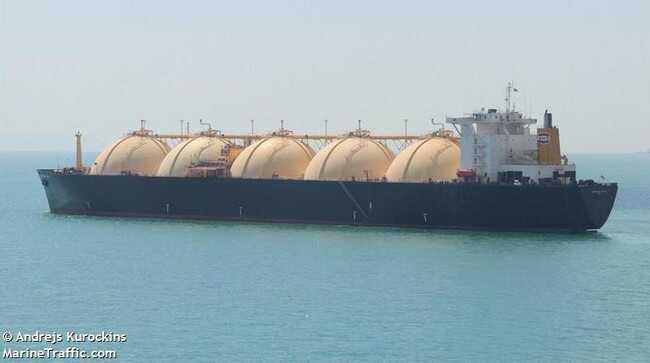
Jakarta, CNBC Indonesia – The war in the Middle East involving Iran with the United States and Israel has spilled into global gas markets. The price surge was triggered by disruptions to supply from the Strait of Hormuz, which Iran has closed. The vital shipping lane connecting Oman and Iran handles around one-fifth of global LNG trade, and is now at risk of disruption as the conflict involving Iran escalates. Experts warn this could damage Europe’s economic growth and affect several Asian countries.
Market Surge
The Dutch Title Transfer Facility (TTF), the European benchmark for gas prices, jumped 35% on Tuesday, 3 March 2026, to €60 per MWh (US$69.64). Across the week, the price had risen about 76%. Similar gains were seen in Asia, with the Northeast Asia LNG benchmark, the Japan-Korea Marker (JKM), covering shipments to Japan, Korea, China, and Taiwan, reaching the highest level in a year at around €43 per MWh (US$49.83). Gas prices in the United Kingdom were also reported as very high.
Main Trigger: Production Halt and Threat of Blockade
Qatar, one of the world’s largest LNG producers, halted production on Monday following Iranian drone strikes on Ras Laffan and Mesaieed in the industrial sector. Goldman Sachs estimates the short-term pause in production would cut global LNG supply by about 19%. Tensions intensified after a senior IRGC official claimed to have closed the Strait of Hormuz and threatened to attack any ships attempting to pass; however, Fox News reported that the route remained open according to the United States.
Supply Crisis Threat
Europe and much of Asia appear far more vulnerable to price shocks in gas than the United States, which benefits from shale gas and domestic LNG production. Chris Wheaton, an oil and gas analyst at Stifel, said about 25% of Europe’s total gas supply comes from LNG. With 20% of global LNG production passing through the Strait of Hormuz, prolonged disruption could trigger a supply crisis comparable to the shocks of 2022 following Russia’s invasion of Ukraine.
“We are far more worried about European gas prices than oil,” Wheaton said.
Meanwhile, the situation benefits alternative producers. Shares of energy giant Equinor rose more than 2% on Tuesday, hitting a 52-week high and continuing an 8% rise in the previous session.
Goldman Sachs Forecast
Goldman Sachs warned that if gas flows through the Strait of Hormuz were halted for a month, European gas (TTF) and Asian gas (JKM) could surge to €74 per MWh (US$85.80). The bank warned this could trigger an extreme drop in demand similar to the European energy crisis in 2022.
Responding to the situation, Goldman revised its April price projection for gas higher from €36 to €55 per MWh (US$63.75).
Asia’s Vulnerability
The Asian market is expected to face serious supply disruptions due to heavy reliance on Middle Eastern LNG. Some examples:
India: 58% of LNG imports come from the Middle East.
Singapore: 27% of LNG imports from the region.
China: About 26.6% of LNG supply comes from there.
Most at Risk of Stagflation
Elias Haddad of BBH said prolonged conflicts disrupting energy shipments raise the risk of stagflation (stagnant economy with high inflation). The most vulnerable include importers with limited fiscal space, such as Japan, India, Turkey, and Malaysia, while the safest exporters include Norway, Canada, and Mexico.