
Gas Pipeline and Oil and Gas Working Area Auctions: Government Strategy to Ramp Up Oil and Gas Production
Indonesia is accelerating efforts to boost oil and gas production through strategic moves, including the auctioning of new oil and gas working areas (WK) and the expediting of gas-pipeline infrastructure. The Ministry of Energy and Mineral Resources (ESDM) said that, recently, the government auctioned 10 WKs to attract investors and to ensure future energy supply. This step forms part of an effort to sustain gas production, given that discovered and produced wells naturally decline over time.
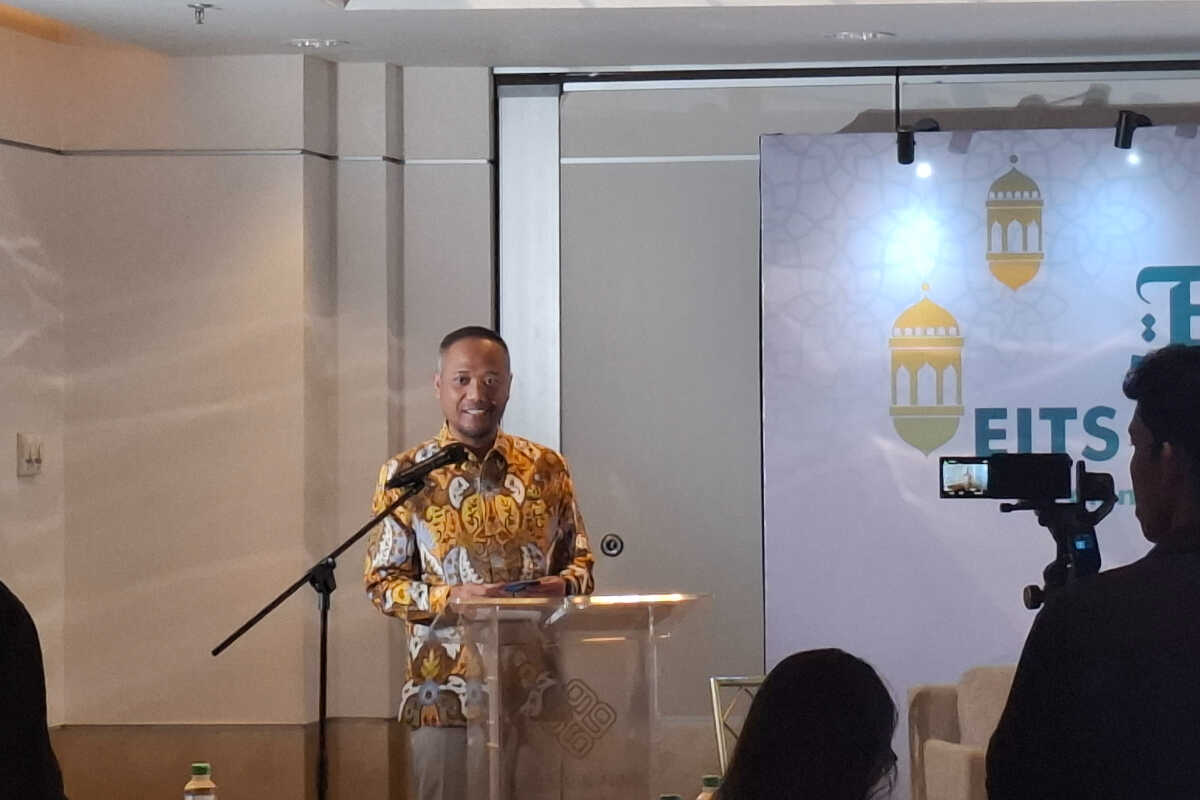
“This year the government even targets more than 100 oil and gas WKs to be auctioned gradually,” said Agung Kuswandono, Director of Planning and Development of Gas Infrastructure, at a talk during EITS Chat Ahead of Ramadan 2026: The Big Insurance Business Potential Behind Increasing Gas Production, Jakarta, 5 March.
The move aligns with the government’s lifting target of 900,000 barrels per day (bpd) by 2029. Although acknowledging the target is not easy, current rough calculations suggest that around 800,000 bpd is realistic in the near term, but reaching 900,000 bpd will require extra effort. “To reach 900,000 barrels per day it still requires extra effort,” he said.
Besides opening new WKs, the government is also placing heavy emphasis on energy accessibility and infrastructure. One example is the construction of a gas pipeline about 300 kilometres long from Cirebon to Semarang under the Cisepm project. This infrastructure is designed to connect gas supply sources with energy demand centres, especially in Java.
Before this gas pipeline existed, Agung noted that gas production in East Java was actually quite high. However, due to limited demand and transmission infrastructure, gas field development did not progress optimally. In 2022 there was even an oversupply of around 100 million standard cubic feet per day (MMSCFD) in East Java that could not be channelled to other regions.
Given this situation, the government pushed for expedited infrastructure development with state funding so that available gas could be distributed to areas in need. “The gas pipeline is expected to increase gas absorption from East Java while supporting the national lifting of gas,” he said.
Infrastructure availability also provides certainty for investors. Gas demand in West Java, for example, is currently very high but supply is limited. This condition has compelled some industrial needs to be met through relatively expensive LNG imports.
With the gas pipeline network, energy prices can become more competitive, spurring industrial growth and ultimately increasing state revenue.
Infrastructure development is also crucial to support the development of new oil and gas projects, such as in the Andaman region. The gas field in that area is estimated to have a production capacity of up to around 300 million standard cubic feet per day. However, without transmission infrastructure, only about 160 million standard cubic feet per day can be absorbed by markets in Aceh and Sumatra.
“Therefore the government is pushing for accelerated construction of the pipeline network so that all production potential can be utilised to the maximum,” he said.
Certainty in infrastructure development is also a key consideration for investors before making final investment decisions (FID). Some projects have already received approvals for development plans (Plan of Development or POD) but are still awaiting clarity on the pipeline network that will transport gas to the market.
Without infrastructure certainty, investors could shift investments to other regions that are better prepared. But as pipeline construction plans begin to move ahead, investor interest in Indonesian oil and gas projects has risen again.
This trend is positive for efforts to improve national oil and gas production. The current national oil and gas production is estimated to be around 550,000 bpd, vs. a target of around 603,000 bpd.