
Garuda Indonesia Suffers Internal Bleeding Despite Capital Injection
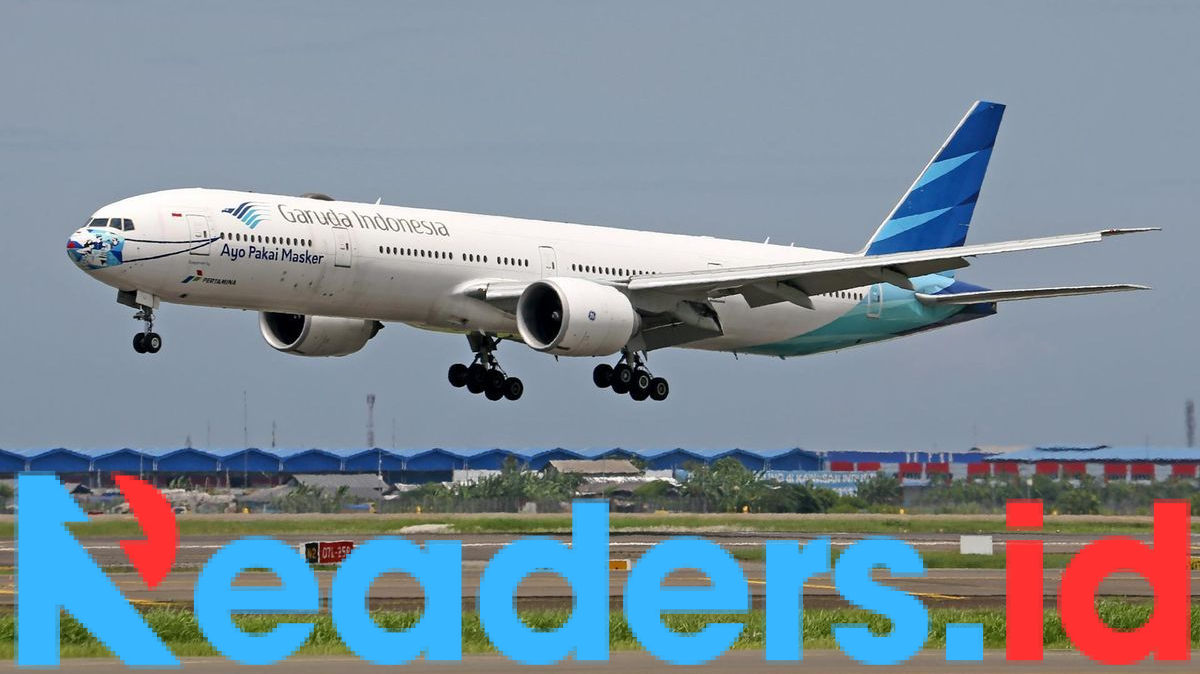
A contrasting scene unfolds in Garuda Indonesia’s hangar as 2025 draws to a close. On one hand, the airline receives a massive capital injection, yet on the other, its losses are surging.
Ironically, Garuda Indonesia received a capital injection of Rp 23.7 trillion (approximately $1.4 billion) from the Badan Pengelola Investasi Daya Anagata Nusantara (Danantara). However, its net loss ballooned 4.5 times to $322.4 million, while business revenue shrank to $3.21 billion.
This condition indicates underlying problems within the company. The national pride airline is experiencing “internal bleeding” that cannot be easily cured merely by additional capital.
This phenomenon is described as a situation where the company is trapped in a large fixed cost structure but fails to convert it into profitable production volume. Theoretically, Garuda is suffering from a “Scale Penalty”.
The company has assets and an organisation designed for large-scale operations. However, available seat capacity has plummeted sharply due to fleet technical issues. As a result, incoming revenue is insufficient to cover operational burdens.
The 5.9 percent decline in business revenue serves as an alarm for the sustainability of the full-service airline business in Indonesia. The core passenger flight business lost $228 million in revenue momentum over one fiscal year.
This decline occurs as the domestic aviation market recovers post-pandemic. It means Garuda Indonesia is losing competitiveness against rivals.
Rescue strategies to date have seemed focused on improving the accounting balance sheet. Meanwhile, fundamental issues in the company’s cash-generating engine are left to rust in the maintenance hangar.
Indicators of late payment penalties surged up to 700 percent, from $1.4 million to $11.1 million. This is a signal of daily cash flow management dysfunction.
Funds from Danantara failed to resolve payment backlogs to strategic vendors, which hinder aircraft repairs and create a cycle of operational failures.
Without fundamental changes, subsequent capital injections will only serve as temporary solutions to increasingly large financial problems.
The Danantara capital injection at the end of 2025 is a cosmetic effort to avoid delisting from the stock exchange, not an aggressive expansion strategy.
The company’s equity did turn positive to $91.9 million, ending a five-year capital deficit. However, this improvement is merely figures on paper that do not reflect true operational health.
The largest portion of the funds, 64 percent or about Rp 15 trillion, was allocated to rescue Citilink Indonesia. This allocation was not for adding new aircraft but to settle fuel cost arrears to Pertamina amounting to $225 million.
Most of the Danantara rescue funds are merely a transfer of bags from one state entity to another to clean up past debts.
Garuda Indonesia only received Rp 8.7 trillion for fleet maintenance, which is insufficient to reactivate 43 grounded aircraft.
The stalled fleet burdens the company. Aircraft that do not fly generate no revenue, yet leasing and maintenance costs continue.
As of the end of 2025, 40 percent of the Garuda Group fleet is not airworthy due to awaiting delayed heavy maintenance.
This capacity shortage forces Garuda to cede market share to Lion Air Group, which now dominates the domestic market. Garuda is left with about 23.5 percent.
Losing market share means losing bargaining position that is hard to reclaim in an industry sensitive to flight schedule frequency.
Failure to reactivate the fleet caused maintenance costs to surge 23.17 percent to $661.36 million. This is the expensive cost of asset recovery due to failed preventive maintenance management.
In comparison, Thai Airways (THAI) recorded a net profit of THB 30.94 billion in the same period. The key to Thai Airways’ success is simplifying aircraft types and focusing on premium routes.
Garuda Indonesia remains trapped in slow fleet maintenance bureaucracy and inflexible cost structures.
Scale Penalty and Operational Dysfunction
Analysis shows that the touted efficiency by management is merely a statistical illusion. Total business expenses only fell slightly by 0.17 percent, far below the revenue decline.
Management failed to implement cost cuts proportional to the business shrinkage. Financial burdens instead increased 9.56 percent to $525.7 million.
Past debt restructuring still leaves suffocating interest obligations that choke the company’s cash. Garuda works hard just to pay debt interest without being able to drive growth.
This inefficiency is exacerbated by global supply chain disruptions that inflate spare parts costs. Other airlines in Southeast Asia have mitigated these risks with more agile operational management.
Garuda is trapped in a rigid business model. As a five-star airline, high service standards demand large operational costs, yet passenger yield is declining.
Without dynamic pricing strategy adjustments, Garuda will continue to provide luxury services at costs subsidised by shareholder losses.
The grounded fleet not only harms financially but also damages customer trust. A 10.5 percent drop in passenger numbers to 21.2 million is evidence that the public is seeking more reliable alternative airlines.
In the aviation industry, trust is the primary currency. Disappointed customers due to route cancellations or schedule limitations will be hard to win back.
Garuda