
Garuda deploys 1,085 aircraft crew for 2026 Hajj flights
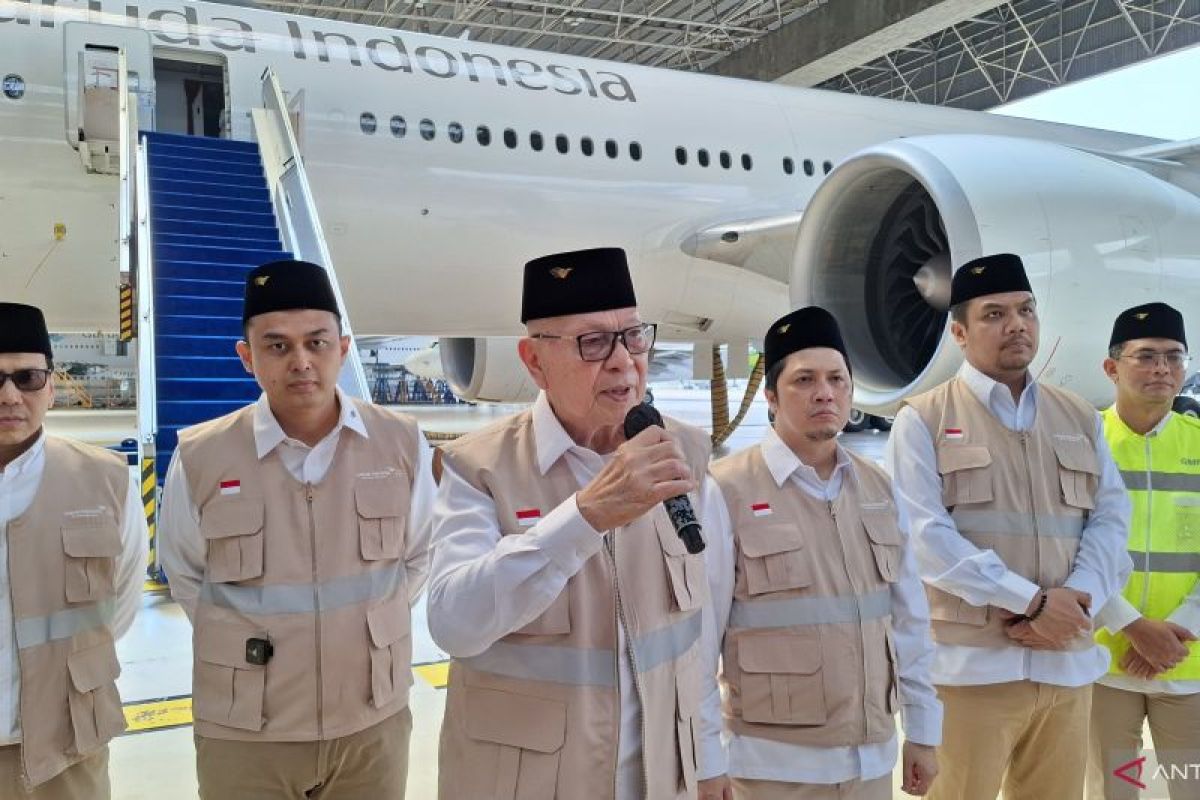
To support this year’s Hajj operations, there are 15 aircraft consisting of 8 Garuda Indonesia-owned planes and 7 leased aircraft, covering 6 Boeing 777-300ER, 6 Airbus A330-300, and 3 Airbus A330-900neo.
Tangerang (ANTARA) - National carrier Garuda Indonesia is deploying at least 1,085 aircraft crew for services to prospective Hajj pilgrims for 1447 Hijriah, which will commence on 21 April 2026.
Garuda Indonesia’s President Director, Glenny Kairupan, in Tangerang on Wednesday, stated that the deployment of hundreds of pilots and cabin crew is an enhancement of services for prospective Hajj pilgrims to and from the Holy Land.
“We are deploying a total of 15 aircraft. The crew or pilots number 300 and 700 cabin crew,” Glenny said.
He explained that of the 1,085 deployed aircraft crew, 731 are cabin crew and 354 are cockpit crew, plus 139 Hajj ground staff who will support the smooth mobilisation of pilgrims at all embarkation points.
“The departure of pilgrims will be carried out in stages from 21 April to 21 May 2026, with the departure phase to Madinah from 21 April to 6 May 2026 and to Jeddah from 7 to 21 May 2026. Meanwhile, the pilgrim return phase is scheduled from 1 to 30 June 2026,” he clarified.
The inaugural flight will begin with the departure of the first cluster from the Yogyakarta embarkation on Tuesday (21/4) at 23:40 WIB with flight number GA 6501 using an Airbus A330-300 fleet.
In this regard, Garuda Indonesia ensures comprehensive operational readiness, emphasising aviation safety aspects, in line with the increasing proportion of elderly Hajj pilgrims this year.
Glenny stated that all the fleets are of competitive-age aircraft generations optimised for long-haul flights and ensured to be in prime condition through layered maintenance procedures via the Aircraft Health Program, including fulfilment of certifications from Saudi Arabian aviation authorities as a primary prerequisite for Hajj operations.
“We respond to this trust by strengthening end-to-end operational readiness, ensuring all aspects of safety, fleet reliability, and service quality run optimally at every point of the pilgrims’ journey,” he said.
Glenny added that this year’s service enhancements are focused on meeting the needs of elderly pilgrims, numbering around 18,000 or about 18% of the total pilgrims served, as well as pilgrims with special needs.
As part of these service enhancements, they are preparing various supporting facilities, including the provision of wheelchairs at every embarkation, ambulifts at the Jakarta and Solo embarkations, pilgrim buses with toilet facilities, the use of passenger boarding bridges at several embarkations, special baggage handling services, and buggy car facilities at King Abdulaziz International Airport.