
Gappri: Ban on additives in tobacco products threatens IHT
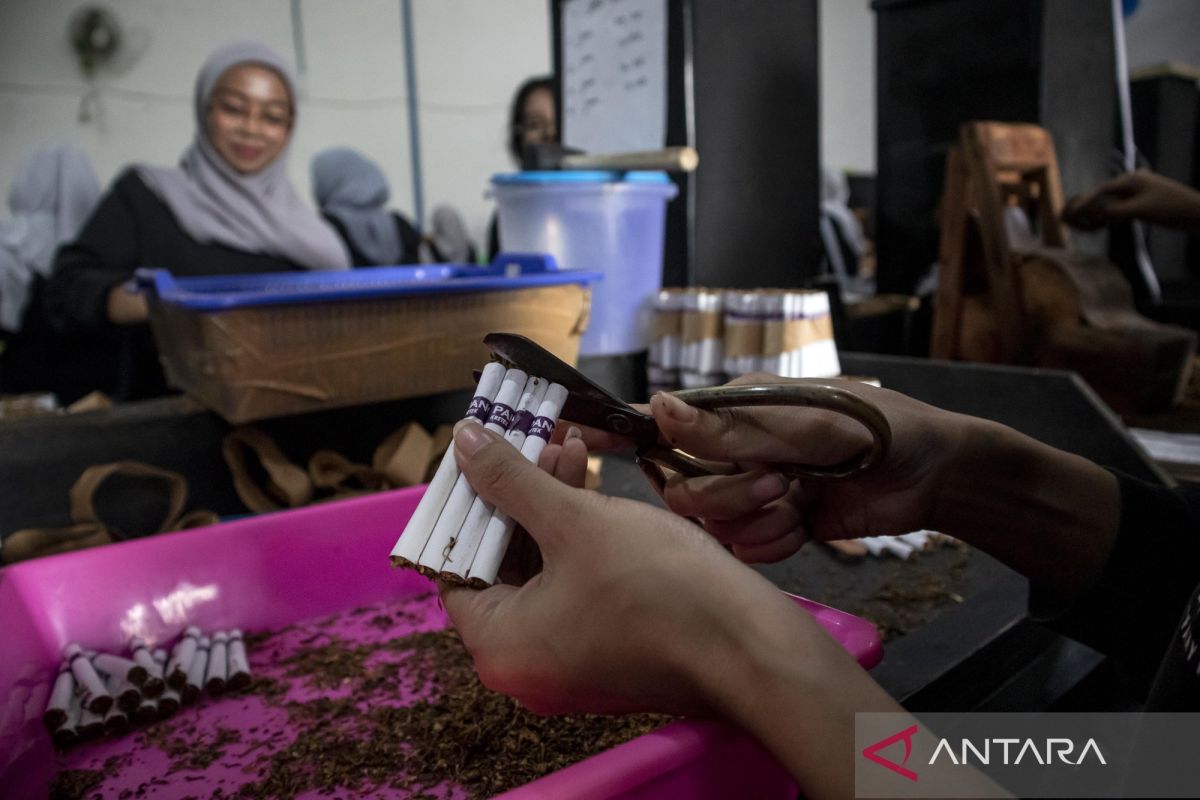
Jakarta (ANTARA) - The Indonesian Combined Cigarette Factory Associations (Gappri) has expressed rejection of the government’s plan to regulate limits on nicotine and tar levels, as well as a ban on additives in tobacco products.
Gappri’s General Chairman, Henry Najoan, stated in Jakarta on Thursday that the proposed policy does not consider the characteristics of local raw materials, potentially endangering the continuity of the national Tobacco Products Industry (IHT) supply chain.
He emphasised that this rejection is based on field facts regarding the uniqueness of raw materials as a distinctive feature of kretek cigarettes, which no other country possesses.
“The main raw materials for our products are domestic tobacco and cloves, such as Temanggung tobacco, which naturally has relatively high nicotine levels,” he said in his statement.
As an illustration, he continued, on average, one gram of Temanggung tobacco contains 30 mg to 80 mg of nicotine. If the set limits are far below that figure, we will face great difficulties in meeting those standards.
Previously, the Coordinating Ministry for Human Development and Culture (Kemenko PMK) intended to regulate limits on tar and nicotine levels, while the Ministry of Health (Kemenkes) is preparing a Draft Ministerial Decree on Prohibited Additives in Tobacco Products and Electronic Cigarettes.
Henry stated that the regulatory plan would also threaten the clove commodity. As the main component of kretek, cloves contribute significantly to tar levels, so limiting tar levels is equivalent to reducing the use of cloves in cigarettes.
“This policy is seen as damaging the distinctive taste of kretek as a form of local wisdom that has long been accepted by the market, while also destroying the livelihoods of thousands of clove farmers,” he said.
He mentioned that Indonesia already has standardisation for measuring nicotine and tar levels through the Indonesian National Standard (SNI) set by the National Standardisation Agency (BSN).
The formulation of the SNI, he continued, even involved all stakeholders, including the government, producers, consumers, and experts, thus having strong legitimacy.
“SNI 8676:2019 on Kretek Cigarettes has accommodated the characteristics of local cloves and tobacco. If the new limits are stricter than the Kretek SNI, then the existing national standard becomes irrelevant. That standard should rightfully be used as the reference,” he said.
Gappri also highlighted the draft regulation that prohibits the use of almost all additives, including those categorised as food grade.
According to him, additives have so far been used to enhance the taste and product character; if this ban is implemented, the legal cigarette industry will not be able to meet the new requirements, potentially halting its operations. On the other hand, this situation could trigger an increase in the circulation of illegal cigarettes.
Henry Najoan also reminded that Government Regulation No. 81 of 1999 on Securing Cigarettes for Health states that business actors are required to produce tobacco with a maximum nicotine level of 1.5 mg and tar of 20 mg per gram.
“That regulation has proven impossible to implement by national kretek industry players because it conflicts with real conditions in society,” said Henry Najoan.
Therefore, Gappri hopes that the government will be more prudent in formulating policies, especially amid uncertain global conditions due to the unresolved Iran-America war, which impacts the continuity of the domestic industry, including the national kretek industry.