
GAPKI: Palm Oil Rejuvenation Can Double Production
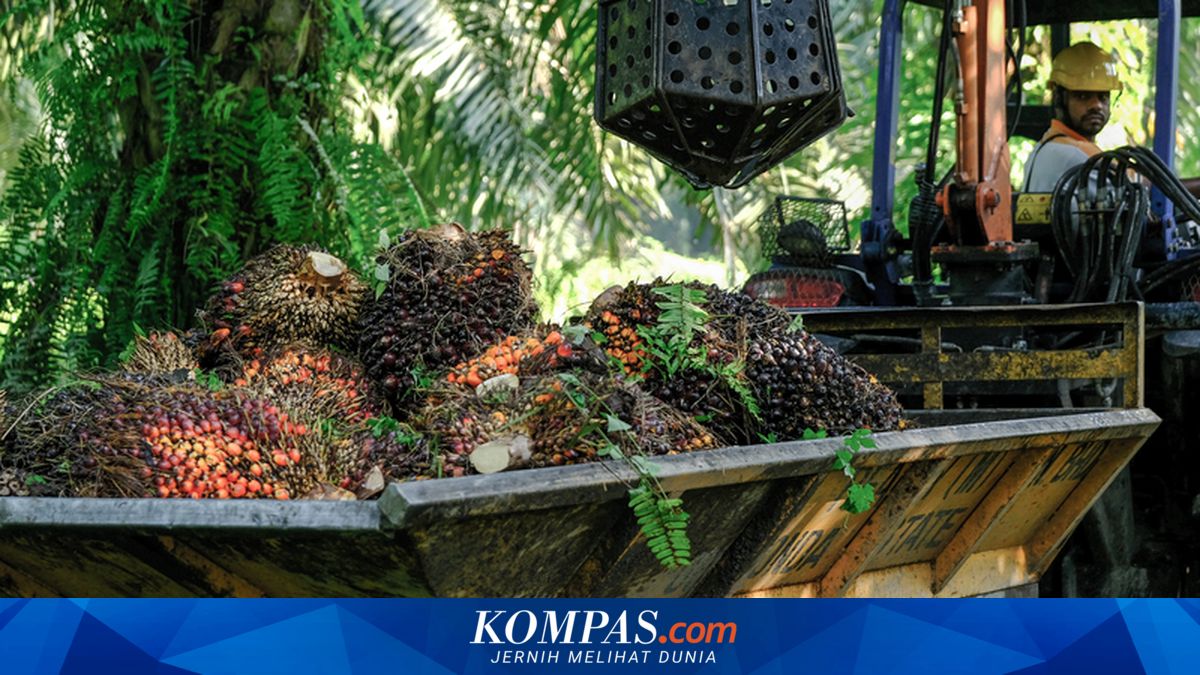
JAKARTA — The Indonesian Palm Oil Entrepreneurs Association (GAPKI) has stated that rejuvenation or replanting of palm oil trees can increase productivity two-fold.
GAPKI Chairman Eddy Martono said that each hectare of plantation that has undergone replanting can yield 20 tonnes of fresh fruit bunches (TBS) per year.
“From just 10 tonnes of TBS per hectare per year that we have now, or even less, it can increase to 20 tonnes, which is a doubling,” said Eddy when met at the Ministry of Agriculture office in Jakarta on Wednesday (11 March 2026).
Within 2.5 years, newly planted palm trees will begin bearing fruit and will increase rapidly in subsequent years. “Perhaps after 5 years it will have increased dramatically,” Eddy said.
He stated that crude palm oil (CPO) production in 2025 increased to 51 million tonnes and reached 56 million tonnes when palm kernel oil (PKO) was included. The productivity increase resulted from replanting carried out by corporate-owned oil palm plantations.
“Our production should be considerably higher if smallholder palm oil rejuvenation (PSR) runs properly,” said Eddy.
Smallholder farmers have raised concerns about their livelihoods when palm trees are felled and replanted with new seedlings.
“Sometimes farmers are reluctant. For example, now with TBS prices at 3,000 rupiah, they do not want to cut down their plants,” said Eddy.
According to Eddy, newly planted palm oil trees can now be harvested again within 2.5 years.
GAPKI submitted this proposal to Agriculture Minister Andi Amran Sulaiman, who approved it. “So that our production can increase well beyond current levels,” Eddy explained.
“Because our demand continues to grow with the biodiesel programme. It continues to increase,” he added.
Eddy hopes the replanting programme can be made mandatory through mandatory smallholder palm oil rejuvenation, encouraging all smallholder palm oil plantations to participate.
“Particularly for smallholder palm oil, I speak of smallholder palm oil because corporate-owned palm oil automatically undergoes replanting,” said Eddy.