
G7 discusses stabilisation of global oil market due to Iran conflict
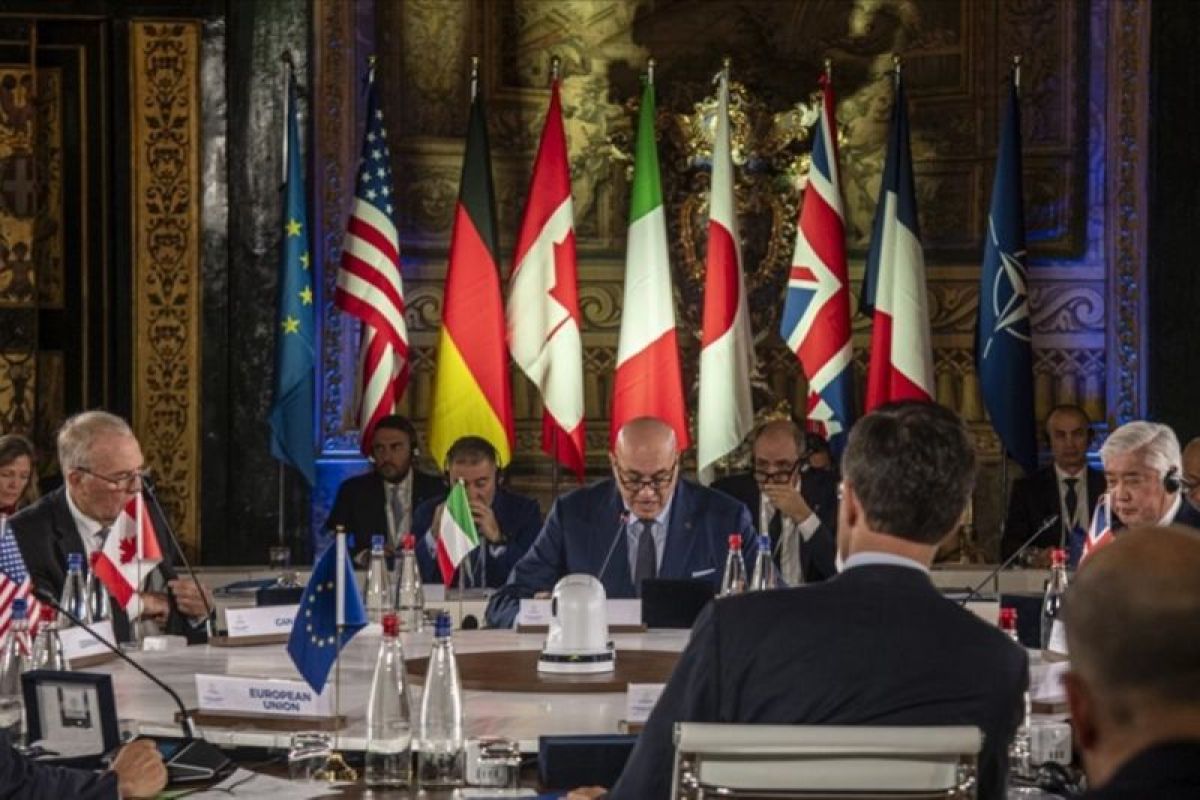
Tokyo — G7 leaders will hold an online meeting on Wednesday, 11 February, to discuss the Middle East situation following US-Israel strikes against Iran and the possibility of coordinated release of oil reserves to stabilise the global market.
The meeting takes place one day after the International Energy Agency (IEA) reportedly proposed the largest release of oil reserves in history at an emergency meeting.
This step will be the first collective response led by the IEA since 2022, when Russia launched a full-scale invasion of Ukraine.
From Japan, which depends on the Middle East for more than 90 per cent of its crude oil imports, Prime Minister Sanae Takaichi is expected to call for diplomatic efforts to defuse the situation at the meeting, according to government sources.
Ahead of the meeting, she told reporters that Japan would begin reducing its oil reserves as early as the following Monday without waiting for the decision on a collective response under the IEA.
Japan is prepared to release oil reserves equivalent to 15 days of consumption held by the private sector as well as reserves equivalent to one month of consumption held by the government, she said.
Following media reports that Iran has begun laying mines in the Strait of Hormuz, one of the world’s most important energy routes through which approximately one-fifth of global oil consumption passes, G7 leaders are expected to reaffirm close cooperation at the meeting.
G7 members are seeking to ensure crude oil supply remains stable after the Strait of Hormuz has been effectively closed since the start of US-Israel strikes against Iran in late February.
On Tuesday, the G7 nations — the United Kingdom, Canada, France, Germany, Italy, Japan and the United States, as well as the European Union — held an online meeting of energy ministers.
At that meeting, they reaffirmed their readiness to take necessary steps, including reserve releases, to support global energy supply.
According to the IEA, the largest previous coordinated oil reserve release occurred in 2022 when member states committed to releasing approximately 182 million barrels of emergency reserves in two phases.
IEA member states, including G7 nations, currently hold more than 1.2 billion barrels of public emergency oil reserves.
Meanwhile, the United States and Japan hold combined reserves of approximately 700 million barrels.
IEA members are required to maintain oil reserves equivalent to at least 90 days of net imports and to respond collectively to serious supply disruptions affecting the global oil market.