
G7 agrees to stabilise global economy amid US-Iran war
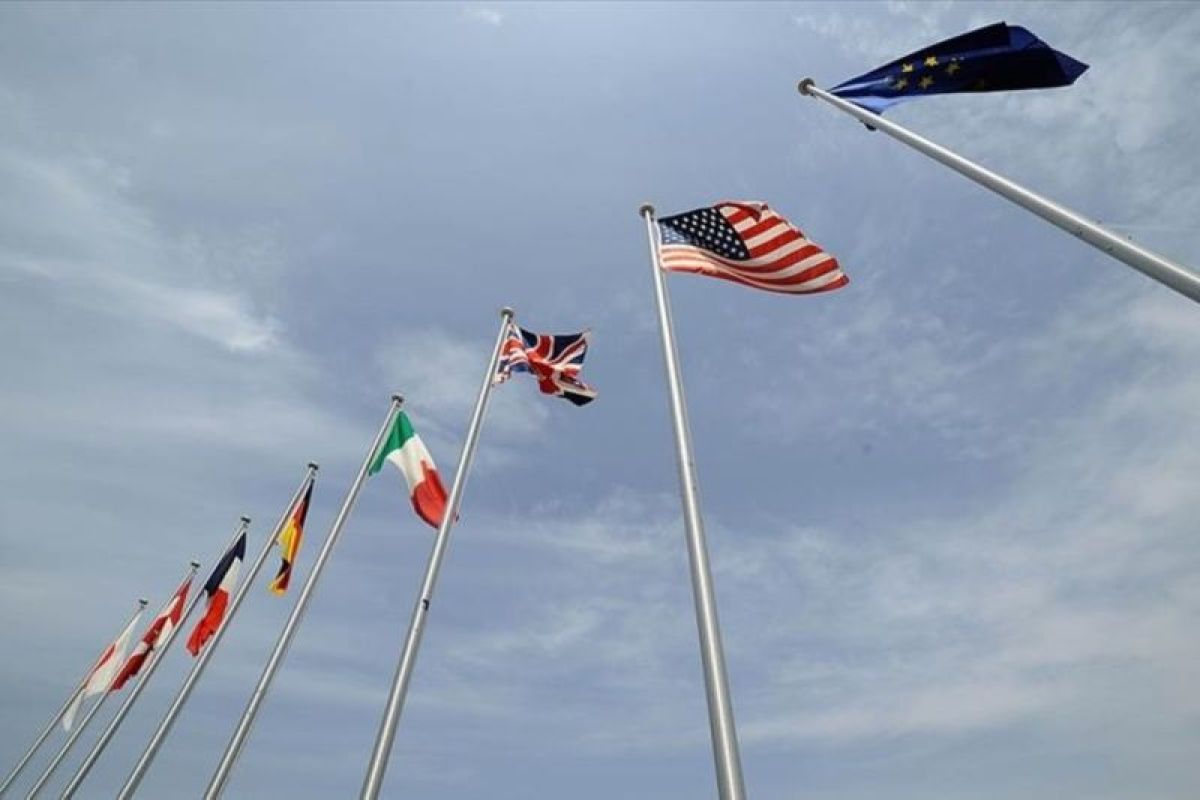
Tokyo (ANTARA) - The finance ministers of the Group of Seven (G7) countries agreed on Wednesday (15/4) to make efforts to stabilise the global economy amid uncertainties caused by the war between the United States (US) and Israel against Iran.
Amid soaring energy prices and disruptions to global supply chains, Japanese Finance Minister Satsuki Katayama told reporters after the meeting in Washington that central banks are inclined to take a wait-and-see stance on monetary policy.
She acknowledged the difficulty in ensuring whether the fragile ceasefire in the war, which has lasted more than a month, would lead to long-term peace.
“I believe there is a common understanding that we need to do our best to ease the situation, including ensuring freedom of navigation in the Strait of Hormuz,” she said.
Katayama said US Finance Minister Scott Bessent did not attend the meeting due to a scheduling conflict, adding that a non-G7 joint statement drafted by the UK essentially reflects the general views of all parties.
The G7 finance ministers and central bank governors, comprising the UK, Canada, France, Germany, Italy, Japan, the US, and the European Union, did not issue a joint communique after concluding the talks.
Together with the UK, finance ministers from Australia, Japan, Sweden, the Netherlands, Finland, Spain, Norway, Ireland, Poland, and New Zealand stated in a document on the Middle East that the impact on growth, inflation, and markets would persist even if the conflict ends permanently.
In the document, the ministers also committed to promoting cooperation and integration to support regional and global stability. The war has also revealed deepening divisions between the US and Europe.
The world welcomed the two-week ceasefire agreement between the US and Iran reached last week, but the end of the conflict is not yet in sight, with the Strait of Hormuz—a vital global trade route off Iran’s southern coast—still largely closed to maritime traffic.
In the two-hour G7 meeting held on the sidelines of the International Monetary Fund (IMF) and World Bank spring meetings, participants also discussed support for Ukraine and cooperation in securing critical minerals essential for high-tech industries and national security, according to Katayama.
Before the G7 meeting chaired by France as this year’s presidency, Katayama met with Bessent.
Via social media, Katayama stated that she and Bessent agreed to strengthen close communication on exchange rates, and described Bessent’s explanation of the Iran situation as “very interesting.”
Katayama also conveyed to Bessent Japan’s procurement of crude oil from the US and Tokyo’s financial package for Asian countries amid the energy crisis.
The $10 billion financial support announced by Prime Minister Sanae Takaichi on Wednesday is aimed at strengthening energy supply chains in Asia, including through loans for crude oil and petroleum product procurement.
Later that day, Katayama told reporters that Bessent is looking forward to visiting Japan before accompanying President Donald Trump on a trip to China in mid-May.
When asked about the information she obtained regarding the Iran situation, Katayama said she could not disclose details but hinted that it relates to the Trump administration’s views on the possibility of de-escalating the conflict and sanctions issues.
Source: Kyodo-OANA