
Furniture Industry Boss Warns Against Concentrating Exports in Single Countries
Jakarta – Global geopolitical uncertainty is being viewed as a warning for Indonesia’s furniture industry to strengthen its export strategy. Industry participants are increasingly encouraging market diversification to reduce the risk of international logistical disruptions.
Abdul Sobur, Chairman of the Indonesian Furniture and Craft Industry Association, stated that conflicts affecting global shipping routes could impact multiple export destination markets.
“The most vulnerable region is clearly the Middle East and surrounding areas, particularly if major shipping routes experience disruptions,” Sobur told CNBC Indonesia on Monday, 2 March 2026.
According to him, not only Middle Eastern markets face potential disruption, but also shipments to other regions that use similar shipping routes.
“Routes to Europe could also be affected if ship operators decide to divert routes to avoid high-risk areas. The consequence is that ship schedules become subject to rolling delays,” he said.
Under such circumstances, exporters must prepare for shipping uncertainties whilst maintaining relationships with overseas buyers.
“Usually in the early phase of conflict, buyers do not immediately cancel orders. They tend to postpone shipments or wait for clarity on ship schedules,” Sobur said.
To respond to this situation, businesses are implementing several operational strategies to keep export activities running.
“One step we are taking is renegotiating shipping terms, including war-risk clauses or emergency surcharges to clarify who bears the additional costs,” he explained.
Companies are also strengthening production planning to be more flexible against logistical disruptions.
“We are also bolstering production buffers and extending lead-time planning. Ship bookings must be made earlier to avoid delays,” Sobur said.
Another strategy being promoted is diversification of shipping routes and ports of dispatch.
“Business operators cannot rely on just one route or one port. Route diversification is important to reduce disruption risks,” he said.
From the market perspective, the industry is also beginning to expand export targets to regions beyond traditional markets.
“We are encouraging members not to concentrate exports in just one or two countries. Markets such as Europe, East Asia, Australia, and India should be pursued more aggressively,” Sobur said.
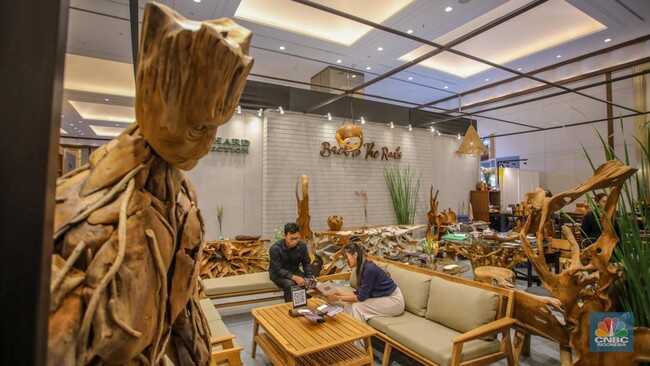
According to him, international furniture exhibitions can also serve as an opportunity to find new buyers amid global uncertainty, including the Indonesia Furniture Expo (IFEX) scheduled for early March at ICE BSD.
“Exhibitions like IFEX can serve as a shock absorber for the industry by opening opportunities to meet new buyers directly,” he said.
Exhibitions can enable business operators to accelerate negotiations and strengthen trade contracts that are more adaptive to logistical risks.
“Conflict not only suppresses industry demand but also creates logistical uncertainties such as lead time, insurance, and freight. For this reason we are promoting market diversification and more adaptive trade contracts so exports can continue to grow,” Sobur said.