
Fuel-Saving Amid Crisis as the Philippines Adopts a Four-Day Working Week
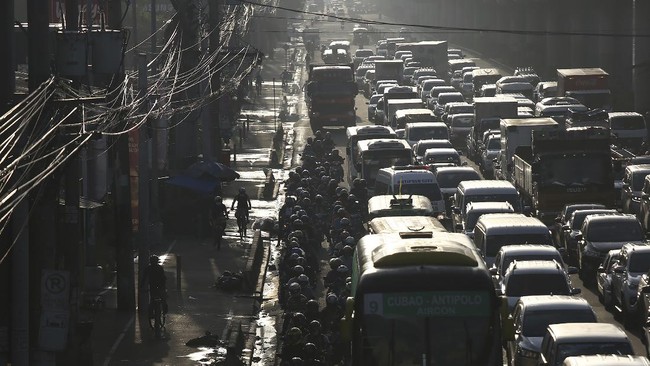
Manila — President Ferdinand Marcos Jr. announced a temporary four-day working week for several executive-branch offices from Monday 9 March, in response to rising fuel costs driven by heightened tensions in the Middle East. The policy, described as an energy-saving measure, will not apply to offices providing emergency or essential frontline services, such as the police, fire department, or other frontline public services. He also directed all government agencies to implement substantial energy savings, aiming to cut electricity consumption and fuel expenditure by 10 to 20 percent. In addition, official travel and non-essential government activities, including meetings that could be conducted in offices, were temporarily prohibited.
The four-day office arrangement is laid out in Memorandum Circular No. 114 and also references the CSC Memorandum Circular No. 6 of 2022, updated by CSC Memorandum Circular No. 1 of 2025. The circular states that the policy will remain in effect “until repealed or cancelled earlier by the president”. Agencies have been instructed to develop internal guidelines to ensure proper monitoring and documentation, including attendance verification, as well as performance standards and monitoring mechanisms in accordance with applicable laws, regulations and CSC provisions.
Some government agencies have already begun planning additional steps. Starting 13 March, the Department of Trade and Industry will shift its Makati City offices to a remote-working system. The move comes amid concerns about the Middle East crisis and its projected impact on global fuel prices.
For the private sector, flexible work arrangements are already possible under the Telecommuting Act passed in 2018, but business groups have urged caution in implementing a four-day system. Philippine Chamber of Commerce and Industry (PCCI) President Ferdinand Ferrer said the policy should consider the characteristics of each industry and be accompanied by consultation with stakeholders and data to ensure that sectors with specific operational requirements are not negatively affected.
Earlier, Senator Sherwin Gatchalian proposed reducing the standard five-day workweek to four days or expanding work-from-home arrangements to help people cope with rising oil prices. The PCCI emphasised that any policy reducing workdays must be evidence-based and sector-sensitive, and should allow dialogue with the government, lawmakers, and labour groups before broader implementation.
This is not the first time the Philippines has adopted such measures; during the global oil crisis triggered by the Gulf War in 1990, the Department of Labour and Employment also implemented a four-day working week to cushion the impact of energy price spikes.
(mkh/mkh)