
Fuel Queues in Makassar Force Students into Remote Learning
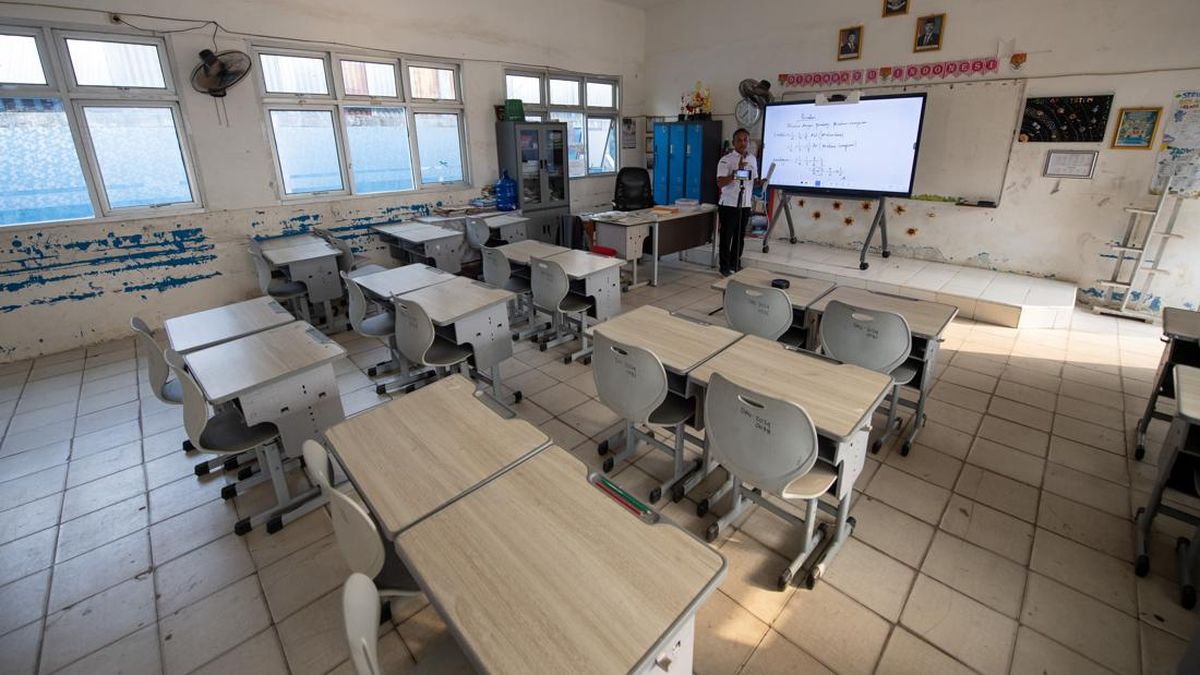
The Makassar City Education Office has implemented a policy of online learning, or Distance Learning (PJJ), for students ranging from early childhood education (PAUD) to primary and junior high school levels, due to ongoing queues for fuel (BBM) which are expected to last for a week.
Educational units for kindergarten, primary, and junior high schools across Makassar City will conduct online learning from 12 to 19 September 2026.
“I have instructed the Head of the Education Office to issue a circular so that students from PAUD to junior high school study online, effective from tomorrow,” said the Mayor of Makassar, Munafri Arifuddin, on Saturday (12/9).
Appi, his familiar nickname, stated that the online learning policy is one of the city government’s responsive measures to reduce public mobility amidst the ongoing fuel queues.
“This step is part of the Makassar City Government’s response to various public aspirations and feedback, particularly from parents who are also feeling the impact of the fuel queue situation,” he said.
Appi explained that the implementation of online schooling was taken following the long queues of vehicles at several petrol stations, which have impacted the smoothness of public mobility and activities on various roads in Makassar City.
“Through this policy, teaching and learning activities will continue without requiring students to travel from home to school, so that vehicle mobility during school hours can be suppressed,” he explained.
Appi hopes this policy can significantly reduce vehicle mobility, especially during peak hours, without disrupting essential and urgent public services.
“The circular will be effective from 12 September 2026 for the next few days, with evaluations adjusted according to the development of the queue conditions and fuel supply,” he said.
Appi added that the implementation of distance learning could help reduce daily fuel consumption and alleviate vehicle congestion accumulating at several petrol station points.
“We want community activities to continue, but on the other hand, we can temporarily suppress mobility that is not too urgent,” he concluded.
Explanation from Pertamina
The Retail Sales Area Manager for Sulselbar of PT Pertamina Patra Niaga Regional Sulawesi, Rainier Axel Siegfried Parlindungan Gultom, stated that the queues occurring over the last two to three months are influenced by several factors, including increased demand from the tourism and logistics sectors.
“The queues occurring in the last 2-3 months are indeed suspected to be caused by many factors. The increase in demand from the tourism and logistics sectors has played a significant role,” said Rainier.
According to Rainier, the queue conditions do not necessarily indicate a shortage of stock. Pertamina ensures that the distribution of Pertalite and LPG in the Makassar City area continues smoothly.
“We always supply stock to petrol stations; it never breaks daily, yet the queues continue to occur,” he said.
In fact, in recent days, vehicle queues were reported to persist until the early hours of the morning. This condition is considered abnormal, as some members of the public are suspected to be queuing due to being influenced by circulating information regarding potential fuel and LPG price increases.
“As recently as last night, at our petrol stations, there were queues from 2:00 AM to 3:00 AM, which is not normal,” he revealed.
To alleviate the queues, Pertamina is preparing several measures. Some petrol stations will receive extended operating hours. Additionally, Pertamina is requesting support from law enforcement agencies and the Department of Transportation to manage vehicles queuing outside the petrol station areas.
“We need support from law enforcement supervision and the Department of Transportation to manage queues that extend outside the petrol stations, as we feel this is already disturbing public order,” he said.
As for LPG, Pertamina has increased distribution in several areas experiencing a rise in demand. The increase in supply will continue with the involvement of relevant departments.
“For LPG, there has been and is actually being implemented, an increase in distribution. In several areas where we have identified a significant increase in demand, it has already been carried out,” he said.