
Fuel Prices Unchanged, World Bank: Indonesia's Fiscal Capacity Allows Continuation of Energy Subsidies
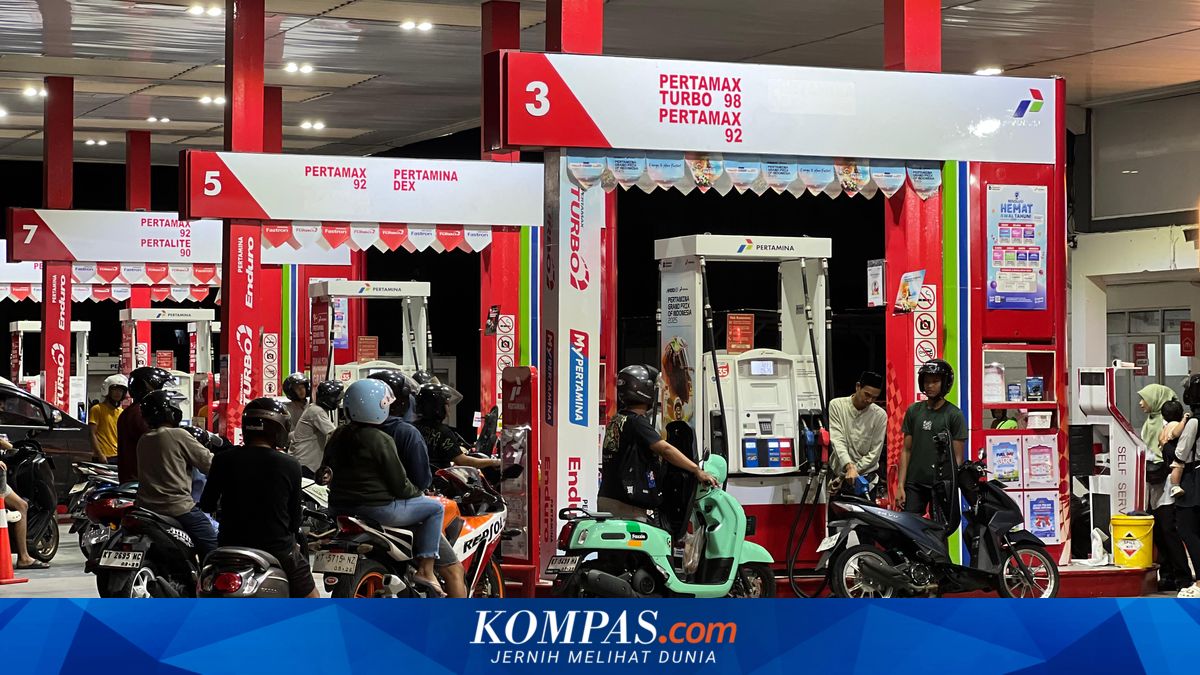
JAKARTA, KOMPAS.com - The World Bank assesses that Indonesia still has adequate fiscal room after the government decided not to raise prices of subsidised fuel oil (BBM) until the end of 2026, even as global oil prices continue to rise due to the escalation of conflict between the United States, Israel, and Iran.
The World Bank’s Chief Economist for East Asia and the Pacific, Aaditya Mattoo, noted that Indonesia’s fiscal deficit in 2025 is recorded below 3 percent of gross domestic product (GDP). Meanwhile, the government debt ratio stands at around 40 percent of GDP.
“Indonesia demonstrates a tendency towards fiscal prudence, thus having relative capacity to continue providing support through energy subsidies, whether implicitly or explicitly,” he stated, quoted from Antara on Thursday (9/4/2026).
According to Mattoo, support also needs to be directed towards small enterprises and some medium-sized businesses so that economic pressures do not become heavier amid rising global energy prices.
He assessed that the government needs to strengthen the subsidy distribution mechanism so that the benefits are truly felt by those in need without causing excessive fiscal burdens in the future.
“The more targeted the support, the smaller the risk to the fiscal burden,” he said.
Previously, Finance Minister Purbaya Yudhi Sadewa assured that subsidised BBM prices would not rise until the end of this year.
According to him, the government has calculated the resilience of the State Revenue and Expenditure Budget (APBN) under various scenarios of global oil price increases, including if they reach US$80 to US$100 per barrel.
In addition to the APBN, the government also has other fiscal buffers, such as excess budget savings funds (SAL) amounting to Rp420 trillion, including Rp200 trillion placed in banking.
Purbaya added that the government still has several other revenue sources to support subsidy needs, including non-tax state revenues (PNBP) from the energy and mineral resources sectors.
“So, (subsidised BBM) is safe until the end of the year. So, people outside don’t need to fuss or worry, we’ve already calculated it,” said Purbaya during a working meeting with Commission XI of the House of Representatives (DPR RI) in Jakarta on Monday (6/4).
In the April 2026 edition of the East Asia and Pacific Economic Update report, the World Bank also projects Indonesia’s economic growth for 2026 at 4.7 percent, slightly down from the previous projection of 4.8 percent.
Although slowing, this figure is still higher than the projected growth for the East Asia and Pacific region, which stands at 4.2 percent.