
Fuel Prices Soar, Vietnam's Residents Cry Out
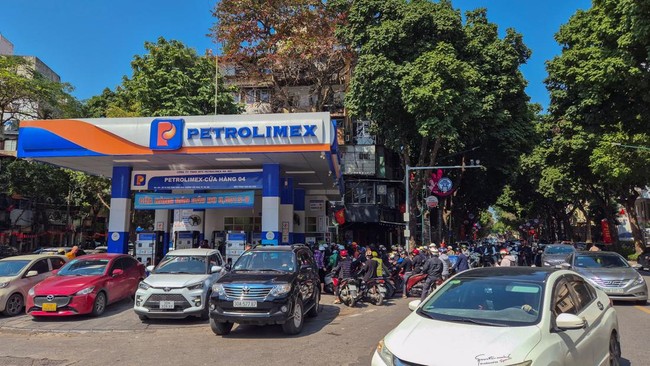
A sharp rise in fuel prices in Vietnam is beginning to pressure gig workers and business operators. This situation is triggered by disruptions to global oil supplies due to the Iran conflict, which has impacted the blockade of the Strait of Hormuz.
Fuel oil prices in the Southeast Asian country have reportedly surged more than twofold, while petrol prices have risen nearly 30%. This has made transportation costs in major cities like Ho Chi Minh City more expensive.
Nguyen, an online motorcycle taxi driver, admits that half of his income is spent on buying fuel. In a day, he only earns around 240,000 Vietnamese dong, equivalent to Rp146,000, but has to spend 120,000 Vietnamese dong (Rp73,000) on petrol.
“I drive for seven to eight hours, but half my income goes to petrol. I can’t survive in the city under these conditions,” he told Al Jazeera, quoted on Monday (6/4/2026).
He added that many drivers are choosing to stop temporarily due to the high fuel prices. “Many are turning off their apps and going home. I might stop for a few days too to see if prices drop,” he said.
Vietnam, which has imported around 80% of its crude oil from Kuwait, is now directly affected by the disrupted distribution routes. The government has acted swiftly by temporarily abolishing environmental taxes on fuel until 15 April to curb price increases.
Visiting researcher at the ISEAS-Yusof Ishak Institute, Nguyen Khac Giang, views this measure as important to dampen public unrest. “There are many complaints about rising living costs, as fuel prices affect almost all sectors,” he said.
He added that the policy also aims to maintain macroeconomic stability amid global pressures. Nevertheless, the government is estimated to lose revenue of around US$273 million, or approximately Rp4.4 trillion, due to this policy.
Pressure is also felt in the transportation and aviation sectors. Domestic airlines like Vietnam Airlines and Vietjet Air are starting to reduce flight frequencies, while public transport in major cities is nearing maximum capacity.
Gig worker groups are the most vulnerable. Researcher at the University of Melbourne, Do Hai Ha, states that their incomes are highly dependent on external factors like fuel prices.
“Their incomes are unstable and they have no bargaining power against platforms,” she explained. She added that gig workers also lack protections such as minimum wages or overtime pay.
The impact of rising fuel prices is also felt by fishermen and small business operators. A fisherman in Binh Thuan admits that the selling price of his catch has dropped from 800,000 dong (Rp488,000) to 650,000 dong (Rp396,000) due to weakened demand.
On the other hand, household burdens are also increasing. Uyen Pham from Saigon Children’s Charity states that household gas prices have nearly doubled, forcing many families to switch to firewood to cut expenses.
“The cost increases also make many parents go home less often because travel fares have risen, while wages remain the same,” she said.
In the long term, the Vietnamese government is starting to promote energy independence. Giang assesses that the country needs to accelerate the construction of new oil refineries to reduce import dependence.
Currently, Vietnam only has two refineries that are insufficient to meet domestic needs.
Meanwhile, energy price pressures are also starting to shift investment directions. Conglomerate Vingroup is reportedly planning to redirect investments from gas-based power plant projects to renewables, following the high risks of fuel prices.