
Fuel Prices Remain Unchanged, Government Aggressively Seeks New Revenue Sources
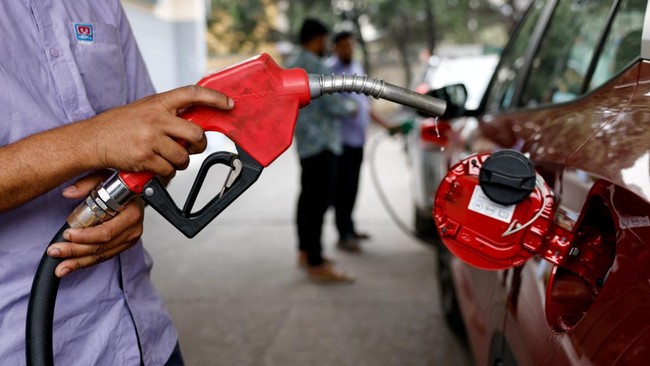
Jakarta, CNBC Indonesia - The Ministry of Energy and Mineral Resources (ESDM) has assured that prices of subsidised fuels remain unchanged and have not experienced any increases. Amid global uncertainties, the government is now focusing on boosting state revenues from other sectors, such as minerals.
Minister of Energy and Mineral Resources Bahlil Lahadalia emphasised that there are currently no options for restricting or raising fuel subsidies. Energy policies continue to be directed towards protecting the public, particularly low-income economic groups.
“The President always instructs us to work thoroughly and carefully, considering the interests of our fellow citizens, the small people, and our society in terms of affordability. Up to now, we have no options to limit subsidies,” said Bahlil when met at the Coordinating Ministry for the Economy, quoted on Monday (30/3/2026).
He then confirmed that there have been no changes to the fuel subsidy scheme. Nevertheless, he acknowledged that dynamic global conditions could influence future policies.
On the other hand, the government is preparing several strategic measures to increase state revenues from natural resources, particularly minerals.
Export Duties on Coal and Nickel
One option being prepared is the imposition of export duties on coal and nickel commodities. This policy aims to optimise state revenues from the export of these commodities.
However, Bahlil assured that the policy has not yet been finalised and is still in the calculation stage with the Ministry of Finance.
“I think not yet. Because it is awaiting the results of our study with the ESDM team and the team from the Ministry of Finance,” said Bahlil.
Export Tax on NPI
In addition, the government is also examining the imposition of export taxes on downstream nickel products, such as nickel pig iron (NPI).
According to Bahlil, this is being done as an effort by the government to increase state revenues amid the current global uncertainties.
“Because in a situation like this for the country, we must seek many alternative sources of income. One of them is by pushing for the imposition of export taxes on downstream products,” said Bahlil.
He explained that his side is still conducting calculations and studies regarding the appropriate formulation for implementing export duties on NPI products, including the scheme and the rate of tariffs.
Nickel Reference Price to Rise
It does not stop there; the government has confirmed that the Nickel Reference Mineral Price (HMA) will also be increased. This policy is also part of the government’s efforts to increase state revenues from the mineral sector.
“It is not a possibility; it has become our decision. That we will raise the HMA. So, the standard reference price for nickel will be increased by us,” said Bahlil.
Bahlil also plans to cut nickel production quotas in the 2026 Work Plan and Budget (RKAB). This policy is taken to regulate nickel production in line with domestic industry needs, so that prices do not fall due to oversupply.
“Regarding nickel. For nickel, we will create a balance in the RKAB between supply and demand. How much our factories need, that is what we will issue. So that the price does not fall as well,” said Bahlil.