
Fuel Price Rise Likely, Indef Recommends Gradual Adjustment Scheme to Prevent Inflation
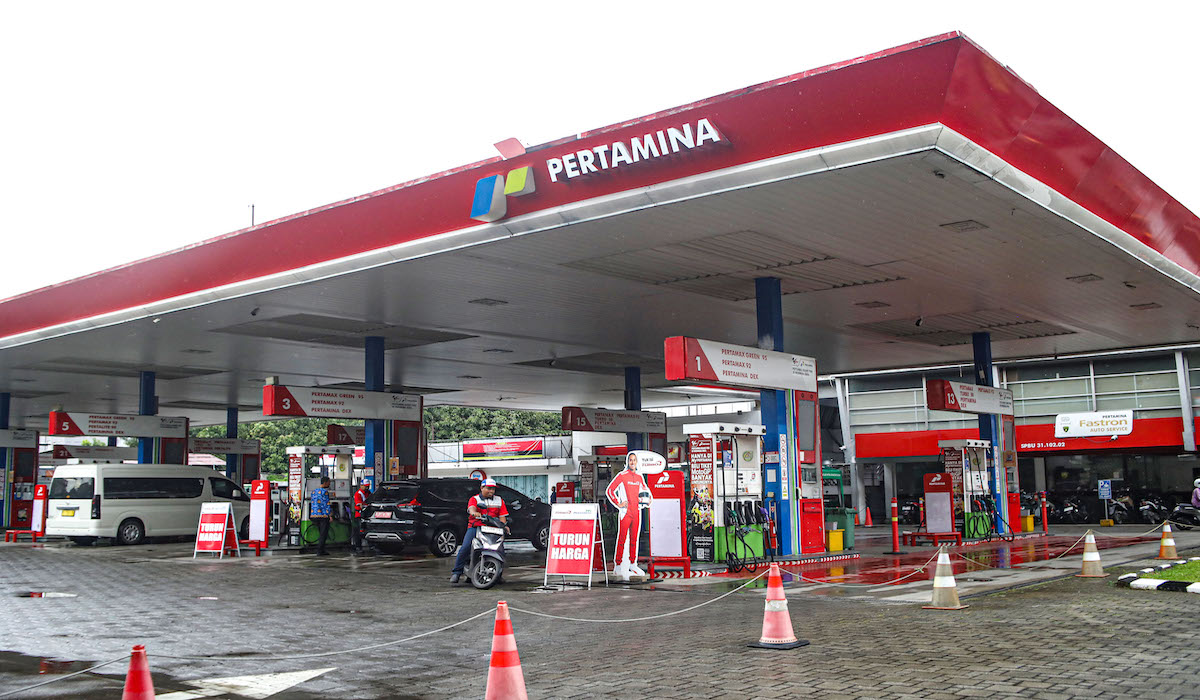
A researcher from the Centre for Food, Energy, and Sustainable Development at the Institute for Development of Economics and Finance (Indef), Afaqa Hudaya, has advised the government to consider a gradual fuel price adjustment scheme to mitigate pressures from surging global crude oil prices.
According to Hudaya, rising prices for global crude oil such as Brent Crude Oil have the potential to compel the government to increase fuel prices. However, such a policy could also trigger inflation spikes and substantial social impacts.
“A rise in fuel prices can indeed be one option when global crude oil prices increase, but such a policy also has the potential to cause inflation shocks and considerable social consequences,” Hudaya said during an online public discussion titled “Holiday Economics in the Midst of War Turmoil” held on Monday, 9 March.
He explained that the government could implement a gradual price adjustment scheme, or gradual price adjustment, to prevent the public from experiencing shock due to excessively high price increases all at once.
“Rather than raising fuel prices all at once in a large range, price adjustments could be carried out gradually based on movements in global oil prices,” Hudaya said.
Under this scheme, price adjustments could be made periodically with relatively small values. If fiscal conditions necessitate, price increases of approximately IDR 200 to IDR 300 per litre could be implemented gradually.
Additionally, the government could also carry out recomposition of state spending to dampen pressure on the state budget. One option that could be considered is budget reallocation from certain programmes such as the Free Nutritious Meals programme or projects deemed non-priority.
“Pressure on the state budget could be dampened through spending reallocation and programme efficiency so that the impact is not directly borne by the public through fuel price increases,” he said.
Hudaya also believes the government could postpone non-priority projects, increase ministry and institutional spending efficiency, and optimise state revenue from the commodities sector to strengthen fiscal space.
These steps are considered important so that energy price adjustment policies do not trigger social unrest in society. He cited examples from several regions such as Aceh where panic buying phenomena of fuel have already begun to emerge amid concerns about price increases.
“Several alternative schemes such as gradual adjustment, spending reallocation, and budget efficiency could be options so that energy policies do not cause shock effects for the public,” Hudaya concluded.