
Fuel Price Hike Leads Indonesian Official to Cycle to Work
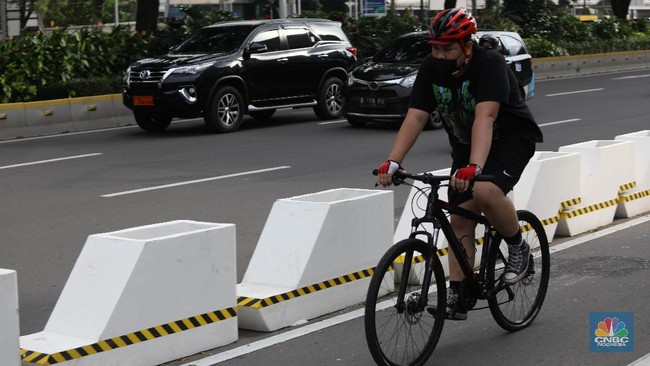
The fuel price increase that strained the national economy once prompted an unusual step from a public official from Bandung, Mohammad Aten Hawadi. In the name of efficiency and to save government expenditure, he rejected the official car facility and chose to carry out his daily duties by cycling.
Aten was the Chairman of the Bandung City Council. At that time, an official of Aten’s level received a luxury official car, namely a Plymouth sedan from the United States. The car came complete with a driver and fuel, all costs borne by the state. By regulation, Hawadi was fully entitled to enjoy those facilities.
However, the economic conditions at the time led him to make a different decision.
According to a report in Pikiran Rakyat (23 July 1958), entering the late 1950s, Indonesia’s economy was on the brink of crisis. Fuel prices surged to around Rp60-Rp100 per litre. Kerosene prices also rose to around Rp1-Rp1.5 per litre, while rice prices broke through around Rp10 per litre.
This price surge put pressure on the government’s fiscal position. The state budget recorded a deficit of up to Rp6 billion. The situation grew even more difficult due to unrest in several regions, which further disrupted national political and economic stability.
This situation also impacted Bandung’s regional finances. The city government’s budget was not ample, while the needs for development and public services continued to increase.
Amid these conditions, Hawadi chose to set an example. According to the Pikiran Rakyat newspaper (6 October 1958), he decided to return the official car, which was worth a great deal at the time, and opted to use a bicycle for his daily mobility.
“The Chairman of the Bandung City Council, Moh. A. Hawadi, has replaced his Plymouth sedan with a ‘Raleigh’ brand bicycle for his journey to the office,” stated Pikiran Rakyat.
This step made him stand out from many other officials. Instead of enjoying state facilities, Hawadi demonstrated that public officials must first feel the pulse of the difficulties faced by the people and the local government.
As a result of Hawadi’s stance, it was known that the government could save up to Rp18,000 a year. This simple attitude became an important symbol that budget efficiency is not just a policy on paper, but must also begin with the example set by its leaders.