
Fuel Price Concerns Rise as Energy Minister Bahlil Asserts Subsidised Fuel Prices Remain Unchanged
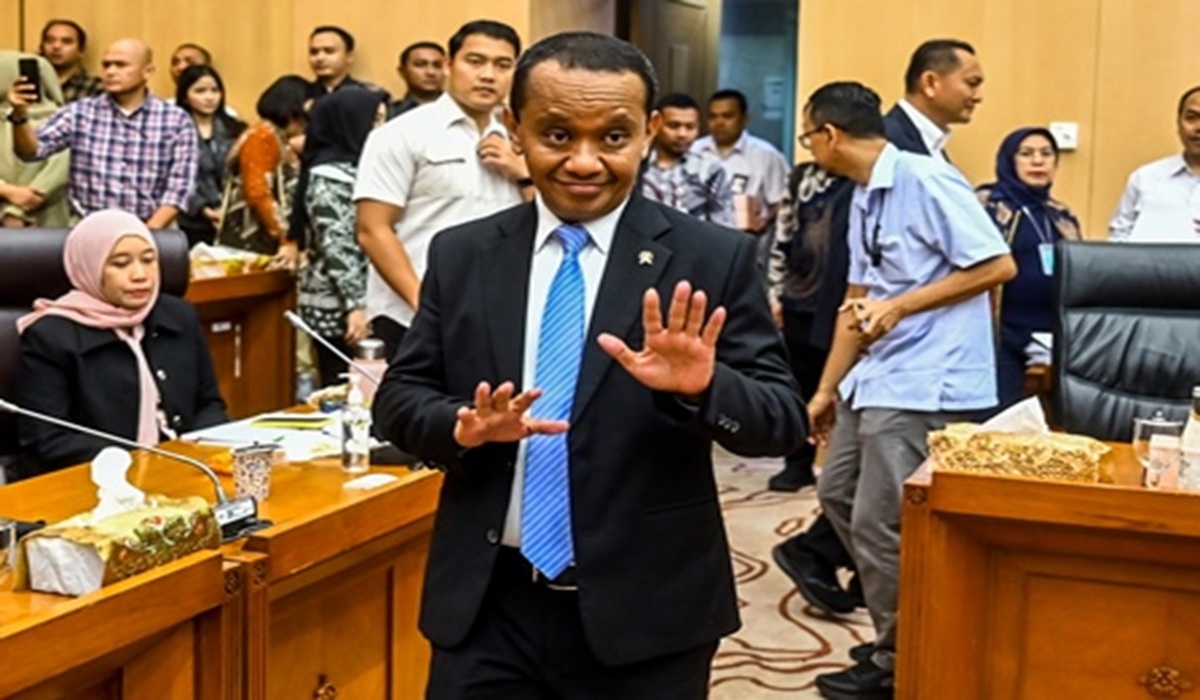
The Ministry of Energy and Mineral Resources (ESDM) Minister Bahlil Lahadalia has guaranteed that subsidised fuel prices will not change in the near future, as the government remains committed to maintaining national energy stability and ensuring adequate fuel stocks amid global market dynamics. The announcement addresses earlier concerns regarding potential price increases at Pertamina.
Subsidised Pertamax fuel remains fixed at 10,000 rupiah per litre, whilst subsidised diesel is pegged at 6,800 rupiah per litre.
“Regarding prices, the state will continue to provide subsidies,” Bahlil stated at the ESDM Ministry office in Jakarta on Tuesday, 17 March.
The minister emphasised that the government will maintain strict control over fuel subsidies, particularly through the holiday season and beyond. He assured the public that subsidies will remain under government control during this period and is expected to continue thereafter.
According to Bahlil, the government is deeply concerned about public welfare and does not wish to burden ordinary citizens with all economic pressures.
“The government has great concern for the condition of society. We also do not want all that burden to be transferred to the people,” he said.
Nevertheless, Bahlil noted that subsidised fuel pricing decisions continue to account for global geopolitical dynamics and international crude oil price movements. He explained that with current average oil prices hovering around 70 US dollars per barrel, the government still has room to manage potential price increases up to 100 US dollars per barrel.
According to the Golkar Party politician, such conditions would remain within the state budget framework and manageable by the government.
“But if the price is 100 US dollars per barrel, God willing that is still within the state budget parameters and we can adjust it. But this is still under discussion,” he stated.
Beyond price management, the government is ensuring adequate national energy supplies, including liquefied petroleum gas (LPG), petrol and diesel, to prevent shortages amid global oil price fluctuations and geopolitical developments in the Middle East.
“The strategy we have been implementing even after March is to ensure that all stocks are available so there are no shortages in Indonesia—whether LPG, petrol or diesel. That is most important,” he said.
Regarding reports of fuel hoarding in countries such as Thailand, the government has urged Indonesians not to adopt such practices as reference. Bahlil noted that each country employs different policies and mechanisms for energy management. Indonesia, for example, operates two categories of fuel: state-regulated subsidised fuel and non-subsidised fuel that follows market prices.
“I request that other countries not be used as reference. Our country has baseline regulations that differ from those outside,” he advised.
He also reaffirmed that national energy supplies are currently safe and controlled. Fuel, LPG and electricity availability all meet minimum national stock standards, meaning the public need not worry about potential shortages.
For LPG supplies, the government will ensure additional supplies arrive by the end of the month, guaranteeing that public needs—including during the holiday period—remain fully met without significant disruptions.
Meanwhile, coal supplies for national electricity generation also remain within safe limits. Coal stocks for PLN power plants currently stand at 14 to 15 days of operational supply, which is the minimum threshold according to national standards.
Indonesia is committed to strengthening national energy resilience through oil supply diversification, including through cooperation exploration with Brunei Darussalam. Indonesia and Japan have signed a critical minerals and nuclear energy cooperation agreement under the Indo-Pacific Energy Security Ministerial and Business Forum in Tokyo, with Energy Minister Bahlil demonstrating Indonesia’s commitment to inclusive energy development through programmes such as the B50 fuel initiative and the One-Price Fuel programme.