
Fuel Policy Becomes a Test of National Leadership Facing Global Pressures
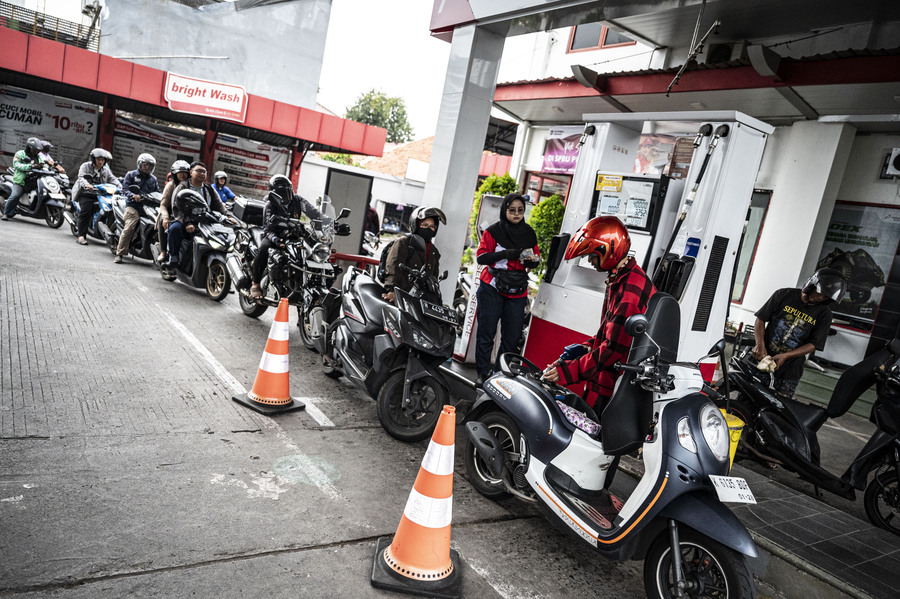
Facing global turmoil threatening fuel availability, the government is taking strategic steps to maintain national stability. President Prabowo Subianto has decided against raising fuel prices, while carefully considering the State Revenue and Expenditure Budget (APBN) calculations.
A lecturer from the Department of Politics and Government at UGM’s Faculty of Social and Political Sciences, Mada Sukmajati, assesses that the current national leadership faces significant challenges in managing both local and global dynamics, particularly in responding to fluctuations in world oil prices. According to him, the leadership track record from the eras of Presidents Megawati, SBY, to Jokowi can serve as valuable lessons for President Prabowo in shaping his own leadership model.
“This moment of world oil prices presents a challenge for the president in managing international dynamics that directly impact the national scale. Sensitivity to timing is crucial in deciding whether to raise or maintain fuel prices,” said Mada on Thursday (9/4).
Mada emphasises that the courage to not raise fuel prices, when many other countries are doing the opposite, must be based on accurate calculations. This must also be accompanied by the government’s ability to build public trust through tangible policies, not just rhetoric.
The real impact of this policy, Mada continues, must be reflected in safeguarding the basic needs of the population. “Purchasing power should not weaken, prices should not skyrocket, and employment opportunities should not become more limited. Poor policy management could result in bad decisions for both the government and the public,” he added.
President Prabowo is also advised to conduct policy evaluations incrementally. Several programmes, such as the Free Nutritious Meals (MBG) to the Red White Village Cooperatives, are deemed to require ongoing monitoring of their effectiveness. Regarding the plan for Work From Home (WFH) for civil servants as an effort to save fuel, Mada considers it a concrete step, but it still requires strict monitoring in its implementation.
Furthermore, Mada highlights the need for a comprehensive evaluation of ministerial performance. Given the current large cabinet structure, the issue of cabinet reshuffle could be an option if ministerial performance is not optimal in supporting the president’s vision.
“With the number of ministries currently in place, the president needs to respond to the situation quickly. If needed, a reshuffle can be a step to review the situation better for the national interest,” Mada stressed.
Amid significant international and economic pressures, the government’s speed in responding to public input will determine how far national leadership can pass this test of the global energy crisis.