
Fuel Crisis Hits Indonesia's Neighbour, Prices Soar - Protests Rage
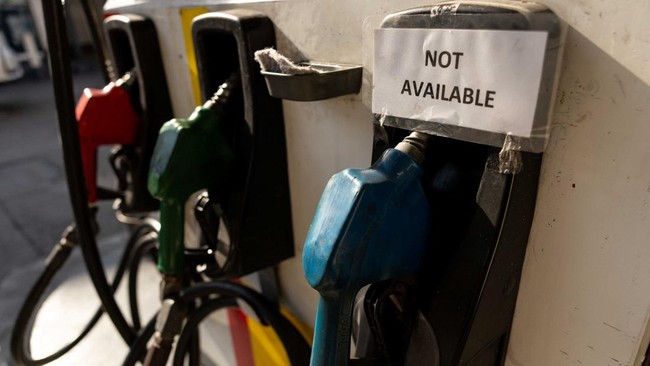
The Philippines is now in a highly vulnerable position due to the surge in global crude oil prices triggered by the war in the Middle East, forcing the local government to declare the world’s first national energy emergency. This situation has sparked massive waves of protests and widespread public anger on the streets of Manila, as fuel prices soar and supply disruptions worsen. Workers in the transportation sector are the group most directly impacted by this oil crisis, including Jayson Naga, who works as a tricycle taxi driver in Manila. Under normal conditions, Naga usually brings home 500 pesos, or about US$8 (Rp136,000), to feed his four children, but now he must work extra hard because a 60% surge in fuel prices has cut nearly a third of his income. “If fuel prices rise even further, there will be nothing left for us,” Naga told The Guardian on Tuesday (31/03/2026). A similar fate befell Hogan Ruben, who also works as a tricycle driver, forcing him to spend an additional five hours on the roads each day to earn a sufficient income. Ruben has no choice but to start work earlier and stay out until midnight to cover the ballooning operational costs due to the energy crisis. “What we’re doing now is leaving earlier and staying out until 12 midnight or 1 a.m., so that the income we bring home is enough,” said Ruben. “We have no choice but to keep working hard,” Ruben added. In response to this pressure, President Ferdinand Marcos Jr stated on Friday (27/03/2026) that the government has secured sufficient crude oil supplies for domestic processing until 30 June. This step was taken after the government acknowledged difficulties in replenishing national inventories, including efforts to seek alternative sources such as oil shipments from Russia. However, the government’s assurances have failed to quell the masses’ anger, which peaked last week when transportation groups held a two-day national strike. They demanded a reduction in oil prices by abolishing fuel excise taxes and repealing the oil deregulation law, which they say is strangling ordinary people. Piston transportation group president Mody Floranda launched sharp criticism, calling President Marcos’s leadership powerless in handling this crisis. Floranda emphasised that the hardships are not only felt by transportation workers but by all segments of society who must endure low wages and skyrocketing fuel prices. “The difficulties continue not only for transportation but for the entire public. How can workers survive on low wages while fuel prices keep rising?” said Floranda. In agreement, NGO worker Edgardo Cabalitan assessed that this situation is not merely an ordinary economic crisis but has entered the realm of a human rights crisis. While joining a mass action in front of the country’s largest petrol station on Friday, Cabalitan highlighted how the oil price increase would domino-effectively damage society’s access to basic needs. “The oil crisis is not just a matter of rising costs. This is a problem that directly attacks human rights. As oil prices rise, the cost of goods follows, affecting not only drivers’ livelihoods but also our access to basic needs,” said Cabalitan. The academic side also issued a grim warning, with assistant professor at the University of the Philippines School of Economics, Jan Carlo Punongbayan, predicting that the crisis will worsen with estimates of global crude oil prices reaching US$200 per barrel. Punongbayan warned of indirect effects in the form of double-digit inflation expected in May, a level not seen in years, even during the pandemic. “This will be very bad, especially the indirect effects of inflation. The government is looking at double-digit inflation levels in May. We haven’t seen inflation rates that high in years, not even during the pandemic,” said Punongbayan. This increasingly desperate situation has begun to trigger criminal acts, such as an incident in Quezon City where an SUV driver fled after filling up a full tank without paying, forcing petrol station staff to cover a bill of nearly US$100 (about Rp1.7 million). Nevertheless, community solidarity has re-emerged through the establishment of communal kitchens or “community pantries” that provide food assistance to drivers severely affected by the crisis.