
FSHA Proposes Establishment of Special Judicial Body through Judgeship Bill
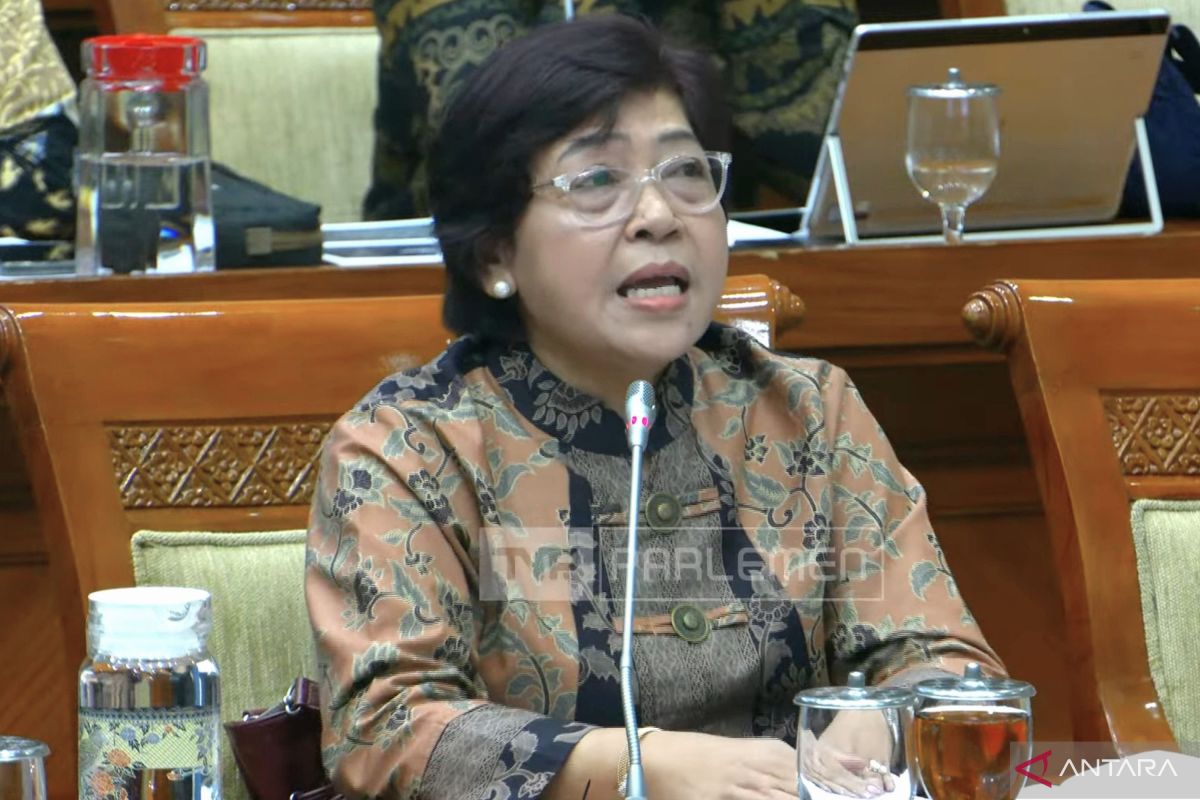
Jakarta (ANTARA) - The Forum Silaturahmi Hakim Ad Hoc (FSHA) has proposed the establishment of a Special Judicial Body (Badilsus) through the Bill on Judgeship, which is currently under discussion.
FSHA Coordinator Siti Noor Laila stated that Badilsus would oversee various special courts, namely the Corruption Crimes Court, Human Rights Court, Industrial Relations Court, Fisheries Court, Commerce Court, and Tax Court.
“This is important considering the permanent nature of each of these special courts, which are not ad hoc courts,” Siti said during a Public Hearing (RDPU) with Commission III of the House of Representatives (DPR RI) in Jakarta on Tuesday, as monitored online.
To that end, FSHA also views the need for a paradigm shift regarding ad hoc judges, which should be changed to special judges, given the continuity and existence of the procedural law systems in each special court.
The unification of all judge clusters—career, non-career, and ad hoc—under one name as state judicial officials in the Judgeship Bill, she said, could erode the current partialism that leads to welfare disparities, both in financial rights and facilities for the judges, such as tax allowances and cost-of-living allowances.
Therefore, Siti hopes that the equalisation of the concept of career, non-career, and ad hoc judges under one name, namely state judicial officials, must also have equal impacts on welfare in terms of financial rights and facilities.
“This also includes social security guarantees and security guarantees for judges and their families from home to the work environment,” she said.
Fundamentally, she assesses that if the state truly intends to reform law enforcement, a comprehensive overhaul of the Supreme Court (MA) structure is also necessary.
She stated that the intended structural change begins with drawing a clear line between judicial power and executive and legislative powers.
That clear line, according to her, can only be created if the MA has its own structure and personnel pattern.
She explained that if this can be realised, judges will no longer be part of the civil service apparatus (ASN), which seems bound to executive power.
Instead, she continued, judges will become more independent as state judicial officials as meant in Article 1 number 12 of the new Criminal Procedure Code (KUHAP).
That article stipulates that “A judge is a state judicial official authorised to receive, examine, try, and decide criminal cases,” without fragmenting whether they are career judges or ad hoc judges.
She added that this also entails the consequence that judges will be returned to their primary function as judges who hold the gavel to examine, try, and decide cases.
“Thus, structural positions within the MA will no longer be held by judges except for the positions of court chief and deputy chief, but handed over to MA ASN as the supporting system,” Siti emphasised.