
From Washington to Gaza: Indonesia's Challenging Transition from Rhetoric to Real Action
Indonesia’s foreign policy transformation regarding the Palestine-Israel conflict has entered its most critical phase since independence in 1945. For several decades, Jakarta’s involvement was characterised by moral diplomacy, rhetorical support in multilateral forums, and the provision of humanitarian aid without direct military engagement. However, recent geopolitical dynamics have compelled Indonesia to undertake a paradigm shift from sympathetic observer to active security actor in one of the world’s most volatile regions.
Indonesia’s appointment as Deputy Commander of the International Stabilisation Force (ISF) represents the manifestation of this transition. This strategic move reflects President Prabowo Subianto’s leadership ambition to position Indonesia as a responsible middle power, whilst exploring the boundaries of the “Free and Active” foreign policy framework within the context of peacemaking.
Indonesia’s military involvement in the ISF did not occur suddenly but is rooted in a complex international legal framework established in late 2025. The primary foundation is UN Security Council Resolution 2803, adopted on 17 November 2025. Resolution 2803 provides a mandate enabling the use of force to maintain international peace and security. The Indonesian government welcomed this resolution as a concrete step towards a permanent cessation of violence and more effective distribution of humanitarian aid. For Jakarta, support for Resolution 2803 is a means of ensuring that the withdrawal of Israel Defence Forces (IDF) from Gaza can be conducted systematically and replaced by international forces more acceptable to the local population, with Indonesia playing a leadership role.
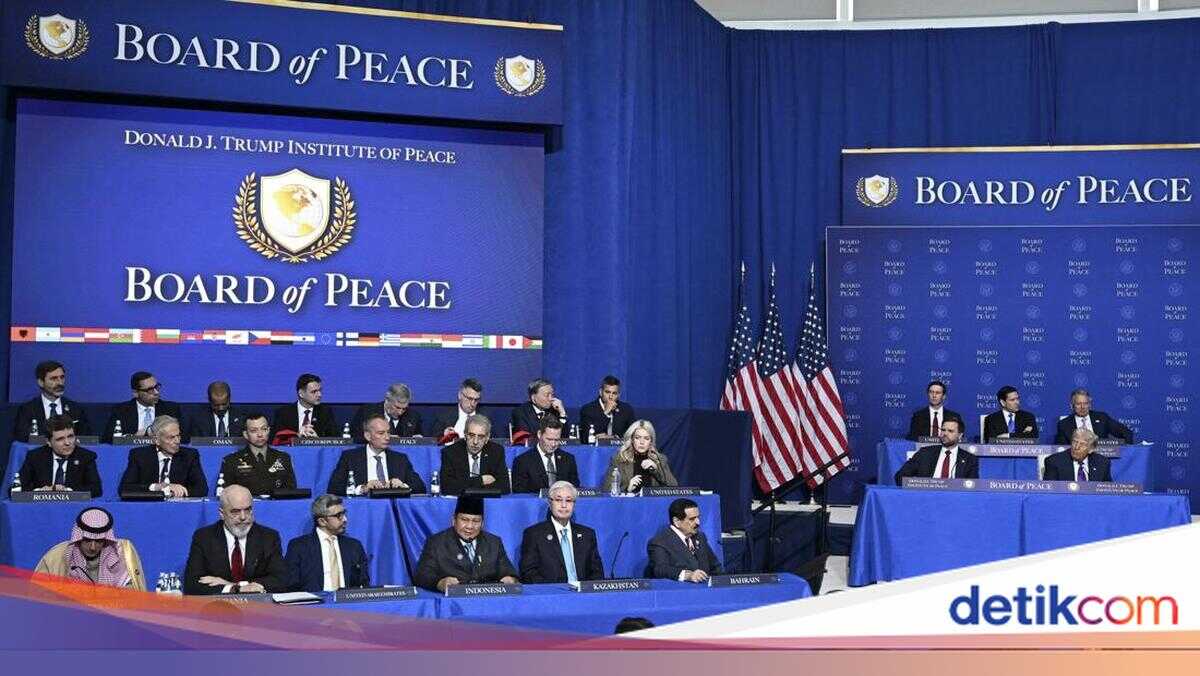
Indonesia’s involvement at the highest level provides Jakarta with influence in the strategic decision-making process regarding how reconstruction funds will be managed. Indonesia’s participation ensures that the voice of the world’s largest Muslim nation is heard in prioritising basic infrastructure development.
The most defining moment in Indonesia’s role transition came when Major General Jasper Jeffers, the ISF Commander from the United States Army, announced that Indonesia had officially accepted the position of ISF Deputy Commander. This announcement signified US recognition of Indonesia’s military capacity and diplomatic credibility. Indonesia has declared its readiness to deploy up to 8,000 Indonesian National Armed Forces (TNI) personnel to join the ISF. The Rafah sector has been designated as the initial deployment destination due to its critical location on the Egyptian border.
The physical presence of thousands of Indonesian soldiers in Gaza is not merely a matter of security but also one of moral legitimacy. The presence of a large Muslim contingent within the international force is expected to temper local anger towards US and Israeli involvement in the transition process. However, this also places TNI personnel at considerable security risk, given that armed factions in Gaza, including Hamas, have expressed strong opposition to the presence of foreign forces with a demilitarisation mandate.
Domestic Political Dynamics and Indonesia’s National Caveats
The Indonesian government has communicated several key conditions to the Board of Peace as the basis for their participation. The critical points in these conditions include:
- Humanitarian Mission, Not Combat: TNI personnel will not be involved in active combat operations or direct confrontation with armed factions in Gaza.
- Rejection of Forced Demilitarisation Mandate: Indonesia has affirmed it will not participate in efforts to forcibly disarm Palestinian resistance groups, as this is considered beyond the scope of civilian protection duties.
- Consent from the Palestinian Authority: Troop deployment will only proceed with explicit approval from the Palestinian side.
- Anti-Normalisation: Involvement in the ISF in no way signifies diplomatic recognition or normalisation of relations with Israel.
- Focus on Local Capacity: The primary tasks of the Indonesian contingent are civilian protection, distribution of medical aid, infrastructure reconstruction, and training of Palestinian police.
These conditions create a “Humanitarian Paradox” for Indonesia’s position. Resolution 2803 clearly mandates the ISF to ensure the demilitarisation of Gaza. By refusing to carry out demilitarisation, Indonesia operates under a different interpretation of the mandate from that of the United States and Israel. The tension between the ISF’s collective mandate and Indonesia’s national caveats will be a major test for command coordination between General Jeffers and his Indonesian deputy in the field.
Muhammad Waffaa Kharisma, a researcher from the Centre for Strategic and International Studies (CSIS) in Jakarta, has warned that the Indonesian government must be careful not to become “the face of new colonialism” in Gaza. If the ISF is perceived as a tool for securing Israeli interests rather than realising an independent Palestinian state, then Indonesian forces will lose their moral legitimacy and risk becoming targets of attacks by local resistance groups.
Operational Challenges on the Ground: Hamas, Israel, and Security Risks
Although agreement has been reached at the elite level, the reality on the ground in Gaza remains dangerous. Hamas, which has governed Gaza since 2007, has explicitly rejected Resolution 2803 and the establishment of the ISF. They consider the assignment of international forces to disarm the resistance as an act that eliminates those forces’ neutrality and transforms them into a party to the conflict siding with “the occupation.”
Hamas has affirmed that any international force, if established, should be deployed only at the borders to monitor the ceasefire and must be entirely under UN supervision, not under a Trump-led body such as the Board of Peace.