
From the Village, the City Finds Its Soul
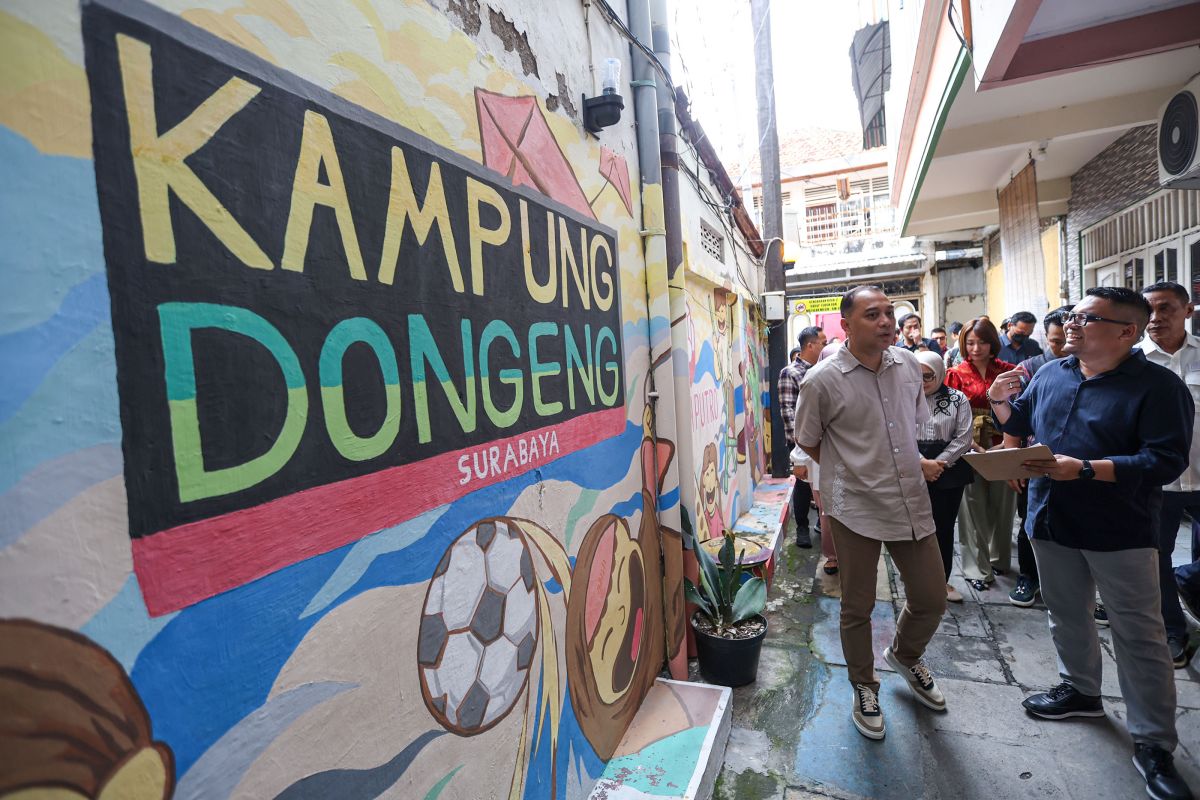
Kampung Pancasila, with all its challenges and potential, is an effort to ensure that behind the high-rise buildings and wide roads, there is still space for people to connect with one another. Surabaya (ANTARA) - In an alley in Krembangan, Surabaya City, urban life does not always manifest in the roar of vehicles or the rapid pace of development. Instead, from that simple space, conversations among residents flow warmly, greetings remain intact, and mutual cooperation thrives as a habit, not merely a slogan. It is within such daily landscapes that the concept of Kampung Pancasila takes shape—not as a symbolic project, but as an endeavour to nurture the “soul” of the city, which is often eroded by modernity. Amid Surabaya’s ambitions to become a global city, the Kampung Pancasila programme invites a look inward, to the kampung as the smallest social unit that has long served as the foundation of urban life. This initiative is important to examine not only as a local policy, but as a reflection of the direction of urban development in Indonesia. Will it become a space that is increasingly individualistic, or remain rooted in values of togetherness? Closest Values Kampung Pancasila in Surabaya emerges with a simple premise that national values must live in daily practice. It does not stop as a grand narrative in public spaces, but enters narrow alleys, residents’ dining tables, and RT and RW consultation forums. This approach is compelling because it shifts the locus of development from being project-based physical infrastructure to relation-based social dynamics. The Surabaya City Government consciously positions the kampung as the epicentre of change. By involving all RW, numbering more than 1,300, the programme seeks to build social resilience from the bottom up. The concrete steps taken are also not abstract. The accompaniment by Civil State Apparatus (ASN) in every RW, for instance, becomes a direct state intervention at the micro level. This scheme enables residents’ issues, from inaccuracies in social assistance data to environmental problems, to be resolved more quickly and contextually. However, more important than the mere presence of ASN is the effort to revive social capital that had weakened. Experiences during the COVID-19 pandemic showed that solidarity among Surabaya residents is actually very strong. Neighbours cooked meals for those in isolation, aid flowed without bureaucracy. Kampung Pancasila seeks to institutionalise that spontaneity so it does not fade over time. In some areas, results are already visible. In Ngagel Rejo, for example, residents have managed to handle social donations worth tens of millions of rupiah independently. Those funds are used to help sick residents, the elderly, and education. In other places, community-based environmental security systems and waste management operate effectively. This demonstrates that when social trust is built, the kampung can become a resilient social and economic unit. Beyond that, Kampung Pancasila also touches on aspects of tolerance. Surabaya, as a multicultural city, has latent conflict potential if inter-resident relations are not nurtured. The programme encourages concrete practices of diversity through daily interactions, cross-religious community work, and joint social fund management. At this point, Kampung Pancasila becomes a kind of “social laboratory” testing whether Pancasila values remain relevant amid modern urban life. The initial answer appears positive, but future challenges are not simple.