
From the Strait of Hormuz to Indonesia: Strengthening the Ummah Through Sharia Economics
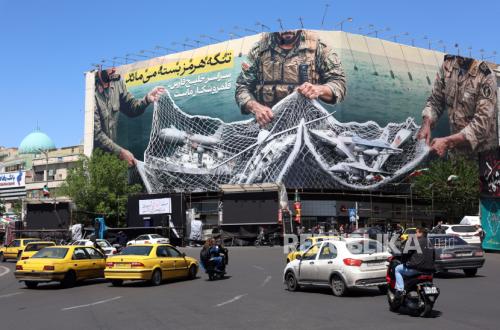
On 28 February 2026, the world awoke to news that dramatically altered the geopolitical landscape. A joint US-Israel military operation known as Operation ‘Epic Fury’ attacked Iran, prompting a retaliatory response from the Islamic Revolutionary Guard Corps (IRGC): the closure of the Strait of Hormuz, the world’s energy lifeline. The 33-kilometre-wide strait is the most critical point in the global economic system, with around 20 to 25 per cent of the world’s daily oil trade passing through it, equivalent to 20 to 21 million barrels per day.
For Indonesia, this is not merely distant news. The 2026 state budget (APBN) was prepared based on an assumption of oil prices at $70 per barrel. The Hormuz crisis has driven Brent prices to soar to between $112 and $126 per barrel.
CELIOS simulations indicate that every $1 increase per barrel above the budget assumption adds approximately Rp10.3 trillion to the state’s spending burden. In a scenario with prices at $150 per barrel, the additional energy subsidy burden could reach Rp544 trillion. The rupiah exchange rate has also weakened to between Rp16,893 and Rp17,000 per US dollar.
Even more concerning: national fuel reserves are only sufficient for about 20 days, far below the International Energy Agency’s recommended 90 days. The impacts are widespread: household LPG prices are at risk of rising, logistics costs are exploding due to skyrocketing ship insurance premiums, and urea fertiliser prices are hitting farmers ahead of the planting season, given that a third of global fertiliser trade passes through Hormuz. Southeast Asia feels the heaviest impact, as around 80 per cent of the oil passing through the strait flows to the region.
Root of the problem: a fragile foundation
The Hormuz crisis is a mirror reflecting structural weaknesses that we have long ignored. Indonesia, the country with the world’s largest Muslim population, has built its economic system on a foundation too dependent on fluctuations in global markets vulnerable to geopolitical turmoil. It is like building a house on sand: when the storm comes, the foundation feels extremely fragile.
This is where the great paradox lies, which we need to reflect upon. Indonesia actually possesses extraordinary ummah economic assets: more than 228 million Muslims, a network of pesantren spread across the country, a productive waqf ecosystem, zakat potential worth hundreds of trillions of rupiah, and a continuously growing halal industry. However, these vast potentials have not yet been optimised as pillars of national economic resilience.
From an Islamic economic perspective, the concepts of maslahah and iqtisad teach that true resilience arises from self-reliance, just distribution, and strong internal solidarity networks, not from dependence on global supply chains that can easily be disrupted when conflicts erupt in other parts of the world.
Sharia economics: a proven resilience foundation
Those who doubt the capacity of sharia economics as a structural solution need to examine the latest data more carefully.
The KNEKS report notes that in the second quarter of 2025, total national sharia financial assets reached Rp10,774 trillion, growing 12.8 per cent year-on-year, with a market share of 28.6 per cent against the total national financial industry, equivalent to 45 per cent of Indonesia’s GDP. Sharia banking grew by 7.8 per cent, surpassing conventional banking at just 6.4 per cent.
At the global level, sharia financial assets reached USD 5.98 trillion in 2024 and are projected to reach USD 9.7 trillion by 2029. This is a signal that sharia-based financial systems have better resilience and growth potential, even amid global shocks.
The Hormuz crisis must serve as a momentum, not just a warning, to make a structural leap towards true economic resilience. At least five pillars must be accelerated.