
From the Kennedy Family to Mueller: Why Does Trump Keep Insulting Deceased Figures?
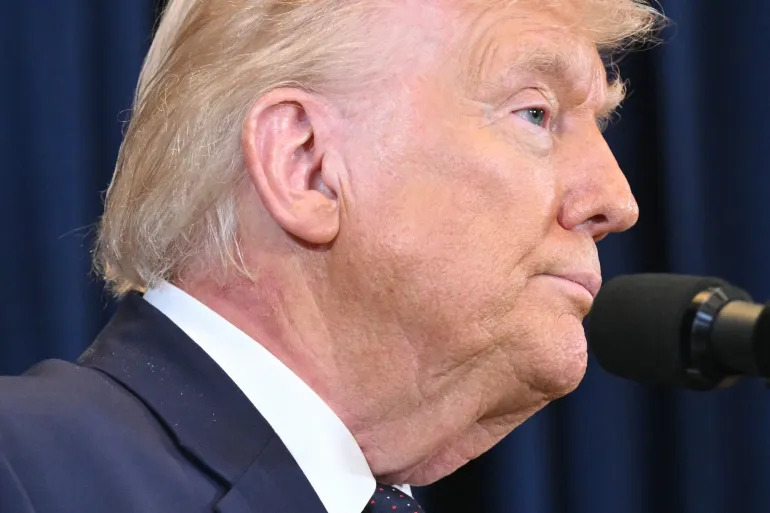
US President Donald Trump has once again ignited a wave of controversy after issuing harsh statements regarding the passing of former FBI Director and special prosecutor Robert Mueller. Through a social media post, Trump explicitly expressed his joy over the death of the figure who led the investigation into Russian interference in the 2016 election.
“Robert Mueller has just died. Good, I’m glad he’s dead. He can’t hurt innocent people anymore!” Trump wrote shortly after the news of the passing broke on Saturday (21/3) local time.
This statement is seen as a new low in Trump’s rhetoric, which has long been known for frequently attacking his political opponents, even after they have passed away. Mueller, who spent his tenure investigating Trump’s campaign, now joins a long list of public figures targeted by the former president’s disparaging comments.
However, Trump’s remarks about Mueller are not the first incident. Over the years, Trump has repeatedly made controversial statements and shown insensitivity towards deceased figures, especially those considered his political adversaries.
A CNN report on Sunday (22/3) shows this pattern began during his first term. In 2017, he was alleged to have made unsympathetic comments to the widow of a fallen soldier, saying her husband “knew the risks of his job.”
Similar attacks were also directed at the late Senator John McCain in 2019, where Trump continued to lob criticisms even though McCain had been dead for a year. Trump attacked McCain by stating he “never liked McCain,” even repeating old criticisms of his political track record.
In 2019, Trump also targeted the late Congressman John Dingell with comments implying that Dingell was “looking up from hell.” This statement elicited an emotional response from his wife, Debbie Dingell, who called the remark painful and burdensome during her grieving period.
It did not stop there; major figures like former Secretary of State Colin Powell and members of the Kennedy family were not spared from Trump’s digital attacks shortly after their deaths.
The same pattern continued in 2021 when former Secretary of State Colin Powell passed away. Trump issued a statement highlighting Powell’s “major mistakes” and labelling him a “RINO” (Republican In Name Only).
Trump also reposted criticisms of the Kennedy family shortly after the death of environmental journalist Tatiana Schlossberg, granddaughter of President John F. Kennedy, following her diagnosis with terminal brain cancer.
The most recent and extreme case saw Trump linking the death of director Rob Reiner to the term “Trump Derangement Syndrome,” a taunt and phrase often used to mock criticism against him. Trump’s attitude immediately drew sharp criticism, even from within the Republican Party itself.
Several Republican figures criticised the statement, deeming Trump’s comments to cross the boundaries of public ethics. His latest statement about Mueller is seen as a new escalation because it explicitly celebrates someone’s death.
Several political analysts assess that this explicit celebration of Mueller’s death marks a shift from mere crude comments to overt expressions of hatred, which could further deepen polarisation in American society.