
From the F-35 to AI Drones: How the US and Israel Are Bombarding Iran
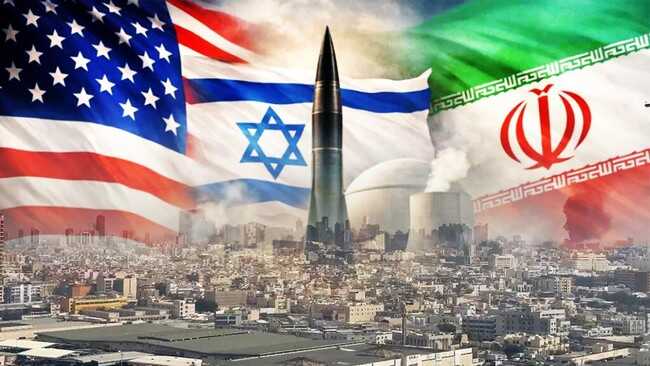
The war in Iran has, so far, been regarded as a major success for the United States and Israel. Amid the frequently shifting political justifications for the war, the military operation appears highly planned, with substantial destructive power, and a clear display of dominance on the battlefield.
Dominance From the Outset of the War
On Wednesday, 4 March 2026, a pilot from the Israeli Air Force became the first in his squadron to record an air-to-air victory in over 40 years. However, the engagement was clearly unbalanced. The F-35 he was flying, one of the world’s most advanced combat aircraft, shot down an Iranian Yak-130 that was originally designed as a trainer aircraft.
“We hammered them while they were reeling,” said Pete Hegseth, the American defence secretary, quoted in The Economist. “And that is how it should be,” he added.
The lop-sided fighting is seen as reflecting the overall campaign by the United States and Israel.
On the political level, American officials are judged to have offered dubious, sometimes conflicting, and ever-changing reasons for the war. Conversely, on the military side, the campaign shows careful planning, heavy firepower, and very dominant results.
In a video released on 3 March, Admiral Brad Cooper, commander of CENTCOM at the Pentagon overseeing military operations in the Middle East, claimed that in four days the United States had attacked almost 2,000 targets, including 17 ships, one of which was a submarine.
Also on the same day, an American submarine apparently attacked and sank an Iranian frigate near Sri Lankan waters, about 3,000 km from Iran. It was the first use of a torpedo by the United States since 1945.
Cooper said the first day of the war was almost twice as large as the United States’ 2003 shock-and-awe campaign against Iraq. Meanwhile, Israeli attacks were even more intense.
According to the Israel Defence Forces or IDF, Israel was attacking around 1,000 targets per day. The high intensity of these attacks was enabled by American tanker aircraft refuelling Israeli jet fighters.
Opportunities to Target Khamenei
The decision by the United States and Israel to open the war openly on 28 February is said to have been influenced by the opportunity to kill Ayatollah Ali Khamenei, Iran’s supreme leader. That audacity also shows that Iran’s air defences were in poor condition, after most of it had been knocked out during last year’s 12-day war.
After the initial wave of attacks, which to preserve the element of surprise used long-range missiles from stealth aircraft and ships from afar, the United States and Israel can now fly their aircraft directly over the targets.
This condition allows them to use guided bombs that are cheaper, without over-relying on expensive and limited stand-off munitions. “We have an almost unlimited stock” of this type of weapon, said Hegseth.
War Arranged Together
Israeli officers even joke that this conflict is a “war in English”, different from previous strikes against Iran, because all the plans were made in very close coordination with the United States. Discussions began in the summer last year after the 12‑day war, but the joint strike plan only really developed after the IDF Chief of Staff, Eyal Zamir, visited the Pentagon in January.
The two countries then divided Iran into large zones they call ballistic-missiles operation areas or BMOA.
Israel handles the western and central parts of Iran, including Tehran, the country’s capital. The United States handles the southern part of Iran and the surrounding waters. Israel mostly flies over via Syria, while the United States operates largely from bases in Jordan as well as from the USS Abraham Lincoln in the Arabian Sea and the USS Gerald Ford in the Mediterranean.
Even though both sides are attacking missile launchers, which number in the hundreds according to Cooper, this division of labour is one reason why Israel focuses more on regime targets.
Those targets include the Assembly of Experts, the body charged with selecting the next supreme leader, on 3 March, and the Basij paramilitary forces on 4 March. By contrast, the United States concentrates more of its strikes on the Iranian navy.
This division also reflects differences in willingness to take risks. Martin Sampson of the IISS, a think tank, says Israel is prepared to fly single-engine jets far into Iranian territory, even if shot down, with rescue and search-and-rescue teams likely to have great difficulty evacuating the pilot.
Into a New Phase
The war plan consists of several phases, two of which have already been executed. Phase One was the opening strike on 28 February. Phase Two was the next 100 hours, during which Israel attacked the highest-priority targets for fear that President Donald Trump could at any moment halt the war more quickly.
Now Phase Three is underway, targeting lower-priority targets. The planners say there are still enough American and Israeli targets for a war of four or five weeks, a timeframe Trump has also mentioned.
“We will now begin broadening operations into the interior,” said General Dan Caine, chairman of the United States’ Joint Chiefs of Staff, speaking with Hegseth on 4 March. He said the strikes would continue moving deeper into Iran.
Most of the nuclear targets are scheduled for the next phase of this conflict. One reason, even though American officials make claims seen as misleading, is that Iran has not made many changes at those locations since last year’s war, apart from burying soil atop the craters left by the bombs.
Nevertheless, on 3 March Israel said it had attacked the Min Zadai complex on the eastern outskirts.