
From Small Movements in Class, Literacy Skills of Sumedang Students Flourish
If there are 100 children in a classroom, even one child experiencing learning difficulties must not be left behind. For this reason, attention to students with learning obstacles must be a priority.
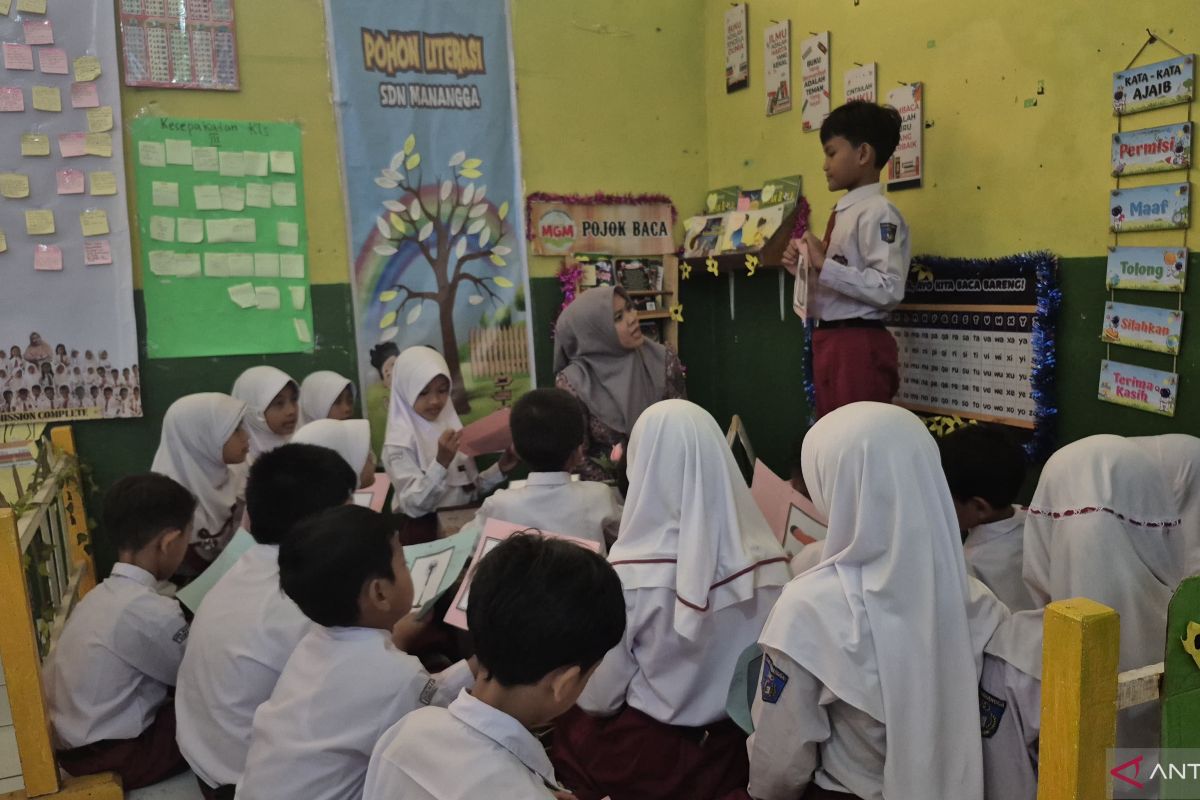
Sumedang (ANTARA) — On that Friday morning, the Class 3 classroom at SDN Manangga in Sumedang Regency, West Java, did not look like usual. The learning atmosphere felt warmer with laughter and small movements from the children. The desks remained in their previous arrangement, but students’ attention was no longer solely focused on the textbooks open on their tables. They stood up, moved about, and followed the teacher’s instructions enthusiastically, as if the school day had begun with renewed energy.
Before the lesson commenced, the children were first invited to engage in simple motor activities. These light movements were guided by the teacher at a relaxed rhythm, yet purposeful, intended to train focus, build learning readiness, and ease the morning atmosphere.
Small hands rose in unison, feet moved following instructions, and occasionally spontaneous laughter could be heard when the movements seemed amusing to them. The classroom transformed into a living space, not just a place to sit and take notes, but a space to grow together.
In this class, learning did not stop merely at reading and writing ability. The teacher endeavoured to create an atmosphere that gave each student the courage to try, perform, and develop according to their individual abilities.
Children were encouraged to speak, ask questions, and demonstrate their work without fear of being wrong. The learning process became a shared journey, not merely a demand to achieve grades.
This change in the learning atmosphere did not happen overnight. Initially, Class 3 of SDN Manangga faced challenges in student literacy and numeracy skills. Of the 39 students, 34 had already been able to read and understand texts well. However, among them, one student was still recognising syllables, and four other students were still in the process of understanding words and beginning to construct simple sentences. This difference in abilities presented its own dynamics within the classroom.
Rather than seeing it as an obstacle, Class 3 teacher Iis Sartika viewed this diversity as a call to adapt. She began seeking a more flexible learning approach suited to each child’s needs. For her, a classroom is not a place to standardise abilities, but a space where every student is given the opportunity to grow at their own pace.
Since then, learning in that classroom gradually changed direction, becoming more inclusive, more humane, and closer to the children’s world. That Friday morning was simply an illustration that a classroom can come alive when learning is understood not merely as an academic activity, but as an experience that builds confidence and hope.
Iis began the learning process by conducting an initial assessment to determine the actual state of each student’s literacy and numeracy abilities and then to determine a more appropriate learning strategy.
“We conduct an initial assessment first to understand the abilities of each student. From that we can determine a learning approach suited to their needs,” she said when interviewed on Friday in Sumedang.
In practice, learning was not only conducted through reading or writing in books; Iis also invited students to engage in simple motor activities so they could focus better before following the core material.
In addition, she regularly provided appreciation to students with praise each time they showed progress, which she believed could help build student confidence.
“Children will be braver to try if they feel valued. Simple appreciation can make them confident to learn better,” she said.
Each learning activity was also concluded with educational games and joint reflection so the teacher could observe student progress whilst evaluating the methods used in the learning process.
Efforts to improve literacy were not only conducted within the classroom, as the school also provided additional learning for students who still needed mentoring by grouping them into supplementary learning sessions.