
From palace to villages, Indonesia’s Eid reflects unity
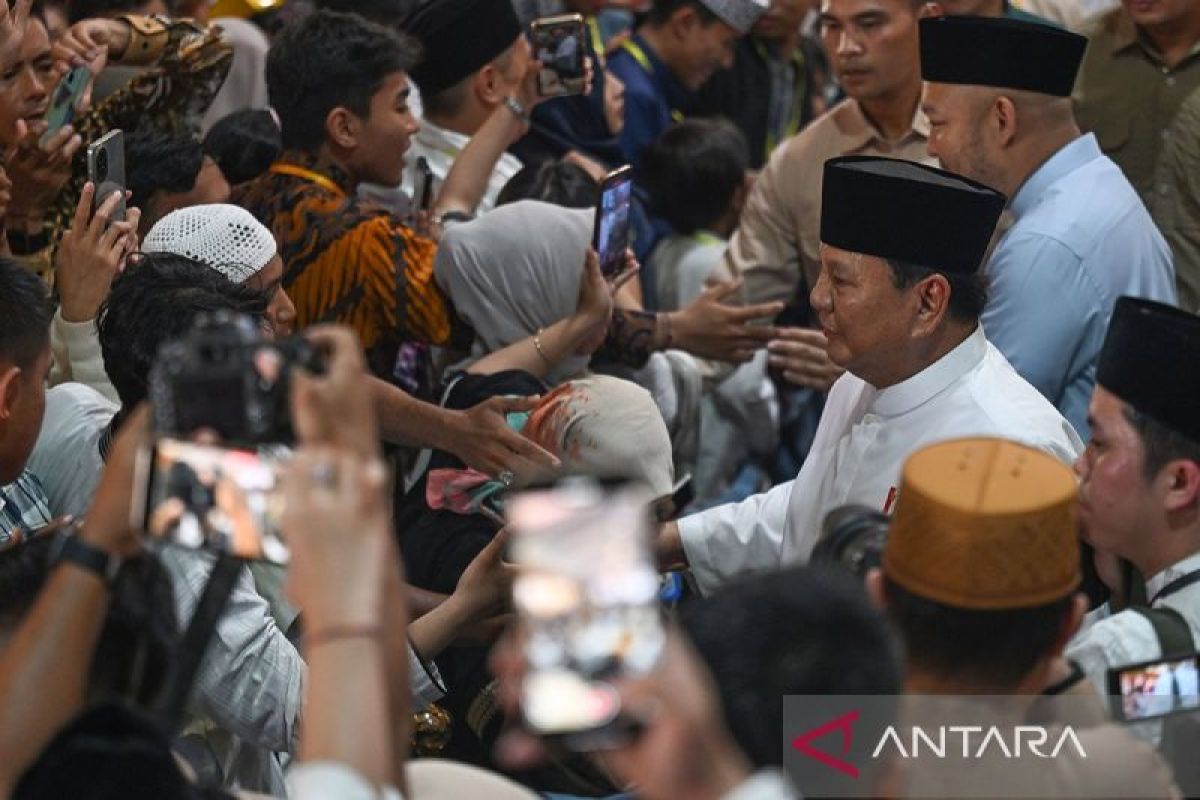
Indonesians have demonstrated an extraordinary social resilience: standing united when disasters strike and remaining humble while celebrating the hard-won victories of the spirit.Jakarta (ANTARA) - The rhythmic thunder of prayer drums echoed across the Indonesian archipelago this Saturday, marking an Eid al-Fitr celebration defined by a spirit of accessibility and national harmony.
Under sapphire skies, millions gathered for the 1 Syawal 1447 Hijriah prayers, following the official moon-sighting decree led by Religious Affairs Minister Nasaruddin Umar two days prior.
This 2026 holiday transcends a mere annual routine, emerging as a portrait of a maturing nation skillfully navigating the intersection of faith and the challenges of a modern era.
At the Merdeka Palace, the gates opened to the public for a “gelar griya,” or open house, inviting ordinary citizens into the heart of the government complex since dawn.
President Prabowo Subianto greeted the crowds personally, a move signaling an inclusive leadership style that seeks to bridge the distance between the presidency and the people.
This moment was less a formal protocol and more a space for communication, bringing the leader and the people together in a warm, familial atmosphere.
For the president, the occasion represented a key moment to reinforce unity across Indonesia’s vast and diverse archipelago—an asset he views as critical in navigating an increasingly uncertain global economy.
Minister of State Secretary Prasetyo Hadi ensured the event prioritized accessibility, while ministers were encouraged to celebrate privately with their families, leaving the palace fully dedicated to public engagement.
Efficiency of Operation Ketupat 2026
Beyond the palace walls, the success of the holiday was measured by the smooth flow of the “mudik,” or homecoming, the massive annual migration of people across the islands.
Even as vehicle volumes reached approximately 270,000 units per day on the Trans-Java Toll Road during the peak on Wednesday, data showed a positive safety trend.
Evaluation of Operation Ketupat 2026 showed a 3.23 percent decline in traffic accidents, while the fatality rate dropped by 24.61 percent compared to the previous year.
National Police Chief General Listyo Sigit Prabowo confirmed that the holiday exodus remained controlled, credited to precise traffic engineering and intensive monitoring at high-risk bottlenecks.
These safety gains resulted from the combination of professional inter-agency coordination and a public more willing to distribute their travel schedules to avoid peak congestion.
This success proves that the management of massive human movement has become increasingly professional, ensuring that the journey home to the provinces remains safe for millions.
Medical vigilance and food security
The stability of the day of victory was further bolstered by unwavering public services, particularly within the healthcare sector and the management of basic food supplies.
The government ensured that all hospitals under the Ministry of Health remained fully operational for emergencies throughout the long holiday, which coincided with the Nyepi period—the Hindu “Day of Silence” marked by a 24-hour cessation of all travel, work, and lighting to allow for spiritual reflection.
Health Minister Budi Gunadi Sadikin emphasized that this policy guaranteed medical access was not hampered, ensuring the festive season did not compromise essential life-saving care.
Between March 20-23, authorities focused specifically on emergency cases, rescheduling elective procedures to maintain an optimal medical infrastructure for those in critical need of immediate attention.
Complementing health readiness, food price stability played a vital role in maintaining the peace of the holiday across the sprawling and consumption-heavy domestic market.
Through the National Food Agency, the government secured sufficient stocks of strategic commodities, ensuring that surplus supplies helped keep market prices stable despite the holiday surge.
This proactive intervention provided a sense of calm for households, allowing families to prepare their traditional feasts without the worry of sudden or crippling price hikes.
Resilience from the tents
However, the most authentic expressions of gratitude emerged from Indonesia’s disaster-stricken regions, where the spirit of the day remained strong despite recent environmental trials.
In Agam district, West Sumatra, hundreds of villagers proved that natural disasters cannot dampen faith as they performed Eid prayers on tarps spread over open ground.
Their primary house of worship, the Nurul Ikhlas Mosque, was destroyed by a “galodo” flash flood, yet prayers still rose with full solemnity amidst the debris.
A similar scene unfolded in Agusen village, Gayo Lues, Aceh, where displaced families celebrated within temporary housing and emergency tents after their homes were swept away.
President Prabowo Subianto personally inspected the post-disaster recovery in Aceh Tamiang district, Aceh, on Saturday, stating that the handling progress has reached nearly 100 percent.
He noted that all affected residents had moved into decent housing ahead of the festivities, with the fulfillment of basic needs like electricity and water being the top priority.
These recovery efforts ensured that disaster survivors could celebrate their victory with dignity, marking a swift return to normalcy for those once sheltered in makeshift tents.
The mental fortitude of these survivors serves as a poignant reminder of the nation’s collective resilience when facing the relentless challenges of a changing global climate.
A tapestry of inter-faith harmony
The holiday narrative was further enriched by a sense of religious moderation, a hallmark of the nation’s “Bhinneka Tunggal Ika” or Unity in Diversity.
Minister Nasaruddin Umar praised the maturity of the faithful, noting that differences in prayer schedules—including in parts of East Java—occurre