
From Mediator to Spectator: Europe's Waning Influence Over Iran
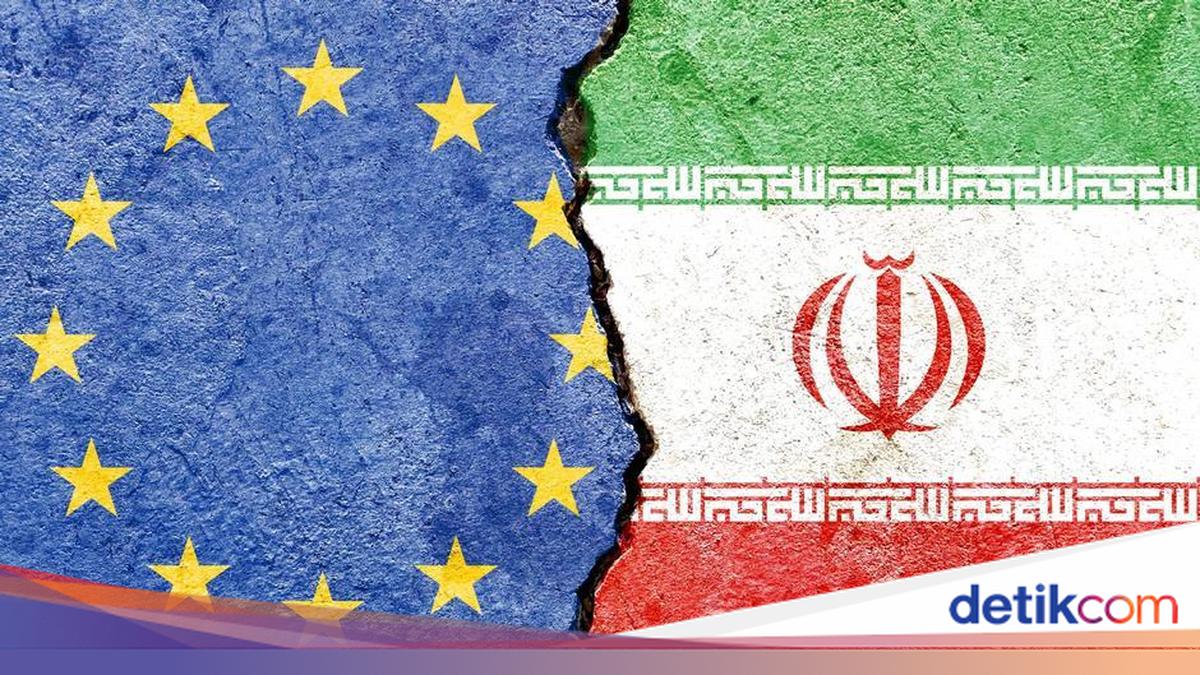
Amid the Iran crisis, a pressing question has emerged: Can the European Union still influence the current situation, or has it merely become a spectator on the sidelines? Debates that took place this week in the European Parliament revealed one stark reality: when discussing Iran, Europe struggles to translate its concerns into meaningful influence.
Members of parliament debated how the EU should respond to attacks by the United States and Israel against Iran. The discussion exposed sharp divisions within the bloc, even among European Union institutions themselves.
The picture that emerged from the Strasbourg meeting portrayed a Europe heavily affected by the crisis, yet far weaker in shaping its trajectory than expected. “The European Union currently has no meaningful role whatsoever. Period,” said Julien Barnes-Dacey, director of the Middle East and North Africa programme at the European Council on Foreign Relations. “Europe is now irrelevant.”
Once the principal mediator
The European Union once saw itself as a key diplomatic actor on Iran. Since 2006, the EU’s High Representative for Foreign Affairs has coordinated negotiations between the United States and Iran.
This diplomatic process ultimately produced the 2015 nuclear agreement known as the Joint Comprehensive Plan of Action (JCPOA). The agreement aimed to limit Iran’s nuclear programme in exchange for the lifting of some international sanctions. After the agreement was signed, the EU remained its principal coordinator and defender.
Now merely a spectator
However, the situation changed dramatically. In 2018, US President Donald Trump withdrew Washington from the agreement, a move that dealt a severe blow to the diplomatic framework Europe had built over the years.
Nevertheless, Barnes-Dacey argues that Europe’s loss of influence was not solely caused by Trump. According to him, the European Union had downgraded its priorities regarding the Middle East for years. Meanwhile, both Washington and Tehran increasingly ceased to view Europe as a leading player. “Both the United States and Iran no longer see Europe as a serious and credible diplomatic mediator,” he said.
Analyst Maneli Mirkhan, who was born in Tehran and now lives in Paris, France, also believes Europe has lost its influence. In his view, Europe was naive for too long. A focus on diplomacy and sanctions was insufficient to prevent Iran from developing its military, nuclear, and technological capabilities.
A longstanding problem: Europe divided
Both experts agree on one thing: Europe’s classic problem—internal divisions—has only worsened the situation. The EU’s foreign policy still depends heavily on consensus among its member states, something difficult to achieve in rapidly unfolding security crises.
Spain has taken the hardest line, condemning the attacks as violations of international law. German Chancellor Friedrich Merz initially appeared to support US and Israeli objectives to change the regime in Iran, before subsequently softening his stance. Now Germany, France, and the United Kingdom are calling for greater caution whilst still criticising Iran.
In Brussels, the message that has emerged also appears inconsistent. EU foreign policy chief Kaja Kallas has emphasised the importance of de-escalation, whilst European Commission President Ursula von der Leyen has spoken of the possibility of a “credible transition” and “new hope” for the Iranian people.
Europe’s focus diverted to Ukraine
According to Barnes-Dacey, Europe’s weakened position is also influenced by strategic factors. Europe’s geopolitical attention is currently focused heavily on the war in Ukraine.
The European Union is also reluctant to confront Trump over Iran for fear of damaging cooperation with the United States, both in trade and in countering Russia. “Europe remains focused on safeguarding the transatlantic relationship above all else, because they want to ensure America remains aligned with them,” he explained.
Sidelined, yet still affected
Although on the margins of the stage, Europe will still feel the consequences. Mirkhan warned that Europe could pay a heavy price if Iran is weakened militarily but survives politically.
Protracted conflict could trigger surging energy prices, destabilise the region, and increase migration pressure on Europe. “If we fail to create conditions for a relatively stable transition, the risks for Europe will be very substantial,” he said.
Still a role to play?
At this point, the two analysts disagree. Barnes-Dacey is pessimistic that Europe can regain influence without major shifts in its political will. Conversely, Mirkhan is more optimistic. He believes Europe may no longer play a significant role in the military phase of the conflict, but could still play an important role afterwards—for instance, if the Islamic Republic of Iran’s regime collapses.
According to him, Europe could support opposition figures, facilitate dialogue between them, and help design a democratic framework for a transition period. In other words, Europe must move from mere symbolic statements to becoming a genuine driving force.
However, for Barnes-Dacey, the conclusion is clear: if the Iran crisis is a test of whether the European Union is truly a meaningful geopolitical actor, then “Europe has failed.”
The Iran crisis once again reveals the gap between Europe’s geopolitical ambitions and its capacity to act. On Ukraine, the European Union has demonstrated that it can still play an important role when speaking with one voice. On Iran, the European Union must still prove that it can be more than just a “spectator”.